


? Are you doing everything you can to keep your WordPress site secure and running smoothly in 2026?

Why WordPress Core Updates Are Critical For Website Security In 2026
You rely on WordPress to deliver content, convert visitors, and run essential site features. In 2026, the platform’s popularity and complexity make it both powerful and a high-value target. Keeping the WordPress core current isn’t optional if you want to reduce risk, maintain performance, and protect your users’ data.
What the WordPress Core Is — and Why It Matters
You can think of the WordPress core as the engine that runs your site: the files and codebase maintained by the WordPress project that handle routing, content management, APIs, security features, and more. When the core is patched or improved, those changes affect fundamental behaviors that all themes and plugins depend on. If the core becomes outdated, you increase the chance that an attacker can exploit known vulnerabilities, or that newer components won’t work properly with your stack.
Types of WordPress Updates and What They Mean for You
There are different kinds of updates you’ll see in WordPress. Each type has a different level of urgency and risk, and understanding them helps you set the right process.
| Update Type | Purpose | Urgency | Typical Action |
|---|---|---|---|
| Security (core) | Fix vulnerabilities or security regressions in WordPress itself | High | Apply immediately or during next emergency maintenance; test on staging |
| Maintenance/patch (minor) | Bug fixes, small improvements, and automatic security backports | High/Medium | Can be auto-updated; verify after update |
| Major release (core) | New features, architectural changes, breaking changes | Medium/High | Test on staging, verify compatibility before production rollout |
| Plugin updates | Security fixes, features, compatibility for plugins | High/Medium | Update frequently; test critical plugins on staging |
| Theme updates | Fixes and features for themes; may include security fixes | Medium | Update after testing to avoid layout regressions |
| PHP and server package updates | Address runtime and performance/security at server level | High | Coordinate with host; test compatibility (PHP 8.x+ in 2026) |
Why Core Updates Become More Critical in 2026
You’re operating in a very different environment compared with earlier years. Several trends make timely core updates essential:
- Attack automation has increased: Bots and AI tools scan and exploit known WordPress vulnerabilities very quickly. A patched core narrows the window of opportunity for these attackers.
- Supply chain attacks are more common: Third-party libraries, plugins, and even automated build systems can introduce vulnerabilities. An updated core often includes hardened integrations and dependency management improvements.
- API and headless use is widespread: Newer WordPress sites rely on REST, GraphQL, and headless configurations. The core updates address API security and rate-limiting improvements that protect these entry points.
- PHP and runtime changes: In 2026, newer PHP versions (8.2/8.3/8.x) are standard. Core updates ensure compatibility and take advantage of performance and security improvements in newer runtimes.
- Performance and resource efficiency matter: Core updates include performance improvements that reduce attack surfaces (e.g., limiting heavy endpoints), which helps both cost and security.
- Regulatory and compliance expectations: GDPR, privacy rules, and payment standards continue to push organizations to maintain secure, updated software stacks.
Specific Threats in 2026 That Core Updates Help Mitigate
You should understand the real threats so you can prioritize updates accordingly. Core updates are designed to counter many of these:
- Automated vulnerability scanning and exploitation bots.
- Credential stuffing with stolen credentials from other breaches.
- Supply chain and dependency compromise (npm/composer libraries).
- REST API abuse and unauthenticated endpoints being exposed.
- Cross-site scripting (XSS) and CSRF vectors rooted in core behavior.
- Privilege escalation and authentication bypasses patched in the core.
- Attacks on image and file handling, upload endpoints, and parsing libraries.
Why Weekly Checks Are Necessary — Not Optional
You might be tempted to check your site monthly or only when something breaks. Weekly checks offer a better balance between risk and operational overhead.
- Threat window reduction: New vulnerabilities are discovered frequently. Weekly checks close the gap between discovery and remediation.
- Faster regression detection: If an update introduces an issue, weekly monitoring helps you detect it early before more users are affected.
- Plugin churn management: Plugins update frequently. Weekly checks let you catch incompatible plugin updates before they cascade into bigger problems.
- Backup verification: Backups are only useful if they work. Weekly verification ensures your restore points are valid.
- Performance and uptime monitoring: Weekly checks highlight deteriorating performance trends that could indicate a compromise or misconfiguration.
What a Weekly Check Should Cover
Make weekly checks standard across all production sites to keep risk manageable. At minimum, a weekly check should include:
- Verify that the WordPress core, themes, and plugins are up to date or queued for an update.
- Confirm that recent backups completed and can restore.
- Run security scans for malware and file changes.
- Check user account activity for suspicious logins and privilege changes.
- Verify uptime and performance metrics.
- Inspect logs for anomalies (login failures, 500 errors, unusual traffic spikes).
- Validate SSL certificate health and renewal dates.
Here’s a simple table you can use as a weekly checklist:
| Item | Purpose | Action |
|---|---|---|
| Core version | Ensure up-to-date with security patches | Confirm latest security/patches installed |
| Plugins & Themes | Reduce attack surface | Update or flag for staged testing |
| Backups | Restore assurance | Test a sample restore from last backup |
| Malware scan | Detect compromise | Run automated scans, inspect flagged files |
| User logs | Prevent account abuse | Review admin/logins for anomalies |
| Performance/Uptime | Identify DoS or slowdowns | Check metrics and alerts |
| SSL/Certificates | Avoid browser warnings | Confirm validity and proper configuration |
How WordPress Core Updates Work (Automatic vs Manual)
WordPress supports multiple update pathways. You need an approach that balances speed and safety.
- Minor security and maintenance updates: These are often applied automatically by WordPress by default. They close urgent security holes quickly.
- Major releases: These introduce new features and sometimes breaking changes. You should test them on staging before applying to production.
- Configuration controls: You can control auto-updates by plugin, theme, or core via constants in wp-config.php, filters, or management tools. Use those controls to tailor behavior for critical sites.
- Hosting providers and managed services often provide controlled auto-updates with pre-testing and rollback features. If you use managed hosting, align your update policy with their SLA and process.
Best Practices for Applying Updates
When you apply updates, a repeatable, tested process will reduce risk.
- Backup first: Always create a full-site backup including database and files. Verify backup integrity.
- Use staging: Apply updates in a staging environment that mirrors production. Run smoke tests and user scenarios.
- Update order: Update plugins and themes before or after the core depending on compatibility notes, but always follow the vendor guidance. A common safe order is backup → plugins/themes on staging → core on staging → test → production updates.
- Run automated tests: If you have unit or integration tests (CI), run them automatically as part of the update pipeline.
- Monitor after update: Check logs, uptime, and error reports for 48–72 hours after updates.
- Maintain rollback mechanisms: Keep immediate rollback ready (snapshot or backup) if updates break functionality.
- Keep sensitive credentials out of code: Use environment variables and secrets managers to prevent exposure during updates.
Why Plugins and Themes Matter — They’re Often the Weak Link
You can update the core religiously, but if plugins or themes have vulnerabilities or are abandoned, your site remains at risk.
- Plugin and theme vulnerabilities are consistently among the top infection vectors.
- Abandoned code: Plugins with no updates for years may be incompatible with modern core features and PHP versions.
- Poorly coded plugins can introduce security holes into otherwise secure cores.
- Always vet plugins for active maintenance, recent updates, and a good security record.
WordPress Care Essentials — What It Covers and Why It Helps You
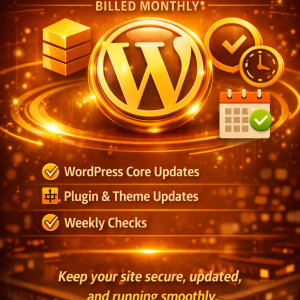
WordPress Care Essentials is a maintenance package you can use to stay secure and stable. It typically includes:
- WordPress core updates
- Plugin & theme updates
- Weekly checks
Here’s why this package matters to you:
- Proactive maintenance: You don’t react to problems—you prevent them by staying current.
- Reduced downtime risk: Weekly checks catch issues early, and regular updates close security holes fast.
- Predictable cost and effort: Outsourcing core responsibilities lets you focus on business priorities while professionals manage the stack.
- Rapid incident response: Maintenance providers can run immediate remediation and rollback when updates cause issues or when a security event occurs.
Maintenance Schedule You Should Consider
A structured schedule keeps you consistent. Below is a sample schedule you can adopt.
| Cadence | Tasks |
|---|---|
| Weekly | Check for updates; apply critical security updates; run malware scan; verify backups; review user login logs; check uptime and performance |
| Bi-weekly | Apply non-critical plugin/theme updates after staging tests; verify SSL certificate; check server resource utilization |
| Monthly | Test full backup restores; run vulnerability scans with different tools; review plugin/theme vendor communications; update PHP minor versions if supported |
| Quarterly | Run audit for inactive or abandoned plugins; update major core releases after staging validation; review user roles and permissions |
| Annually | Full security audit; penetration test for high-risk sites; review hosting and infrastructure; disaster recovery drill |
Post-Update Monitoring and Validation
After any update, you need to validate functionality and security. Your monitoring should include:
- Automated functional checks (key pages, checkout, login, forms).
- Error logs and PHP notices aggregation.
- Performance baseline comparison (response times, TTFB).
- Security scans for file changes and suspicious entries.
- User feedback channels for reported issues.
Automate as much as possible so you’re not relying on manual checks alone.
Handling an Update Failure or Security Incident
You will face issues sometimes. When that happens, follow a clear incident flow:
- Isolate: Put site into maintenance mode to prevent more damage or data loss.
- Backup the compromised state: Even a hacked state is valuable for forensics.
- Rollback: Restore from the most recent clean backup if no safe patch is available.
- Patch: Apply the needed core/plugins/theme updates or vendor fixes.
- Clean and harden: Remove injected files, reset passwords, rotate keys, and apply additional hardening (WAF, disable file editing).
- Analyze root cause: Identify how the attacker exploited the site and close that vector.
- Report and document: Maintain incident logs and notify stakeholders where applicable.
Choosing an Update Policy: Automatic vs Manual
You’ll need to choose an update approach that fits your risk tolerance and site complexity.
- Automatic updates (security and minor): Recommended for most sites. They reduce the window for exploitation and require minimal oversight.
- Selective automatic updates: Auto-update core security patches and low-risk plugins; hold major releases for staging.
- Manual updates (business-critical sites): For complex custom integrations, do staged testing and scheduled update windows with backups and rollback plans.
- Hybrid approach: Auto-update minor security patches; schedule manual review for major releases and plugins with history of issues.
Tools and Services That Make This Easier
You don’t have to manage this manually. Useful tools include:
- Managed WordPress hosting with built-in update handling and staging.
- WordPress management platforms (e.g., ElasticPress, WP-CLI with orchestration scripts, CI/CD pipelines).
- Backup services with one-click restore and integrity verification.
- Security plugins and external scanners that inventory files and detect anomalies.
- Monitoring and observability tools for uptime, logs, and performance metrics.
Use a combination that fits your team size and technical capabilities.
Cost vs. Risk — Why Frequent Updates Pay Off
You might wonder if the ongoing cost of weekly checks and regular updates is worth it. Consider:
- Incident costs: Cleanups after a compromise can be expensive — time, lost revenue, legal exposure, and reputation damage.
- Downtime: Every minute your site is down costs conversions and trust.
- Compliance fines and liability: Outdated software can lead to breaches that expose user data and result in fines.
- Opportunity cost: You lose time addressing emergencies that could have been prevented.
Frequent maintenance and updates are an investment in predictability and reduced long-term cost.
Hardening Beyond Updates — Additional Steps You Should Take
While core updates are crucial, you should also implement other security measures that complement updates:
- Enforce strong passwords and two-factor authentication (2FA) for all administrative users.
- Limit login attempts and use IP-based restrictions where practical.
- Use a Web Application Firewall (WAF) to filter malicious traffic.
- Disable file editing via wp-config.php and remove unused themes/plugins.
- Keep PHP and server stacks current and use modern TLS configurations.
- Employ least privilege for user roles and database access.
- Use Content Security Policy (CSP) and proper CORS settings for API endpoints.
These practices reduce the likelihood that a minor lapse in updates leads to a major compromise.
Communicating with Stakeholders About Updates
You should make update practices transparent to stakeholders and set expectations:
- Schedule maintenance windows and communicate them clearly.
- Report completed updates and any incidents with root-cause summaries.
- Explain the trade-offs of automatic vs manual updates and why certain windows are necessary.
- Offer SLAs or response times if you’re providing services to clients.
Clear communication reduces friction and aligns everyone on the importance of ongoing maintenance.
Final Recommendations for Your 2026 WordPress Security Strategy
You can make meaningful security progress by following a few consistent practices:
- Treat core updates as a high priority: Apply security patches quickly, even if minor.
- Perform weekly checks: This cadence is sufficient to detect and remediate most emergent issues without overwhelming resources.
- Use staging and backups: Never update production without a verified backup and staging validation.
- Maintain plugin hygiene: Remove unused plugins, update actively maintained ones, and avoid risky vendors.
- Automate and monitor: Use automation for testing, monitoring, and rollback to reduce human error.
- Consider a care package: WordPress Care Essentials or a similar managed maintenance plan provides ongoing updates, weekly checks, backups, and faster incident response. It’s a practical way to ensure continuity.
Conclusion
You are responsible for keeping your site secure and performant. In the fast-moving landscape of 2026, WordPress core updates are more than routine maintenance — they are a frontline defense against increasingly automated and sophisticated threats. Weekly checks ensure that updates, backups, and monitoring actually work together to reduce risk. Whether you manage your site personally or opt for a WordPress Care Essentials package, make core updates and consistent checks a non-negotiable part of your strategy. Your users, data, and reputation depend on it.





0 Comments