


Do you know what keeps your WordPress site secure, fast, and reliable day after day?
WordPress Core Updates Explained: What Every Site Owner Should Know
WordPress Core Updates Explained: What Every Site Owner Should Know is a practical guide to understanding why core updates matter, how they work, and what you can do to keep your site running smoothly. You’ll learn not only what updates do, but also how weekly checks fit into a healthy maintenance routine. This article will walk you through the essentials, clear up common misconceptions, and show you practical steps you can apply right away.

What is the WordPress core, and what do updates do?
The WordPress core is the backbone of your site—the underlying software that powers every page, post, and widget. Core updates include important security improvements, performance tweaks, and new features that improve usability and accessibility. When you apply a core update, you’re patching vulnerabilities, closing gaps that could be exploited by attackers, and ensuring compatibility with modern web technologies.
You may hear about “updates” as a single thing, but there are several layers to consider. Core updates address the WordPress foundation itself. Plugin updates adjust the extensions you’ve added to extend functionality. Theme updates refine the appearance and layout that shape how your site looks to visitors. Each layer plays a distinct role in your site’s health, security, and performance.
Why updates matter for security and safety
You are operating in a constantly evolving online landscape. Threats evolve, new attack vectors emerge, and older code paths can become weak spots over time. Core updates often include security patches that fix these vulnerabilities. If you skip updates, you’re leaving known weaknesses open to exploitation and increasing the chances of a malware infection, unauthorized access, or data loss.
But security isn’t the only reason updates matter. Regular updates also reduce the risk of compatibility problems. When you keep WordPress, themes, and plugins current, you reduce the chances that a new feature or change in one part of the system will break something else. In short, updates are a front-line defense plus a long-term investment in reliability and trust with your audience.
How updates are rolled out in WordPress
WordPress releases are structured and time-based. There are several types of updates to understand:
- Minor releases (maintenance releases): These include bug fixes and security patches. They’re designed to be applied quickly and with minimal risk.
- Major releases: These introduce new features and changes that may require more attention during installation and testing.
- Security releases: These are urgent patches focused on closing serious vulnerabilities as soon as possible.
You can choose how updates are applied, and you can configure automatic updates for some categories. The important part is to have a plan that fits your site’s risk tolerance, hosting environment, and your ability to test updates before they go live.
The risks of delaying or skipping updates
If you delay updates, you may face several issues:
- Increased security risk: Known vulnerabilities remain open longer.
- Compatibility problems: The newer versions of core, plugins, or themes may require changes in code or configurations.
- Performance and reliability issues: Outdated software may not be optimized for current hosting environments or browsers.
- Support and compatibility gaps: You might encounter issues when seeking help, as many developers expect you to keep software current.
On the flip side, applying updates without testing can also cause problems, especially if a plugin or theme conflicts with the latest core version. That’s why a thoughtful update strategy often includes testing in a staging environment and scheduling updates for a low-traffic window.
How to plan a safe update cadence
A clear cadence helps you balance speed and safety. Your plan should address:
- Core updates: Their urgency and testing process.
- Plugin and theme updates: How you test for compatibility and roll back if needed.
- Backups: The timing and reliability of your backup strategy.
- Monitoring: How you detect issues after updates are applied.
A practical cadence often looks like this: back up, test in staging, apply updates during a low-traffic window, monitor for issues for 24–72 hours, and resolve any conflicts quickly. You can tailor this to your site’s traffic patterns, the complexity of your setup, and your hosting environment.
How weekly checks fit into a healthy maintenance routine
Weekly checks act as a safety net to catch issues before they impact your visitors. Even when you’re diligent about updates, problems can arise—broken functionality, performance slowdowns, or security alerts. Weekly checks help you detect and address these problems early, keeping your site running smoothly and your visitors happy.
Weekly checks should cover critical areas such as security, performance, backups, uptime, content integrity, and user experience. They aren’t a replacement for updates, but they are the proactive practice that helps you stay ahead of problems and maintain a trustworthy site.
Core updates versus plugin/theme updates: what you should know
Core updates affect the site’s foundation, while plugins and themes add and alter functionality and appearance. The process and risk profile differ:
- Core updates typically have broad impact and are tightly tested by the WordPress community. They are essential for security and compatibility with the latest PHP versions, browsers, and hosting environments.
- Plugin updates add features or fix issues specific to a particular function. They can introduce conflicts if they rely on older coding patterns or aren’t compatible with the current core.
- Theme updates influence layout and visual behavior. They can affect responsive design, typography, and templates.
Understanding this distinction helps you plan testing and rollbacks more effectively. It also clarifies why you should maintain each layer, not just the core.
A practical look at updating: a simple framework you can follow
To make updates safer and more predictable, you can adopt a framework that many site owners find practical:
- Assess: Read the release notes for core, plugins, and themes to understand what’s changing and why it matters to your site.
- Back up: Create a full backup before applying any updates. This includes files and the database.
- Test: If you have a staging environment, test updates there first. If not, consider a dry run on a copy of your site or a staging plan with your hosting provider.
- Schedule: Choose a time with low traffic to apply updates, especially major updates.
- Verify: After updating, check key functionalities, forms, payment gateways, login processes, and any custom code.
- Monitor: Watch for errors, slowdowns, or unusual activity for at least 24–72 hours after the update.
- Document: Keep notes on what you updated, when, and any issues and resolutions.
This framework helps you minimize risk while maximizing the benefits of updated software.
A quick reference: core vs plugin vs theme update considerations
| Update type | Why it matters | Typical risk level | How to approach |
|---|---|---|---|
| WordPress Core | Security, performance, compatibility with PHP and browsers | Moderate to high depending on the release | Test in staging; read release notes; plan downtime if needed |
| Plugins | Extend functionality; may rely on core features | Variable; some plugins can conflict with each other | Update one at a time; test critical features; ensure compatibility |
| Themes | Visual presentation; often uses template files | Moderate to high; theme changes can affect layout | Test responsive checks; backup before applying; ensure child theme usage if you customize |
The weekly checks you should perform (a practical checklist)
A weekly checks routine helps you catch issues before they impact user experience. Here’s a concise checklist you can adapt to your site:
- Security and malware status: Scan for known malware signatures and unauthorized changes.
- Backups: Verify that your latest backup completed successfully and that you can restore from it.
- Uptime and performance: Check site uptime and page load times; note any spikes.
- Core, plugins, and theme status: Confirm all components are up to date or, if updates are pending, note why.
- Accessibility and usability: Confirm forms, buttons, and navigation work; test on mobile and desktop.
- Content integrity: Ensure published posts, pages, and media render correctly; check for 404s and broken links.
- Analytics and SEO health: Review recent changes affecting SEO or user behavior metrics.
- Security settings: Check user accounts, roles, password policies, and two-factor authentication (if enabled).
Weekly checks don’t replace automated monitoring or updates, but they provide a proactive layer that catches issues early and reduces risk of downstream problems.
Why weekly checks are essential for smooth site operation
If you want your site to run smoothly, you need ongoing visibility into what’s happening under the hood. Weekly checks give you a steady rhythm to detect subtle problems—like gradually degraded performance, content mismatches after a theme change, or an extension that’s not playing nicely with a newer PHP version. This proactive approach reduces the chance of a surprising outage or a major bug during a busy period, such as a product launch or a marketing campaign.
WordPress Care Essentials: a maintenance package to support you
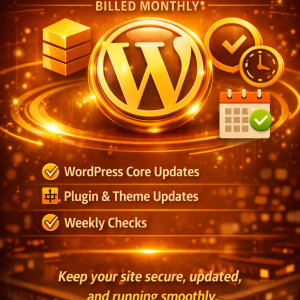
WordPress Care Essentials is a website maintenance package designed to simplify the upkeep of your site. It includes the core components you rely on most:
- WordPress core updates: Keep your foundation secure and current, minimizing exposure to known vulnerabilities and compatibility issues.
- Plugin & theme updates: Maintain compatibility and access to the latest features, while reducing the risk of conflicts.
- Weekly checks: A disciplined routine to monitor security, performance, and integrity, so you can catch problems early and stay confident in your site’s health.
If you’re managing a site for clients, a team, or your own business, a structured maintenance package like WordPress Care Essentials helps you stay on top of updates and checks without getting overwhelmed.
How to implement a solid update strategy for your site
A well-planned strategy reduces friction and protects your site. Here are practical steps you can start using today:
- Establish a policy: Decide how you’ll handle core, plugin, and theme updates, including automatic updates for minor core releases and automatic backups before updates.
- Build a staging environment: If your hosting supports it, use a staging site to test updates before applying them to production.
- Create reliable backups: Use a reputable backup plugin or hosting feature that creates backups you can restore quickly.
- Schedule updates: Put updates on a calendar during low-traffic hours. Major updates may require more time and testing.
- Monitor after updates: Track performance, error logs, and user reports after updates. If something goes wrong, rollback quickly.
- Document your process: Keep a simple playbook with steps, contacts (if you work with others), and any known issues.
This approach helps you stay in control, even when you manage multiple sites or complex configurations.
Common myths and truths about WordPress updates
- Myth: Updates always break sites. Truth: While conflicts can occur, testing in staging and following a plan reduces risk dramatically.
- Myth: Automatic updates are always safe. Truth: Automatic updates work best for minor core releases; major upgrades often benefit from testing first.
- Myth: Plugins and themes are always compatible with the latest core. Truth: Compatibility varies; some extensions require updates or replacements when major core changes happen.
- Myth: Security is someone else’s problem. Truth: You’re responsible for your site’s security, and timely updates are a critical part of it.
Understanding these realities helps you make smarter decisions and avoid overreacting to every update notice.
Real-world scenarios: applying these principles in practice
-
Scenario A: Small business site with a single shop plugin You run a small business site with a storefront plugin and a few custom forms. You prioritize timely core updates and test plugin updates in staging. You schedule updates during a quiet evening and verify checkout works as expected. If the store slows down after an update, you roll back to a recent backup and investigate the plugin version compatibility.
-
Scenario B: News blog with high traffic A fast-paced content site needs security patches quickly but still wants to avoid downtime during publishing spikes. You enable automatic minor core updates and have a weekly testing routine on staging that includes performance checks and caching configurations. You monitor real-time uptime and load times to ensure updates don’t degrade the user experience.
-
Scenario C: E-commerce site with multiple integrations This site has payment gateways, CRM integrations, and third-party shipping apps. You test all critical integrations in staging after any update, paying close attention to checkout flows and API connectivity. You maintain a robust backup strategy and a rollback plan to restore a stable state if an issue occurs.
Tools and resources to support updates and checks
- WordPress official release notes: Read about what’s changing and why it matters for your site.
- Backup plugins and hosting backups: Ensure you have reliable, tested restore points.
- Security plugins and services: Use scanning and hardening features to reduce risk between updates.
- Staging environments: A safe space to test updates before pushing them live.
- Uptime and performance monitoring tools: Keep an eye on key metrics after updates.
- Developer documentation and support forums: When you run into issues, these resources can help you diagnose problems faster.
A suggested operating model for ongoing maintenance
You can adopt a practical operating model that many site owners find manageable. It blends updates with weekly checks and a clear escalation path when issues arise:
- Update cycle: Separate the core update process from plugin and theme updates. Prioritize critical security patches for faster application.
- Testing cycle: Use staging for major updates. For minor updates, rely on quick checks if you don’t have staging.
- Verification cycle: After updates, verify key flows such as forms, login, purchases, and user interactions.
- Recovery cycle: Have a rollback plan and tested backups ready in case you need to revert.
- Documentation cycle: Maintain a simple log of updates, test results, and any issues and how you resolved them.
With this model, you create a reliable rhythm that supports a growing site and team.
The role of a maintenance package in daily operations
A maintenance package like WordPress Care Essentials can be a significant easing agent in your daily operations. When you understand the scope, you can delegate tasks, track progress, and communicate clearly with stakeholders. You benefit from:
- Predictable costs and wearables: You know what you’re paying and what you’re getting.
- Reduced risk: Regular updates and weekly checks reduce the chance of a crisis.
- Time savings: You don’t have to manage every detail yourself; you can rely on a structured program.
- Peace of mind: You know your site is being actively monitored and maintained.
If you’re balancing content creation, customer support, and site management, a maintenance package helps you focus on growth while still protecting the technical foundation.
A practical summary: why you should care about core updates and weekly checks
- You can protect your site from security vulnerabilities and malware infections.
- You can maintain compatibility with PHP versions, browsers, and modern hosting environments.
- You can reduce the risk of downtime and broken functionality after updates.
- You can stay ahead of performance regressions and ensure a smooth user experience.
- You can create a repeatable, auditable process for updates and checks that scales with your site.
Final takeaway
Your WordPress site deserves a thoughtful refresh plan, not a blind update cycle. By understanding core updates, the role of plugin and theme updates, and the value of weekly checks, you can keep your site secure, fast, and reliable. A structured maintenance routine—supported by a clear plan and, if helpful, a service like WordPress Care Essentials—lets you focus on what you do best: delivering value to your audience.
If you’re ready to take the next step, consider establishing a regular update schedule, setting up a staging environment, and committing to a weekly checks routine. You’ll reduce risk, improve performance, and give your visitors a consistently solid experience. Your site will feel more trustworthy, and you’ll have greater confidence in the long-term health of your online presence.








0 Comments