


Do you know what happens when you skip WordPress maintenance?
WordPress Maintenance Essentials: Keep Your Site Secure, Updated, And Smooth
You want your site to be reliable, fast, and safe for every visitor. The reality is that WordPress, like any digital system, requires regular care. When you commit to a maintenance routine, you protect your content, your users, and your brand. This article guides you through the essentials of WordPress maintenance, explains why updates matter, and shows how weekly checks keep your site running smoothly. You’ll also learn how a focused maintenance package—WordPress Care Essentials—could fit into your workflow, so you can keep your site secure, updated, and performing at its best.

Why maintenance matters
Maintenance isn’t just a quarterly or yearly chore. It’s a continuous practice that directly affects security, stability, and performance. Each element of your WordPress site—core software, plugins, themes, and content—depends on regular attention to stay compatible with evolving technologies and security standards. Without a disciplined maintenance approach, you risk vulnerabilities, incompatibilities, slower performance, and even downtime that disrupts your visitors’ experience and undermines your credibility.
Think of maintenance as a shield and a performance booster rolled into one. When you apply updates promptly, you close security gaps that attackers could exploit. When you review plugins and themes for compatibility, you prevent conflicts that can break pages or features you rely on. When you monitor performance and uptime, you learn how changes affect your site and you react quickly to anomalies. In short, maintenance helps you deliver a safer, faster, and more reliable experience for every user.
What is WordPress Care Essentials?
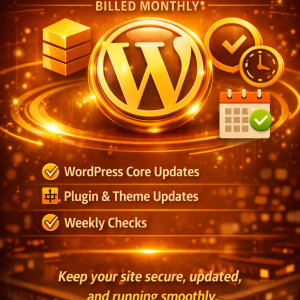
WordPress Care Essentials is a website maintenance package designed to simplify ongoing care for your site. It emphasizes three core activities that keep WordPress healthy and predictable:
- WordPress core updates: Regular updates to the WordPress core ensure you have the latest security patches, performance improvements, and new features that are compatible with modern web standards.
- Plugin & theme updates: Plugins and themes extend functionality, but they can also introduce risk if not kept current. Timely updates reduce security exposure and maintain compatibility with the core.
- Weekly checks: A structured weekly review covers backups, updates verification, security monitoring, uptime and performance checks, and any necessary remediation steps.
This package helps you maintain a consistent, predictable maintenance rhythm without taking you away from your primary responsibilities. It’s designed to minimize surprises and maximize uptime, so you can focus on delivering great content and services to your audience.
How updates protect your site
Updating WordPress and its components isn’t cosmetic work; it’s a foundational security and stability practice. Here’s what updates do for you and why they matter:
- Security hardening: Core updates include fixes for newly discovered vulnerabilities. Applying these patches promptly reduces your risk exposure and helps prevent breaches.
- Compatibility alignment: The ecosystem around WordPress evolves quickly. The core, themes, and plugins must stay in sync to prevent collisions that could cause errors or broken pages.
- Performance improvements: Updates often include optimizations to speed, resource use, and caching behavior. Faster pages enhance user experience and search engine ranking.
- Feature access: Updates can unlock better admin tools, improved editors, and enhanced accessibility. Staying current means you’re not missing important capabilities that could help your workflows and user experience.
- Stability and bug fixes: Patches address known issues that could affect functionality, such as broken forms, broken links, or faulty widgets. Regular updates keep your site predictable.
- Compliance and standards: Updates can bring you in line with evolving accessibility and privacy standards, helping you meet legal and best-practice requirements.
To illustrate the value, consider this comparison table that summarizes the potential outcomes of timely updates versus delayed updates.
| Outcome | Timely updates | Delayed updates |
|---|---|---|
| Security posture | Stronger; fewer known flaws | Higher exposure to exploits |
| Compatibility risk | Lower; tested with current core | Higher; risk of plugin/theme conflicts |
| Performance | Often improved or stabilized | May degrade as dependencies diverge |
| Downtime risk | Minimal; issues caught early | Higher; unpatched vulnerabilities can cause outages |
| Feature access | Immediate access to improvements | Delayed access to enhancements and fixes |
As you can see, the benefits of keeping updates current extend beyond security. You gain a smoother admin experience, fewer surprises on live pages, and a better foundation for future growth. This is where a structured weekly maintenance routine becomes essential.
The importance of weekly checks
A weekly checks routine is the heartbeat of ongoing WordPress health. It isn’t just about installing updates; it’s about verifying that your site continues to perform as intended after changes, catching issues before they affect visitors, and documenting what you did so you can learn and improve over time.
Key reasons for weekly checks include:
- Early detection of conflicts: After updates, new incompatibilities can surface in unexpected places. A quick check helps you spot broken forms, layout issues, or broken widgets before users encounter them.
- Reliable backups: Weekly checks ensure your backup process is working correctly, recent backups exist, and you can restore quickly if something goes wrong.
- Performance and speed monitoring: Subtle delays can creep in after updates or content changes. Regular checks help you identify and fix bottlenecks.
- Security assurance: Routine scans and review of security alerts help you stay ahead of new threats and adjust defenses as needed.
- Audit trail: A documented record of changes, tests, and fixes builds your institutional knowledge and supports accountability.
In short, weekly checks give you confidence. You’ll know your site is not just technically up-to-date but also resilient and ready to handle traffic, even as circumstances change.
Core components you maintain
A well-rounded maintenance routine covers several fundamental areas. Below, you’ll find a structured breakdown of each component, why it matters, and how to approach it.
WordPress core updates
Your WordPress core is the engine that runs your site. Keeping it updated ensures you have the latest security patches, performance improvements, and compatibility with current web technologies.
- Why it matters: The core team patches vulnerabilities, improves efficiency, and introduces modern coding standards. Delays can leave a door open for attackers or cause compatibility issues with newer plugins.
- How to manage it: Enable automatic minor updates if feasible, but plan manual reviews for major updates. Test updates on a staging environment when possible, then deploy to production after confirming compatibility.
Plugin updates
Plugins extend functionality but can be a source of risk if neglected. Each plugin has its own release cycle, and conflicts can emerge between plugins, the core, and the theme.
- Why it matters: Incompatible or outdated plugins can cause site errors, security flaws, or performance regressions.
- How to manage it: Track active plugins, review changelogs, and test updates in a safe environment. Remove or replace plugins that are abandoned or not maintained.
Theme updates
Themes shape appearance and sometimes behavior. An outdated theme can become a weak link in your site’s security and performance.
- Why it matters: Themes may include custom code, templates, and scripts that interact with plugins and the core. Updates can fix bugs and improve accessibility.
- How to manage it: Keep the active theme updated, and monitor child themes for compatibility. If a theme is not well supported, consider alternatives with better ongoing development.
Backups and restore points
Backups are your safety net. They let you recover quickly if something goes wrong with updates, a security incident, or accidental data loss.
- Why it matters: A reliable backup strategy minimizes downtime and data loss. Restores are often the fastest way to recover from a major issue.
- How to manage it: Schedule automatic backups (daily or weekly, depending on activity), verify integrity, and test restoration drills periodically.
Security monitoring
Ongoing security monitoring helps you detect and respond to threats in real time. It’s not enough to patch; you must also observe how your site behaves.
- Why it matters: Early threat detection reduces the potential damage and containment time.
- How to manage it: Use a layered security approach (firewall, malware scanning, login protection). Review security alerts weekly and adjust rules as needed.
Performance optimization
Performance isn’t only about speed; it’s about reliability and user experience. A fast site earns trust and supports conversions and engagement.
- Why it matters: Users abandon slow sites, search engines reward fast experiences, and resource efficiency saves hosting costs.
- How to manage it: Monitor page load times, caching behavior, image optimization, and database performance. Apply sensible optimizations and re-test after changes.
SEO health
Technical SEO health ensures search engines can discover and index your content effectively.
- Why it matters: Poor technical SEO can hide your pages from rankings or cause indexing problems, reducing organic traffic.
- How to manage it: Check for broken links, structured data validity, sitemap accuracy, and crawl errors after updates.
Accessibility and compliance
Ensuring accessibility and compliance improves usability for all visitors and supports legal and ethical standards.
- Why it matters: Accessible sites expand audience reach, reduce potential legal risk, and improve overall user experience.
- How to manage it: Validate color contrast, keyboard navigation, ARIA roles, and content semantics regularly. Update accordingly.
Content integrity checks
Maintenance isn’t only technical; it includes ensuring your content remains accurate and intact.
- Why it matters: Outdated information, broken media embeds, or corrupted content can undermine trust and user experience.
- How to manage it: Periodically review key pages, check media assets, and ensure internal links remain valid.
Uptime monitoring
Understanding when your site is down lets you respond quickly and minimize impact.
- Why it matters: Even brief outages can affect traffic, conversions, and brand perception.
- How to manage it: Use uptime monitoring tools that alert you immediately when downtime is detected. Investigate and remedy promptly.
A practical weekly maintenance checklist
To keep you on track, here is a practical weekly checklist you can adapt. The goal is to build a predictable routine that you can follow consistently. The table below outlines tasks, their purpose, suggested tools, and rough time estimates.
| Task | Purpose | Tools/Notes | Time Estimate |
|---|---|---|---|
| Review core updates | Ensure core is current; assess impact | WordPress admin, staging environment | 20-30 minutes |
| Update plugins and themes | Patch security gaps; ensure compatibility | Admin dashboard, changelogs | 20-40 minutes (depends on number of items) |
| Verify backups | Confirm last backup integrity and restore ability | Backup plugin, hosting panel | 10-20 minutes |
| Run security scan | Detect malware or suspicious activity | Security plugin, hosting security tools | 15-25 minutes |
| Check uptime | Confirm site is reachable and performance stable | Uptime monitoring service | 5-10 minutes |
| Test critical pages | Confirm forms, checkout, and key interactions work | Live site, staging if needed | 20-30 minutes |
| Performance checks | Gauge load times; identify bottlenecks | Page speed tools, caching stats | 15-25 minutes |
| Content integrity review | Verify accuracy of key content and links | Content pages, internal links checker | 15-25 minutes |
| Accessibility quick check | Ensure accessibility basics are intact | Accessibility audit tools | 10-15 minutes |
| Documentation update | Record changes for future reference | Internal notes, changelog | 5-10 minutes |
| Issue remediation plan | Prioritize fixes and assign ownership | Task manager, notes | 10-15 minutes |
This weekly rhythm helps you catch issues early, keep your site coherent after updates, and demonstrate a disciplined approach to site governance. If you prefer, you can divide these tasks across two shorter sessions rather than doing everything in one long session. The key is consistency and timely action.
How to implement this in your workflow
Turning maintenance into a reliable habit requires a simple, repeatable workflow. Here are practical steps you can adopt to embed WordPress maintenance into your routine without overwhelming your schedule.
- Establish a dedicated maintenance window: Pick a regular time each week when you review updates, run checks, and document changes. Treat this as a recurring appointment for your site’s health.
- Use staging for updates: Before applying updates to production, test them on a staging site. This lets you verify compatibility and prevent surprises on your live site.
- Automate where sensible: Automate routine tasks like backups and minor core updates if your environment supports it. Automation reduces manual workload while preserving a safety net.
- Keep a single source of truth: Maintain a log or changelog that captures what you updated, what you tested, and what you verified. This documentation is valuable for audits, troubleshooting, and accountability.
- Integrate tools you already use: If you rely on a hosting dashboard, a maintenance plugin, or a project management tool, integrate these into your weekly process so tasks flow smoothly.
- Build a safe rollback plan: For every significant update, have a rollback plan. Know how to revert to a known-good state if something doesn’t work after updates.
- Monitor and learn: Use performance and security data to inform your future maintenance approach. If you notice recurring issues after a specific type of update, adjust your process accordingly.
If you’re considering a more formal approach, you can outline a weekly workflow that includes an initial health check, a staged update pass, a verification pass, a backup test, a performance check, and a final sign-off. The exact steps can be tailored to your site’s complexity and your hosting environment, but the principle remains the same: a predictable, repeatable routine that you can trust.
Common obstacles and how to avoid them
Even with a solid plan, you may encounter hurdles. Here are common challenges and practical ways to address them:
- Update conflicts with themes or plugins: Some updates may create CSS or JavaScript conflicts. Avoid breaking changes by testing in staging and rolling back if needed, and report issues to plugin/theme authors if they persist.
- Backups that fail or don’t restore: Regularly verify backups by performing a test restore on staging and ensuring file integrity. If backups fail, switch to a reliable backup strategy and investigate root causes.
- Performance regressions after updates: If load times worsen after updates, analyze caching, database queries, and asset sizes. Reconfigure caching rules, optimize images, and consider lazy loading to improve performance.
- Security scans generating false positives: Fine-tune sensitivity and review results critically. Verify each alert and confirm whether it’s legitimate before taking action.
- Stakeholder resistance to changes: Communicate the value of maintenance in terms of protection, reliability, and return on investment. Involve stakeholders with clear reporting and measurable outcomes.
The value proposition of WordPress Care Essentials
You may be weighing the benefits of adopting a maintenance package versus managing everything on your own. Consider these key advantages of WordPress Care Essentials:
- Predictable maintenance cadence: A clear weekly routine reduces anxiety and helps you plan ahead.
- Reduced risk exposure: Regular core, plugin, and theme updates close security gaps and prevent conflicts.
- Time savings: Outsourcing or outsourcing-partnered maintenance frees your time to focus on content, marketing, or product development.
- Improved site reliability: Weekly checks catch issues before they impact visitors, reducing downtime and support requests.
- Better decision support: Documentation and structured checks give you data to guide future upgrades and optimizations.
With these benefits, your site becomes more resilient and easier to manage. The peace of mind you gain from knowing you have a proven maintenance plan is valuable, both in terms of user experience and operational efficiency.
A deeper look at the maintenance experience
To help you visualize how this works in practice, here are a few scenarios that illustrate how maintenance choices impact your site’s health.
- Scenario 1: You publish a new product page during a busy week. A scheduled weekly check catches a conflict caused by a recently updated plugin, and a quick rollback to a previous state preserves the page’s integrity while you adjust the plugin version. Your users see a stable page, and you avoid a potential support ticket.
- Scenario 2: A security alert is triggered by a routine scan. You review the alert, confirm the validity, and apply the core update with a test on staging first. The site remains secure, and you’ve documented the process for future reference.
- Scenario 3: A page that relies on an external embed starts loading slowly after an update. The performance check flags it, you optimize asset loading, and you implement lazy loading or a lighter embed approach. The user experience improves without sacrificing functionality.
In each scenario, the combination of timely updates, careful testing, and thorough checks preserves your site’s reliability and your audience’s trust.
Real-world benefits you can expect
You’ll likely notice benefits across several dimensions after adopting a disciplined maintenance approach:
- Security posture becomes stronger over time as you apply patches and monitor for threats.
- Uptime improves because you detect and address issues before they cause outages.
- Page speed and resource efficiency rise, contributing to a better user experience and SEO performance.
- Admins and contributors experience fewer surprises, leading to smoother workflows and faster issue resolution.
- Your site remains accessible and compliant with evolving standards, reducing risk and expanding your reach.
These benefits compound over weeks and months. The more consistently you apply maintenance practices, the more stable your site becomes, and the easier it becomes to scale your operations.
A sample implementation plan for you
If you’re ready to implement WordPress Maintenance Essentials on your site, here’s a practical plan you can start tomorrow. Adapt the plan to your hosting environment, team size, and site complexity.
- Week 1: Set up the foundation
- Audit existing updates and backup processes.
- Establish a weekly maintenance window.
- Create a changelog and a basic test plan.
- Week 2: Implement core and backup strategies
- Enable automatic minor core updates if appropriate.
- Set up automated backups and test restores on a staging site.
- Install or configure a security monitoring tool.
- Week 3: Introduce weekly checks
- Create a standard weekly checklist (like the table above).
- Start running the checklist on a fixed day each week.
- Document outcomes and any remediation steps.
- Week 4 and beyond: Refine and scale
- Review results and adjust timing, tools, and processes as needed.
- Add staging environments for major updates.
- Expand monitoring to cover performance and accessibility more comprehensively.
As you begin this process, you’ll steadily build confidence and reduce the friction that maintenance often creates. You’ll also have clearer visibility into the health of your site, making it easier to plan for growth and expansion.
Conclusion
WordPress maintenance isn’t an optional luxury; it’s a practical necessity for any site that aims to be secure, fast, and reliable. By embracing a maintenance approach that emphasizes core updates, plugin and theme updates, and disciplined weekly checks, you protect your content, your visitors, and your brand. The WordPress Care Essentials package embodies this approach, focusing on three core activities and a structured weekly routine that keeps your site secure, updated, and smooth.
If you’re ready to implement a robust maintenance practice, start by mapping out your weekly check tasks, selecting the right tools, and establishing a clear process for testing and documenting updates. You’ll find that a little regular care goes a long way toward delivering a consistently excellent experience for every user who visits your site. Your audience, your team, and your bottom line will thank you.








0 Comments