


Have you considered what happens to your business website if you skip weekly WordPress maintenance?

Why weekly WordPress maintenance is not optional for business websites
If you rely on your website to generate leads, process sales, or serve customers, maintenance isn’t a luxury—it’s a core part of your digital strategy. You may think updates and checks are something you can postpone, but in the fast-moving world of websites, delays create risk. Security vulnerabilities, performance slowdowns, compatibility issues, and outages can cost you money, reputation, and opportunities. You deserve a site that stays reliable, fast, and secure, not one that delivers a frustrating experience or shutters after a minor problem.
Below you’ll find a thorough, practical explanation of why weekly maintenance matters, what it covers, and how you can implement an approach that aligns with your business goals. You’ll see how regular updates and proactive checks reduce risk, improve user experience, and support sustainable growth. The goal is to help you protect your investment—the hours you’ve put into building your brand, the trust you’ve earned from customers, and the revenue you depend on.
How updates keep your site secure, compatible, and fast
Updates are the first line of defense against a compromised site and a broken user experience. They aren’t optional; they’re essential. When you keep WordPress core, plugins, and themes up to date, you’re applying fixes that developers release to address known issues, security gaps, and performance improvements. Here’s what each category typically covers and why weekly attention matters.
WordPress core updates
Core updates fix vulnerabilities, improve reliability, and add new capabilities that your site can leverage. While major core updates can present compatibility challenges, they also deliver security protections and stability enhancements that are worth adopting promptly. You benefit when you stay current because:
- You reduce the window of opportunity for attackers who target known vulnerabilities.
- You gain access to performance optimizations that can improve page load times and responsiveness.
- You ensure compatibility with current PHP versions, server software, and modern development practices.
A weekly check provides a steady rhythm for testing and applying core updates, so you’re not surprised by a critical failure after a random update window. You’ll be able to validate that your most-used features still work and that your site remains accessible to visitors and search engines.
Plugin and theme updates
Plugins and themes extend your site’s functionality and appearance, but they also introduce risk when updated haphazardly. Each update can alter how a feature behaves, interact with other plugins, or consume resources. By reviewing updates weekly and testing in a staging environment when possible, you reduce these risks:
- You catch incompatibilities before they affect live users.
- You preserve critical functionalities (forms, payments, memberships, search, caching, SEO tools).
- You maintain security by applying patches that address known flaws.
Weekly updates let you plan a controlled rollout, especially for essential plugins like e-commerce, security, caching, and backups. You can track changes, test important workflows, and communicate any necessary adjustments to your team or vendors.
Why compatibility matters
A misalignment between core, plugins, and themes is a primary cause of outages and broken features. WordPress is modular by design, and each component depends on the others to function correctly. When you neglect updates, you increase the odds of a conflict that can crash your site, disrupt checkout, or disable critical widgets. Regular maintenance helps you spot these conflicts early, document changes, and implement fixes without scrambling during peak business periods.
Performance implications
Updates aren’t just about security; they can impact performance as well. Newer code paths may improve caching efficiency, database queries, and asset loading. Conversely, an update can temporarily degrade performance if it introduces heavier scripts or conflicts with caching configurations. Your weekly routine can balance these effects by:
- Running automated performance checks after updates.
- Verifying that caching and CDN settings remain effective.
- Clearing and rebuilding optimization caches to reflect the latest code.
With a disciplined weekly cadence, you’ll keep your site not only secure but also fast, which matters for user satisfaction and search engine visibility.
The value of weekly checks: uptime, health, and trust
Weekly checks go beyond applying updates. They’re about ensuring your site remains healthy, accessible, and aligned with your business goals. Regular checks catch issues before they impact visitors, help you meet service level expectations, and preserve your brand’s credibility. Here’s what a robust weekly check entails and why each piece matters.
Uptime and accessibility verification
Even brief downtime can have outsized effects on conversions, support inquiries, and trust. A weekly check cycle can include automated uptime monitoring and manual verification of critical pages. You’ll know quickly if your site goes offline, a page becomes unreachable, or a form fails to submit. Early detection gives you a chance to respond before customers notice.
Backups and restoration readiness
Backups are your safety net. A weekly maintenance routine should ensure that:
- Backups run successfully and are stored securely (off-site or in a reliable cloud storage).
- Restore procedures are tested so you can recover quickly from data loss or corruption.
- Verification steps confirm the integrity of backup files, enabling a fast roll-back if something breaks during an update.
Backups aren’t a “maybe”—they’re mandatory for a business website. Treat them as part of your weekly operational health.
Malware scanning and security checks
Weekly security checks help catch malware, suspicious changes, or unauthorized access. You’ll look for indicators like unfamiliar user accounts, modified core files, hidden code, or unexpected redirects. Regular scans reduce the time an attacker can dwell on your site and limit the damage if a breach occurs. Early containment protects your customers and your reputation.
Broken links, form failures, and user experience issues
Over time, content updates, migrations, or plugin changes can create broken links, 404 errors, or form submission issues. A weekly sweep helps you maintain a smooth user journey from landing page to checkout or contact form completion. You’ll catch issues that impact dwell time, engagement, and conversions.
SEO health and indexing status
Search visibility is sensitive to performance, security, and crawlability. Weekly checks let you verify that your sitemaps are up to date, robots.txt isn’t blocking essential assets, and no crawl errors are harming indexing. You’ll also confirm that important pages load quickly and render correctly on mobile devices, supporting your ongoing SEO efforts.
Compliance and accessibility considerations
Depending on your industry, you may need to meet regulatory requirements and accessibility standards. Weekly maintenance gives you a rhythm to review compliance-related updates, accessibility improvements, and privacy settings. You’ll reduce risk of fines, improve user experience for all visitors, and demonstrate responsibility to customers and partners.
What weekly maintenance typically includes
To turn these intentions into action, you’ll implement a structured maintenance package. A well-defined weekly maintenance program covers several core activities. Here’s a practical overview, reflecting what WordPress Care Essentials offers and how it can be extended for your business needs.
Core components of a weekly maintenance plan
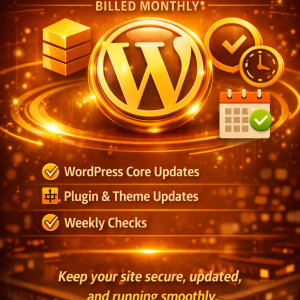
- WordPress core updates: Regularly applied to keep security and stability current.
- Plugin updates: Ensuring third-party functionality remains secure and compatible.
- Theme updates: Maintaining the visual and functional integrity of your site.
- Weekly checks: Uptime verification, backups, malware scans, performance tests, and link/form validation.
- Security improvements: Implementing patches, hardening steps, and vulnerability reviews.
- Performance optimization: Database cleanup, cache tuning, and asset optimization where appropriate.
- Content and media checks: Ensuring media files load correctly and pages render as intended.
- Staging and testing: Verifications in a controlled environment before applying changes to production when feasible.
- Reporting: Clear, actionable summaries that keep you informed about what was updated, what tests passed, and what needs attention.
A practical weekly workflow
To help you visualize how a weekly cycle could run, consider this streamlined routine:
- Day 1: Review notifications and update readiness
- Check for available WordPress core, plugin, and theme updates.
- Verify compatibility notes and deprecation warnings.
- Prepare a plan for applying updates with a rollback strategy.
- Day 2: Implement updates in a staging environment
- Apply core updates first, then plugins and themes.
- Run automated tests and perform manual checks on critical workflows (forms, checkout, login).
- Day 3: Run health checks and security scans
- Check site health dashboard, error logs, and security alerts.
- Perform malware scan and review new user accounts or permission changes.
- Day 4: Backup verification and data integrity
- Create a fresh backup set and attempt a test restore in staging.
- Validate backup integrity and storage access.
- Day 5: Performance and usability checks
- Run speed tests, mobile responsiveness tests, and caching validation.
- Check analytics for anomalies that may indicate issues.
- Day 6: Content and accessibility review
- Inspect key pages for broken links, media loading issues, and alt-text accuracy.
- Ensure accessibility considerations remain satisfied.
- Day 7: Summary and communication
- Produce a concise report for you detailing updates, tests, and any recommended adjustments.
- Schedule any follow-up tasks or deeper investigations if needed.
A table can help you see this at a glance.
| Day | Activity | Why it matters |
|---|---|---|
| Day 1 | Review updates and plan | Prevents surprise breaks, prepares rollback |
| Day 2 | Apply updates in staging | Test compatibility before live disruption |
| Day 3 | Health checks and security | Detects issues early, mitigates risk |
| Day 4 | Backups and restore tests | Ensures recovery capability |
| Day 5 | Performance checks | Maintains fast user experience |
| Day 6 | Content and accessibility | Preserves usability and compliance |
| Day 7 | Report and planning | Keeps you informed and aligned with goals |
What you should test after updates
After applying updates, you’ll want to validate several critical areas to ensure the site still behaves as expected. This is not about chasing perfection; it’s about confirming essential workflows and user-facing features.
- Checkout flows and payment gateways (if you run e-commerce)
- Contact forms, newsletter signups, and lead capture forms
- User login, profile editing, and account management
- Search, navigation menus, and internal linking
- Image and video loading, lazy loading behavior, and media galleries
- Dynamic elements such as sliders, accordions, or modal dialogs
- Custom integrations with CRM, marketing platforms, or analytics tools
- Admin panel access for content editors and site managers
If any of these show issues, you’ve identified a risk that could translate into lost revenue or reduced trust. Your weekly maintenance should include a plan to address them promptly.
Why weekly checks are essential for uptime and reliability
It’s tempting to assume that a well-built site will run smoothly without regular checks. The reality is more nuanced. Even a robust WordPress setup can drift out of spec due to minor changes, external dependencies, or server environment updates. Weekly checks help you maintain a stable baseline while you scale, adapt to new business needs, and prepare for seasonal demands.
Reliability reduces revenue risk
Customers expect your site to be available, fast, and accurate. When a website experiences downtime or errors during peak hours, you may lose sales, erode trust, or trigger support overhead. A weekly maintenance regime reduces those moments of vulnerability by catching issues before they become visible to your audience.
Consistency supports brand perception
Your visitors form impressions not only from your content but from how smoothly your site operates. Regular health checks reinforce a perception of professionalism and reliability. Even small details—properly functioning contact forms, fast load times, and clear error messaging—contribute to your brand’s credibility.
Data integrity and trust
Backups and data integrity checks are about more than avoiding data loss. They’re about preserving customer records, order histories, and any user-generated content. If you ever need to restore a backup, your confidence in the result comes from the weekly discipline you maintained in the weeks prior.
Security resilience
Weekly security checks act as a shield, making you less attractive to attackers. The more you delay or defer, the more you invite opportunities for exploitation. Regular monitoring discourages attackers and reduces the blast radius if a breach occurs.
Why weekly maintenance pays off: real-world benefits
You can expect several tangible benefits from a consistent weekly maintenance approach. While every site is different, the core advantages are reliable performance, predictable costs, and stronger protection against disruption.
- Reduced emergency maintenance: Proactive updates and checks mean fewer last-minute firefighting sessions.
- Better user experience: Faster load times and fewer broken elements translate into higher engagement and conversions.
- Improved search visibility: SEO health remains strong when page speed, security, and indexability stay in good shape.
- Extended site life: A well-maintained site ages gracefully with fewer major migrations or complete rebuilds.
- Clear accountability: Regular reporting keeps stakeholders informed and aligned with business objectives.
If you measure the return on maintenance, you’ll likely find that the cost of weekly care is small compared to the potential losses from downtime, security incidents, or performance degradation.
How to structure weekly WordPress maintenance for your business
You have options for implementing weekly maintenance, ranging from self-managed routines to specialized service packages like WordPress Care Essentials. The right approach depends on your team, internal capabilities, risk tolerance, and budget. Here are practical pathways you can consider.
Self-managed routine with a checklist
If you have internal capacity, you can adopt a formal weekly checklist with defined responsibilities, standard operating procedures, and agreed-upon success criteria. You’ll benefit from full control, direct accountability, and the ability to tailor the routine to your exact business needs. The key to success is consistency, documentation, and a clear rollback plan for updates.
Partnered maintenance service
For many businesses, partnering with a maintenance service provides scale, expertise, and a documented workflow. A service like WordPress Care Essentials typically offers:
- Regular WordPress core updates
- Plugin and theme updates
- Weekly checks covering backups, security, performance, and site health
- Proactive monitoring and rapid remediation when issues arise
- Clear reporting and ongoing optimization recommendations
This approach reduces internal workload, leverages specialized knowledge, and helps you stay current with best practices without becoming an expert in every update.
Hybrid model
Some organizations blend DIY and external support. You might handle routine content updates and minor tweaks while outsourcing core maintenance, security monitoring, and backups. The hybrid model gives you control where it matters most while ensuring critical domains stay protected and up to date.
Tools, processes, and best practices to maximize weekly maintenance
To make weekly maintenance effective, you’ll want to use reliable tools and a disciplined process. The goal is to create a repeatable, auditable rhythm that you can rely on over time.
Use a staging environment for updates
Testing updates in a staging environment before applying them to production is a best practice, especially for business sites. A staging environment lets you:
- Verify plugin and theme compatibility without risking live traffic
- Run representative user flows to catch regressions
- Prepare rollback steps if something goes wrong
If you don’t have a staging environment, at minimum schedule updates during a low-traffic window and have a rapid rollback plan ready.
Automate where practical
Automation can reduce manual effort and increase reliability. Consider:
- Automated backups with periodic restoration tests
- Automated uptime monitoring and alerting
- Versioned change logs and release notes for updates
- Scheduled performance tests after each major update
Automation does not replace human judgment. You still need to review update notes, test critical flows, and verify that changes align with your business requirements.
Document and communicate
Documentation is your safety net. Keep records of:
- Updates applied and by whom
- Test results and any issues observed
- Backups created and restoration verification
- System or plugin deprecations and recommended alternatives
Communicate outcomes to relevant stakeholders so they understand what changed, why it happened, and what to watch for going forward.
Security hygiene as an ongoing discipline
Beyond weekly scans, you should think about ongoing hardening and security hygiene:
- Use strong, unique credentials and role-based access controls
- Enforce two-factor authentication where possible
- Disable unnecessary services and limit login attempts
- Keep server software and PHP versions current, aligned with WordPress requirements
- Review user activity logs for unusual patterns
Security is not a one-and-done activity; it’s a steady practice embedded in your weekly cycle.
Addressing common concerns and objections
You may have concerns about weekly maintenance, especially if you’re balancing budgets, time, and competing priorities. Here are common objections and practical responses to help you decide.
-
Objection: “Updates always break something.” Response: The risk is minimized when you test in a staging environment, use a rollback plan, and review compatibility notes. Regular testing is the antidote to unexpected breakages.
-
Objection: “We don’t have time for weekly checks.” Response: A focused, documented weekly routine saves time by preventing urgent fixes later. Consider bundling this work as a scheduled, non-negotiable activity, just like other critical operations.
-
Objection: “Updates are expensive.” Response: The cost of updates is a small investment relative to the potential losses from downtime, data loss, or security incidents. Think of maintenance as protection against predictable, avoidable risks.
-
Objection: “We can do this in-house later.” Response: Delaying maintenance increases risk. A defined weekly approach, even if you start small, builds muscle over time and reduces the likelihood of major crises.
-
Objection: “We don’t need weekly checks for a simple site.” Response: Even small sites have dependencies, users, and data flows. Regular checks ensure performance, security, and reliability as your business evolves.
Case examples: how weekly maintenance changes outcomes
To illustrate the impact, consider two hypothetical but realistic scenarios.
Scenario A: A small e-commerce site with inconsistent maintenance
- The site runs WordPress with a handful of essential plugins for payments, shipping, and reviews.
- Updates are applied irregularly, if at all.
- A major plugin update introduces a compatibility issue with the theme, causing checkout failures during a busy weekend.
- The business experiences lost revenue, increased customer service inquiries, and a hit to search rankings due to downtime and friction.
What changes with a weekly maintenance plan?
- Core and plugin updates are tested in staging, and a rollback plan is ready.
- A weekly backup is verified, allowing a quick restore if any issue occurs.
- The checkout flow is tested after updates, reducing the risk of disruption.
- The business preserves revenue, trust, and search performance.
Scenario B: A mid-sized site with a defined weekly routine
- Updates are scheduled and tested in staging each week.
- Backups are validated and ready for quick recovery.
- Security scans catch a minor anomaly early, and investigators isolate it before it expands.
- Performance remains consistently strong, with page speeds meeting expectations during peak periods.
What you gain in this approach is not just risk reduction; it’s predictability. You know your site will behave consistently, enabling better planning for campaigns, launches, and content updates.
The return on investment of weekly WordPress maintenance
You might wonder how to quantify the value of weekly maintenance. While exact numbers depend on your traffic, revenue model, and site complexity, the underlying logic is straightforward:
- The cost of preventive maintenance is typically a fraction of the cost of reactive repairs after a failure.
- Regular updates and checks reduce the likelihood of downtime, lost orders, and customer churn.
- A stable site supports better conversions, higher trust, and improved SEO, contributing to long-term revenue growth.
- By avoiding major outages, you also reduce the burden on your support team, freeing bandwidth for growth initiatives.
When you weigh these factors, weekly maintenance becomes a strategic investment rather than a discretionary expense. It aligns with risk management, customer experience, and growth objectives.
How to implement WordPress Care Essentials or a similar weekly program for your site
If you’re considering a formal program like WordPress Care Essentials, think about how it fits with your internal processes and goals. The core value lies in predictable maintenance, clear accountability, and a documented workflow. Here are steps to implement such a program effectively.
- Define your objectives
- What are your top priorities: uptime, security, speed, or SEO performance?
- Which components are most critical for your business (e-commerce, membership, lead generation)?
- Establish a weekly maintenance schedule
- Create a fixed cadence that aligns with your team’s availability and traffic patterns.
- Include arms-length approvals for major updates if needed to maintain governance.
- Build a runbook
- Document the exact steps for core, plugin, and theme updates.
- Include rollback procedures and testing protocols.
- Outline monitoring, backup verification, and reporting steps.
- Choose your tooling
- Identify reliable backup solutions, monitoring services, and performance testing tools.
- If using a service like WordPress Care Essentials, ensure SLAs, reporting formats, and escalation paths meet your needs.
- Measure and optimize
- Track key metrics such as uptime, page speed, conversion rate, and support tickets.
- Use quarterly reviews to adjust the maintenance scope, update cadence, and resource allocation.
Common pitfalls and how to avoid them
Even with the best intentions, maintenance programs can stumble. Here are frequent missteps and practical ways to prevent them.
- Overloading with too many updates at once
- Solution: Stagger updates, test in staging, and schedule downtime or maintenance notices if needed.
- Skipping backups
- Solution: Automate backups and include an automated restoration test in the weekly routine.
- Inadequate testing
- Solution: Implement a minimal viable set of tests for critical workflows and expand as you gain confidence.
- Poor communication
- Solution: Centralize reporting in a single dashboard or weekly email that highlights what changed and what to watch.
- Failing to adapt
- Solution: Review the maintenance plan quarterly to reflect changes in plugins, themes, or business goals.
A sustainable approach to maintenance for your business
You’re not just maintaining software; you’re maintaining an asset that drives revenue, customer trust, and brand integrity. A sustainable approach means balancing risk, effort, and impact. It’s about creating a routine you can uphold over the long term, with the flexibility to adapt to growth, new features, or changing customer expectations.
- Start with a baseline weekly program that covers updates, backups, security, and health checks.
- Evolve the program by integrating performance testing, accessibility reviews, and content audits as your site and team mature.
- Scale responsibly by bringing in additional resources or services as needed, rather than letting the routine degrade.
Final thoughts: your site, your system, your success
Weekly WordPress maintenance is not a luxury; it’s an essential system that protects your investment and supports your business outcomes. When you embrace regular updates and proactive checks, you’re reducing risk, preserving trust, and enabling growth. You’re also creating a reliable foundation for launches, campaigns, and ongoing customer engagement.
If you’re ready to take the next step, consider a structured maintenance plan that includes core updates, plugin and theme updates, and weekly checks. Whether you manage it in-house or partner with a service like WordPress Care Essentials, the outcome is the same: a site that stays secure, fast, and dependable, so you can focus on delivering value to your customers.
Remember, your website is more than a digital storefront—it’s a live system that your business depends on daily. Treat maintenance as an integral part of your operations, not a background task. With a thoughtful weekly cadence, you’ll protect your revenue, support customer success, and maintain competitive momentum in a crowded online landscape.
Additional considerations and closing notes
- Your maintenance strategy should be aligned with your business calendar. Plan heavier updates or feature launches during known low-traffic periods when possible, and communicate any expected downtime to your audience.
- If you operate in regulated industries, factor in compliance checks and data protection requirements into your weekly routine.
- Consider documenting incident post-mortems when issues arise. A short, structured reflection helps you prevent recurrence and continually improve your process.
- Regularly review third-party dependencies. Plugins and services can be discontinued or sold, and you want to ensure your site isn’t overly reliant on a single vendor or component.
- Invest in education for your team. A basic understanding of WordPress maintenance concepts reduces dependency on external help and enables you to make informed, timely decisions.
By committing to a disciplined weekly WordPress maintenance approach, you set your business up for stability, performance, and growth. You’ll create a resilient digital presence that serves your customers well, supports your marketing and sales efforts, and protects your brand in an ever-changing online environment.
If you’d like, I can help tailor a weekly maintenance plan that fits your specific site setup, traffic patterns, and business goals. We can map out a practical schedule, choose the right tooling, and outline a clear set of reporting metrics so you can measure the impact over time.








0 Comments