


Are you aware of the hidden costs you face when you ignore WordPress maintenance in 2026?
The Cost Of Ignoring WordPress Maintenance In 2026
WordPress powers a substantial portion of the internet, from personal blogs to enterprise e-commerce sites. Because it’s so widely used, the risk landscape is dynamic and unforgiving. If you neglect updates, weekly checks, and routine maintenance, you’re not just risking a brief outage or a plugin notice — you’re inviting a cascade of problems that can undermine performance, security, and revenue. You owe it to your visitors, your brand, and your bottom line to understand what’s at stake and what you can do to protect your site.
In this article, you’ll discover why updates matter, how weekly checks keep your site reliable, and what the real costs look like when maintenance is ignored. You’ll also learn about WordPress Care Essentials, a maintenance package designed to cover core updates, plugin and theme updates, and weekly checks, and you’ll see how consistent upkeep pays off in the long run.

Why updates are needed
Updates aren’t just about adding new features or chasing the latest design trend. They are primarily security and stability updates that keep your site resilient in a hostile online environment. When you apply WordPress core updates, you’re patching vulnerabilities that attackers commonly exploit. These patches close off paths that bad actors can use to gain access to your admin area, inject malware, or exfiltrate data.
Plugins and themes are how you extend WordPress’s functionality, and they, too, require updates. Developers release updates to fix bugs, improve performance, and address security flaws. Even if you’re not actively building new features, keeping plugins and themes current reduces the chance of incompatibilities that can break pages or disrupt user flows.
Beyond security, updates can also improve performance and compatibility. PHP, server software, and modern browsers evolve. If you stay on outdated software, you risk slower page loads, broken functionality, and a site experience that feels outdated to your visitors. A well-maintained site performs better in search results, delivers a smoother user experience, and reduces the risk of technical debt piling up over time.
You’ll also benefit from the predictability of maintenance. Rather than waiting for a crisis, you proactively manage risk. That means fewer emergency fixes, less downtime, and a more stable development environment if you use staging for testing updates before they hit production.
What happens if you ignore updates
Ignoring updates creates a ripple effect that touches several parts of your site. Here are the most common consequences you’re likely to encounter:
- Security vulnerabilities become open doors for attackers. When patches aren’t applied, weaknesses linger, and automated attacks can breach your system with little effort.
- Plugin and theme conflicts emerge. An out-of-date plugin or theme may not play nicely with the latest WordPress core or PHP versions, causing white screens, broken pages, or broken checkout flows.
- Your site becomes slower and less reliable. Updates often include performance improvements and bug fixes. Skipping them can leave you with slower page loads and erratic behavior.
- Backups may be insufficient. If you don’t keep up with updates, your backups could be out of date or incomplete, complicating restoration in an emergency.
- SEO and user experience suffer. Downtime, crashes, or broken pages derail user journeys, reduce conversions, and can hurt search rankings over time.
- Compliance and data risks rise. Depending on your data handling and regulatory environment, you may face increased exposure if security standards lapse.
If you’re managing a business site, every minute of downtime translates to lost revenue and diminished trust. Even a few minutes of unplanned downtime can ripple into cart abandonment on an e-commerce site, missed inquiries on a services site, or lost ad revenue for a content site. The longer you let issues linger, the more expensive the fix becomes.
The role of weekly checks
Weekly checks are your early warning system. They are not a one-and-done activity; they’re a disciplined routine that helps you catch problems before they escalate. The goal is to keep your site healthy, fast, and secure with minimal surprises. Here’s what a typical weekly checks routine covers:
- Verify site uptime and performance. You review basic metrics like load times, error rates, and uptime status to spot obvious degradation.
- Confirm backups are recent and restorable. You test a quick restore from a recent backup to ensure you can recover quickly if something goes wrong.
- Check for pending updates. You review WordPress core, themes, and plugins for any available updates and assess their potential impact in a staging environment.
- Scan for security issues. You run malware scans and review security alerts for your installed plugins or themes.
- Review the front-end and critical flows. You test key user journeys, such as product pages, checkout, contact forms, login, and onboarding flows, to ensure they’re functioning.
- Inspect media and assets. You look for broken images, missing fonts, or media that fails to load properly across devices.
- Audit performance and caching. You verify that caching layers are in place, that CDN configurations are correct, and that performance budgets are being met.
- Review SEO health. You check for crawl errors, sitemap integrity, and critical on-page issues flagged by search engines.
- Check for spam and security posture. You review user registrations, comments (for spam), and access controls to ensure there are no suspicious patterns.
- Plan future updates. You prepare a staged plan for applying updates, with rollback procedures and a test plan to minimize risk.
This weekly cadence helps you stay on top of changes, test before deployment, and reduce the chance of a breaking update. It also gives you confidence that your site remains secure, accessible, and performing well for your audience.
The components of WordPress Care Essentials
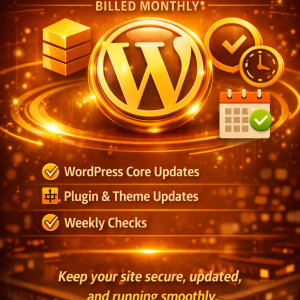
WordPress Care Essentials is a website maintenance package designed to cover the core areas that keep a site healthy and reliable. It focuses on three critical pillars that matter most to you as a site owner:
- WordPress core updates: Regular updates to the WordPress core to patch security vulnerabilities, improve performance, and maintain compatibility with newer PHP versions and server configurations.
- Plugin & theme updates: Timely updates to plugins and themes to fix bugs, address security issues, and maintain compatibility with the latest WordPress core.
- Weekly checks: A structured, proactive review that includes uptime monitoring, backup verification, security scans, performance checks, and testing of critical user journeys.
While the exact scope and price vary based on your site’s size, traffic, and complexity, this package is designed to reduce your maintenance overhead and provide peace of mind. You’ll be able to focus more on your content, products, or services while knowing your site is actively managed and monitored.
The value of this package becomes clear when you compare it to the alternative — a reactive approach that only addresses problems after they occur. With WordPress Care Essentials, you’re investing in prevention, not just remedy. Prevention reduces risk, minimizes downtime, and preserves your brand’s credibility. In the long run, that kind of reliability translates into user trust, better search performance, and steadier revenue.
Financial costs associated with neglect
To understand the true cost of ignoring WordPress maintenance, you need to consider several cost categories. These costs are not just monetary; they include time, brand impact, and risk exposure. Here’s a breakdown to help you quantify the potential impact in 2026 and beyond.
-
Security breaches and incident response: If attackers gain access to your site, you face immediate repair costs, possible data recovery expenses, and potential regulatory penalties. You may also incur costs for forensic analysis, public notices, and customer impacts. Even if you recover quickly, there can be lasting reputational effects that affect conversions.
-
Downtime and lost revenue: Time spent resolving issues translates into actual revenue loss, especially if you rely on e-commerce, lead generation, or subscription models. Even a short outage can result in abandoned carts, lost inquiries, and lower search rankings due to inconsistent user experience.
-
Data loss and recovery costs: If backups aren’t reliable or up to date, you risk losing content, order data, subscriber lists, or other critical information. Rebuilding or restoring data can be expensive and time-consuming.
-
Plugin/theme conflicts and debugging: When updates introduce incompatibilities, you may need to hire developers to diagnose issues, implement workarounds, or roll back updates. The longer the conflict persists, the higher the cost in lost productivity and user dissatisfaction.
-
SEO and traffic impact: Search engines prefer stable, fast, and secure sites. If performance or availability dips, your rankings can suffer. A slow or broken site can erode your organic traffic and slow the recovery of lost rankings.
-
Reputation and customer trust: Security incidents and prolonged downtime can erode trust in your brand. Rebuilding confidence with your audience often requires proactive communication, compensation where appropriate, and a longer-term investment in reliability.
-
Regulatory and compliance risk: Depending on your data handling practices, you may face regulatory scrutiny or penalties if a breach occurs. Even when you’re not legally required to follow a specific standard, a breach can trigger contractual consequences with partners or customers.
If you sum up these costs, neglecting maintenance quickly scales from a risk to a substantial financial burden. The good news is that a disciplined maintenance routine, like WordPress Care Essentials, helps you avoid many of these expensive outcomes. The upfront cost of maintenance is generally far smaller than the outlay you would incur chasing issues after they occur.
To give you a practical sense of the financial landscape, consider a few rough cost ranges you might encounter in 2026:
- Security and breach response: Depending on the data you handle and the severity of a breach, costs can range from a few thousand dollars for minor incidents to six or seven figures for significant breaches or regulatory penalties.
- Downtime revenue loss: For e-commerce or service-oriented sites with high traffic, even minutes of downtime can translate to hundreds or thousands of dollars in lost revenue, with larger sites seeing much higher figures.
- Developer debugging and patching: If you encounter conflicts after updates, the cost of debugging and patching can range from a few hundred to several thousand dollars, depending on the complexity and scope.
- SEO recovery and content restructuring: If you lose rankings, you may invest in SEO consultants, content audits, and technical optimizations to regain visibility, which can be in the thousands to tens of thousands of dollars.
These numbers aren’t universal, but they illustrate the scale of potential exposure. The consistent takeaway is simple: the cost of neglect is not limited to a single incident. It compounds over time as reliability, trust, and performance degrade.
Cost comparison: Maintained vs Not Maintained
| Scenario | What you get (maintenance) | Estimated annual cost range (USD) | What you risk (no maintenance) | Estimated annual risk range (USD or equivalent) |
|---|---|---|---|---|
| Maintained with WordPress Care Essentials | Core updates, plugin/theme updates, weekly checks, backups, security monitoring, performance checks | Typically a monthly fee (varies by site) — commonly in the range of $30–$200 per month depending on site size and services | You maintain security posture, reliability, and performance | Lower risk, but depends on adherence to schedule and monitoring quality; ongoing cost is preventive rather than reactive |
| Not maintained (ignoring maintenance) | None or ad-hoc fixes as issues arise | $0 upfront for maintenance, but unpredictable in reality | High risk of security breaches, downtime, and revenue loss | Potentially thousands to tens of thousands of dollars annually, plus reputational costs and long-term SEO damage |
This table isn’t a guarantee of specific outcomes, but it helps you visualize the trade-off between investing in maintenance and leaving a site to chance. In most cases, the safer financial path is to implement a structured maintenance plan that includes core updates, plugin/theme updates, and weekly checks. The cost of prevention is typically far lower than the cost of remediation.
How weekly checks prevent issues
Weekly checks are more than a routine. They’re a proactive strategy to identify and resolve problems early, when they’re cheapest to fix. Here’s how these checks protect you in practice:
- Early vulnerability detection: You detect insecure plugins, outdated software, or unusual activity before attackers exploit them.
- Backup integrity and recoverability: You ensure backups are complete and test restoration, so you can recover quickly after a failure.
- Compatibility assurance: You verify that updates do not break critical pages, payment flows, or membership access areas. If issues arise, you have a plan to address them with minimal disruption.
- Performance stability: You catch performance regressions before users notice them, allowing you to optimize caching, CDN, and server resources.
- Content and media integrity: You confirm that media assets load correctly and that pages render consistently across devices and browsers.
- Security posture review: You review firewall rules, login security, and access control configurations to maintain strong defenses.
- SEO health check: You confirm that internal linking and canonical configurations are intact, and that critical pages remain accessible to search engines.
- Risk-aware decision making: You document update plans and potential rollback steps, so you can make informed decisions without surprise consequences.
By performing these checks on a weekly cadence, you’re building a resilient site that withstands routine changes and evolving threats. You’ll likely experience fewer urgent support tickets, less downtime, and a more reliable experience for your visitors.
A closer look at WordPress core updates, plugin updates, and weekly checks
WordPress maintenance isn’t just one activity; it’s a coordinated set of tasks that keeps your site coherent and dependable. Here’s a closer look at each component and why it matters in 2026.
- WordPress core updates: Core updates fix security vulnerabilities, introduce performance improvements, and ensure compatibility with current PHP versions and server environments. They also adapt WordPress to changes in browser behavior and accessibility standards. Delaying core updates increases the risk of a vulnerability being exploited and may complicate future updates because the underlying codebase has moved on.
- Plugin and theme updates: Plugins extend functionality but are often constructed by independent developers with varying levels of maintenance discipline. Regular updates reduce the chance of security flaws and compatibility issues with the latest WordPress core. When plugins and themes fall out of date, you risk conflicts, broken features, and compromised user experiences.
- Weekly checks: The weekly checks tie everything together. They ensure that the updates you apply don’t break essential features, verify that backups exist and are restorable, and confirm that your site continues to perform well. These checks also give you visibility into the health of your site, enabling you to plan for the future with confidence.
With WordPress Care Essentials, you’re not just assigning tasks to a technician. You’re partnering with an approach designed to minimize risk, maximize uptime, and preserve your site’s value over time. The package is structured to deliver a predictable maintenance cadence, so you know when updates are done, what tests are run, and how issues are addressed.
Practical maintenance planning for 2026
In today’s environment, you should plan for ongoing maintenance rather than episodic fixes. Here’s a practical framework you can adopt, whether you manage the site yourself or you partner with a maintenance provider.
- Establish a baseline: Start with a detailed audit of your current setup. Document installed plugins and themes, critical pages, e-commerce flows, and external integrations. Create a staging environment for testing updates so you don’t risk production downtime.
- Schedule regular updates: Commit to a fixed cadence for core, plugin, and theme updates. For many sites, weekly checks plus monthly updates are a reasonable pattern, but you may need more frequent updates for high-traffic or security-sensitive sites.
- Enforce a testing protocol: Always test updates in a staging environment. Validate key user journeys, checkout, account creation, login, and content rendering. Record any issues and apply fixes before deploying to production.
- Verify backups and disaster recovery: Ensure automated backups run on a schedule that fits your traffic patterns. Validate restore procedures at least monthly, and document the recovery steps you would take in an incident.
- Monitor performance and security: Implement continuous monitoring for uptime, response times, and error rates. Run periodic security scans and review security alerts from your plugin ecosystem.
- Plan for scaling: As your site grows, your maintenance needs will change. You may need additional performance optimizations, more frequent backups, or a broader set of security controls.
A disciplined maintenance approach gives you stability and growth potential. It also makes it easier to justify the ongoing investment, since you can tie maintenance activities to measurable outcomes such as reduced downtime, faster load times, and better conversion rates.
A practical view of the WordPress Care Essentials package
WordPress Care Essentials focuses on essentials that you rely on every day. Here’s how these components translate into tangible benefits for you.
- Core updates: You stay on the latest WordPress version, reducing security risk and maintaining compatibility with modern server stacks and languages.
- Plugin and theme updates: You minimize the chance of feature breakage and incompatibilities that disrupt your user experience.
- Weekly checks: You gain a consistent, proactive health check that catches issues early, minimizes downtime, and protects your content and customer data.
While maintenance costs vary based on site size, traffic, and the complexity of your plugin ecosystem, the value you receive comes in the form of peace of mind, reliability, and a site that continues to serve your audience well. For many site owners, this is not an optional expense; it’s a critical investment in trust, performance, and business continuity.
Practical steps you can take today
If you’re ready to improve WordPress maintenance for 2026, here are practical steps you can implement right away:
- Audit your current setup: List your core, plugin, and theme inventory. Identify items that haven’t been updated in a while and assess their risk profiles.
- Create a maintenance calendar: Build a recurring schedule for updates, backups, and weekly checks. Make it a non-negotiable routine.
- Invest in a staging environment: If you don’t have one, set up a staging site to test updates before deploying to production.
- Establish backup and rollback procedures: Ensure you have reliable backups and an established rollback plan for updates that cause issues.
- Pick a maintenance partner or framework: If you prefer not to handle maintenance in-house, choose a service like WordPress Care Essentials that covers core updates, plugin and theme updates, and weekly checks.
- Monitor and improve: Use uptime and performance monitoring tools to track improvements over time. Review the data monthly and adjust your plan as needed.
Myths and common misconceptions you might encounter
- “Updates always break sites.” In reality, updates can cause issues, but with proper testing and a staged rollout, you minimize the risk. The failure rate for well-managed updates is far lower than for ad-hoc, untested updates.
- “Backups are enough.” Backups are essential, but they don’t prevent issues from occurring. Updates, security monitoring, and a proactive maintenance routine work together to prevent problems rather than simply reacting to them.
- “Maintenance is expensive.” When you weigh the cost of downtime, data loss, and revenue impact against the price of maintenance, the ongoing investment often pays for itself in shorter repair times, fewer emergencies, and improved user trust.
A final perspective on 2026 and beyond
The maintenance mindset is about resilience. Your website is a living asset that reflects your brand, your products or services, and your relationship with your audience. In 2026, the threat landscape continues to evolve, with more sophisticated attacks, supply chain risks, and the necessity for robust performance optimization. The best defense is a structured maintenance approach that combines core updates, plugin and theme updates, and weekly checks. When you implement a reliable maintenance routine, you reduce risk, improve performance, maintain user trust, and protect your revenue.
By investing in WordPress Care Essentials or a comparable maintenance framework, you’re choosing a future-proof strategy. You’re not just paying for updates; you’re paying for continuity — the continuity that lets your site endure updates, traffic fluctuations, security threats, and the changing expectations of your audience.
If you want to see how this translates into real-world results, you can start by mapping your current maintenance practices against the three pillars: core updates, plugin/theme updates, and weekly checks. You’ll likely identify gaps that are easy to fill and opportunities for more reliable performance. As you implement stable routines, you’ll notice fewer urgent issues, faster recovery when problems do arise, and a more predictable path to your site’s growth.
In summary, neglecting WordPress maintenance in 2026 isn’t a low-risk choice. It’s a high-cost bet that your site’s reliability, security, and revenue won’t be affected by the next wave of updates and threats. The prudent path is clear: adopt a consistent maintenance approach, prioritize weekly checks, and leverage a trusted maintenance package to cover core updates, plugin/theme updates, and ongoing monitoring. Your future self will thank you for the time, effort, and foresight you invest today.









0 Comments