


Are you sure your WordPress site stays secure, fast, and reliable for every visitor?

WordPress Care Essentials For Agencies, Bloggers, And Business Owners
Running a WordPress site is more than publishing great content or delivering services. It’s about keeping your platform secure, fast, and dependable for every user who lands on your pages. That requires ongoing care—updates that take place on schedule and regular checks that catch issues before they become problems. WordPress Care Essentials is designed to do exactly that: provide a reliable maintenance routine so you can focus on growing your audience, serving clients, or running your business.
In this article, you’ll find a detailed look at what WordPress Care Essentials includes, why updates matter, and why weekly checks are not optional but essential for maintaining a healthy site. You’ll discover practical steps you can implement today, tailored to agencies, bloggers, and business owners. By the end, you’ll have a clear understanding of how this maintenance approach can improve security, performance, and overall user experience.
What WordPress Care Essentials is and why it matters
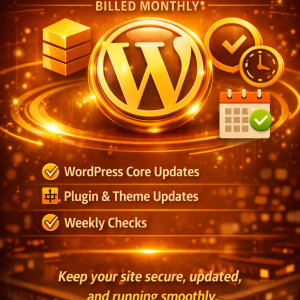
WordPress Care Essentials is a website maintenance package designed to keep your site up to date and running smoothly. It typically includes three core components:
- WordPress core updates: applying the latest security patches, performance improvements, and feature enhancements released by the WordPress project.
- Plugin and theme updates: ensuring that every plugin and theme on your site stays compatible with the current core version and remains secure.
- Weekly checks: a proactive routine to monitor health, performance, security, backups, and general site integrity.
These elements work together to minimize downtime, reduce security risk, and maintain a fast, reliable user experience. If you’re juggling multiple clients as an agency, managing a growing blog, or running a small business site, a structured care plan helps you avoid crises caused by outdated software or unnoticed issues.
Below, you’ll find detailed explanations of each component, why they’re necessary, and how they fit into a sustainable maintenance workflow.
Why updates matter: core, plugins, and themes
Updates are not just about new features. They are primarily about safety, compatibility, and performance. Here’s what updates achieve for you and your site.
Security patches reduce risk
- Why this matters: WordPress, its themes, and plugins are popular targets for malicious actors because they are widely used. When security flaws are discovered, the developers release patches. If you don’t apply them promptly, you leave known vulnerabilities open for exploitation.
- Your takeaway: Timely updates close security gaps. A site with up-to-date software is far less likely to suffer a breach, malware infection, or data loss.
Performance improvements and resource efficiency
- Why this matters: Updates frequently include optimizations that can speed up page rendering, reduce server load, and improve caching behavior. Small performance gains accumulate across pages, resulting in faster load times for your visitors.
- Your takeaway: Regular updates help you keep up with evolving performance best practices and guarantees a smoother experience, which can also help with SEO and user retention.
Compatibility and feature access
- Why this matters: The WordPress core, themes, and plugins evolve in tandem. A core update may introduce changes that affect how a plugin or theme works, and vice versa. If you skip updates, you risk breaking parts of your site when one component changes.
- Your takeaway: Staying current reduces the risk of broken functionality and ensures you can take advantage of new capabilities that improve your workflows or user experience.
Compliance and standards
- Why this matters: Updates often address compliance-related aspects, such as accessibility improvements and code quality standards. For business sites, maintaining compliance with current standards can minimize risk and improve user trust.
- Your takeaway: Regular updates contribute to a more accessible, robust site that meets current expectations for quality.
Long-term stability and support
- Why this matters: When sites lag behind, they become harder to support. Core developers and plugin authors typically drop support for very old versions, which can leave you with unpatched vulnerabilities and limited guidance.
- Your takeaway: A steady update cadence keeps you within supported versions, making it easier to find help when you need it and ensuring ongoing compatibility with hosting environments.
What’s included in WordPress Care Essentials
The package centers on three core activities, each with its own purpose and routine. Here’s what you’ll typically receive and why it matters.
WordPress core updates
- What this includes: Regular application of the latest WordPress core releases, including major and minor updates as they are released.
- Why it matters: Core updates bring security patches, bug fixes, and performance enhancements that keep your site safe and efficient.
- How it’s done: Updates are planned and executed in a controlled manner, typically with a verification step to ensure your site’s critical features still function after the change.
Plugin and theme updates
- What this includes: Updates to all installed plugins and themes, including version checks, compatibility testing, and, when needed, timely fixes.
- Why it matters: Plugins and themes are where most vulnerabilities live. Up-to-date components reduce risk and help maintain compatibility with the current WordPress core.
- How it’s done: A weekly review ensures you’re not left with outdated code, and a backup plan is in place in case an update introduces unexpected conflicts.
Weekly checks
- What this includes: A recurring quality assurance routine that covers site uptime, performance benchmarks, security scans, backups, malware checks, broken links, SEO health, and basic accessibility checks.
- Why it matters: Weekly checks catch issues early, before they impact visitors or business operations. Regular monitoring gives you trend data and early warnings.
- How it’s done: A combination of automated monitoring and manual verification. The results are summarized for you, and any action items are prioritized.
To help you visualize, here’s a concise breakdown of how these components map to daily operations and long-term outcomes.
| Component | What it covers | Why it matters | Frequency | Responsible party |
|---|---|---|---|---|
| WordPress core updates | Security patches, performance improvements, bug fixes | Keeps the core secure and stable, reduces risk of exploits | As released, with scheduled windows | Maintenance team or service provider |
| Plugin and theme updates | Security patches, compatibility fixes, new features | Prevents plugin/theme conflicts, maintains site functionality | Weekly | Maintenance team or service provider |
| Weekly checks | Uptime monitoring, backups, security scans, performance, SEO health | Early issue detection, smooth operation, reliable backups | Weekly | Maintenance team or service provider |
If you’re managing multiple client sites as an agency, this table becomes especially valuable. It gives you a consistent framework you can apply across projects, ensuring you don’t miss critical steps. If you’re a blogger, you’ll appreciate the quiet confidence that comes from knowing your site is not only live but healthy and fast. If you’re a business owner, you’ll gain peace of mind knowing routine care is in place, reducing the chance of costly downtime and disruptions.
Why weekly checks are necessary
Weekly checks are not a luxury; they’re a practical necessity for maintaining a healthy WordPress environment. Here’s why your site benefits from a regular weekly review.
Early detection of issues
- You may not notice a minor error in real time, but weekly checks give you a chance to catch problems early. Whether it’s a plugin conflict after an update or a slow-performing page due to a change in a theme’s stylesheet, catching issues promptly minimizes impact on your visitors and revenue.
- Early detection also means you can implement quick fixes before they escalate into outages or data integrity concerns.
Reliability and uptime
- A site that runs without visible problems is a business asset. Weekly checks help maintain uptime by identifying server errors, database issues, or misconfigurations that could otherwise cause unexpected downtime.
- Routine verification reinforces the trust your visitors place in your site. When users experience reliable performance, they’re more likely to stay, convert, or return.
Backups and disaster recovery
- Regular backups are the safety net of every WordPress site. Weekly checks ensure that backups are present, restorable, and tested. In the event of a problem, you can recover quickly with minimal data loss.
- A robust recovery process reduces the stress and cost associated with data loss or a cyber incident. It also satisfies best practices and potential compliance requirements.
Security hygiene and routine maintenance
- Weekly monitoring helps you spot unusual activity that could indicate a breach, malware, or credential compromise. Early intervention helps contain threats and protect your assets.
- Routine maintenance reinforces a culture of security-minded operations, sending a message that you take your site’s protection seriously.
Performance posture and user experience
- Performance is a competitive differentiator. Regular checks let you track metrics like page load times, time to first byte, and server response times. If these metrics drift, you’ll know where to investigate.
- A smooth user experience correlates with higher engagement, lower bounce rates, and better conversion rates. Maintaining performance ensures your content and services shine.
SEO health and indexability
- Search engines favor sites with good performance, security, and reliability. Weekly checks can catch SEO-related issues early—such as broken links, crawl errors, or slow pages—that could otherwise hinder rankings.
- You’ll gain actionable insights from monitoring trends, enabling you to optimize content delivery and technical SEO continually.
The update process: how it works
A structured update process minimizes risk and ensures your site remains stable after each change. Here’s a practical, step-by-step approach you can adapt to your own workflow or the approach your care package uses.
- Plan and assess
- Before applying any update, review what will change. Read release notes for the WordPress core, each plugin, and each theme involved.
- Identify potential compatibility concerns, such as deprecated functions or altered hooks that could affect custom code or third-party integrations.
- Back up your site
- Create a complete backup of files and the database before applying updates. This is your safety net in case something goes awry.
- Verify the backup integrity. You should be able to restore quickly if needed.
- Use a staging environment
- Wherever possible, apply updates in a staging or development environment first. This mirrors your live site without risking disruption to visitors.
- Run relevant tests in staging to confirm that essential features and workflows still function as expected.
- Apply updates
- Start with WordPress core updates, then move to plugins and themes. This sequence is commonly recommended because core changes can affect compatibility across extensions.
- Update one component at a time if you’re managing a large number of items or if you have a complex site.
- Verify and test
- After updates, check critical paths: login, checkout (if applicable), contact forms, search, and any integrations (CRM, email marketing, analytics).
- Look for console errors, broken layouts, or unusual behavior in the admin area. Perform spot checks on key pages.
- Rollback plan if needed
- If you encounter issues that you cannot resolve quickly, revert to the backup and reassess. Don’t rush through updates without ensuring you can recover gracefully.
- Document the problem and the fix so you can avoid repeating the same issue in the future.
- Monitor post-update performance
- After updates are live, monitor site performance and error logs for a defined period. If something starts behaving oddly, you can address it promptly.
- Communicate outcomes
- Share a brief report outlining what was updated, what was tested, and any notable outcomes. Communication builds trust with clients, team members, and stakeholders.
Risks and best practices to minimize them
No maintenance plan is immune to risk, but you can substantially reduce it by following best practices. Here are the most common risks and how to approach them.
Risk: Plugin or theme conflicts after updates
- Mitigation: Test updates in staging when possible. If conflicts arise, you can roll back while you investigate compatibility fixes or patches from developers. Maintain a compatibility matrix for critical plugins and themes.
Risk: Broken functionality or layout changes
- Mitigation: After updates, perform both automated checks and manual QA on essential pages and workflows. Have a quick design review to ensure layouts remain consistent across devices.
Risk: Incomplete backups or failed restores
- Mitigation: Verify backups regularly and perform restore tests. Automate backup verifications so that you’re not relying on manual checks alone.
Risk: Security surprises
- Mitigation: Combine updates with security scans and log reviews. If you notice suspicious activity, respond promptly, isolate affected areas, and consult with security specialists if needed.
Tailoring WordPress Care Essentials to your audience
Different users have distinct priorities. Here’s how the care package can be aligned to the needs of agencies, bloggers, and business owners.
For agencies managing multiple client sites
- Centralized governance: A consistent maintenance protocol across all client sites simplifies operations and reduces risk. Use standardized update windows and weekly check templates to streamline reporting.
- Client transparency: Provide regular maintenance reports to clients highlighting updates performed, issues found, and performance improvements. This builds trust and demonstrates value.
- Resource efficiency: Batch updates where possible, and leverage staging environments to minimize downtime while serving multiple clients.
- Customization options: Offer tiered plans with varying degrees of monitoring, backup frequency, and security scanning based on client needs and budgets.
For bloggers and content creators
- Focus on speed and reliability: A faster site reduces bounce rates and improves reader engagement. Regular updates keep your site secure and ready to handle traffic spikes.
- Content-driven testing: After major updates, ensure that content blocks, embedded media, and advertising scripts render correctly.
- SEO-conscious maintenance: Maintain crawlability and indexability by keeping an eye on broken links and sitemaps. A healthy technical SEO baseline supports organic growth.
For business owners and ecommerce sites
- Uptime and transactional integrity: Your site’s availability is critical for revenue. Weekly checks help identify issues that could interrupt purchases or inquiries.
- Security for customer data: Regular core and plugin updates reduce the risk of data breaches. Backups ensure you can recover quickly in the event of an incident.
- Compliance and trust: Updates often address accessibility improvements and regulatory considerations. This supports a professional image and broader accessibility.
Real-world scenarios
To illustrate how WordPress Care Essentials translates into tangible benefits, consider these scenarios.
Scenario 1: An agency with multiple client sites
- You manage 8 client sites with varying levels of traffic and functionality. A weekly care routine helps you keep each site in a stable state, catch issues early, and provide consistent reporting to clients. When a plugin release introduces a minor change that would otherwise disrupt a site, your staged approach and comprehensive testing prevent outages and keep client timelines intact.
Scenario 2: A content-driven blog with growing traffic
- Your blog sees increasing traffic, along with new affiliate plugins and multimedia elements. Regular core updates, along with careful plugin management, ensure that page speed remains high and that search engines can crawl your site efficiently. Weekly checks detect broken affiliate links and potential security red flags before they affect user experience or revenue.
Scenario 3: An ecommerce storefront
- For a storefront, uptime and checkout reliability are non-negotiable. Weekly checks verify cart functionality, payment gateway status, and product availability from the user’s perspective. Timely updates keep the shop secure and compatible with payment processors and marketing tools, reducing cart abandonment caused by technical issues.
Tools and resources you can rely on
A robust maintenance strategy uses a combination of tools and practices. Here are recommended categories and examples to consider, tailored to WordPress care.
- Backups: Regular, verifiable backups that cover files and the database. Look for incremental backups with quick restore capabilities.
- Security scanning: Automated security checks that detect malware, file changes, and vulnerability signatures.
- Performance monitoring: Tools that measure page speed, database query times, and server response times over time.
- Uptime monitoring: A lightweight watchdog that notifies you if your site goes down.
- Staging environments: A safe place to test updates and changes before applying them to production.
- Error and log monitoring: Access to error logs and event history to diagnose issues quickly.
- Accessibility and SEO checks: Tools that identify accessibility barriers and technical SEO concerns like broken links and sitemap issues.
If you’re evaluating WordPress Care Essentials, ask potential providers about how they implement these tools, how they report findings, and how they handle remediation. The right package should feel proactive rather than reactive, offering clarity, accountability, and measurable improvements.
How to implement WordPress Care Essentials on your site
Getting started doesn’t have to be complicated. Here’s a practical approach you can follow to implement a WordPress Care Essentials routine.
- Define your objectives
- What are your top priorities: security, speed, uptime, or a combination? Set clear goals for what you want to achieve with regular maintenance.
- Audit your current setup
- List all plugins, themes, and custom code. Identify which components are critical for your business and which ones can be retired or replaced if they introduce risk.
- Set a maintenance cadence
- Decide on update windows (for example, Tuesday at 3 a.m. local time) and a weekly check day. This creates predictability and reduces surprises.
- Establish a backup and recovery plan
- Verify backup frequency, retention periods, and restore procedures. Practice restores in a staging environment or a sandbox to confirm you can recover quickly.
- Implement staging and testing
- Create a staging site for testing updates before applying them to production. This is essential for sites with complex functionality or significant traffic.
- Create a structured update protocol
- Apply core updates first, then plugins, then themes. Document any issues and resolutions, so you can refine your process over time.
- Monitor, report, and refine
- Use dashboards to monitor uptime, performance, and security. Share regular reports with stakeholders and use the data to adjust your maintenance plan.
- Review and adapt
- Technology changes. Your needs change. Periodically reassess your care plan to ensure it still aligns with your goals and risk tolerance.
Common myths about updates and weekly checks
Myths can derail maintenance efforts if you believe them. Here are a few you might encounter, along with the reality.
-
Myth: If it ain’t broke, don’t fix it. Reality: Waiting for something to break means you’re reacting instead of preventing. Updates reduce the chance of breakage and keep you ahead of problems.
-
Myth: Updates always break my site. Reality: While conflicts can occur, a structured process with staging, backups, and testing minimizes downtime. Most updates proceed smoothly when handled with care.
-
Myth: Weekly checks are overkill for small sites. Reality: Even small sites benefit from proactive checks. Routine monitoring catches issues that can otherwise escalate, preserving uptime and visitor trust.
-
Myth: I can do everything myself without dedicated maintenance. Reality: While you can, having a formal care plan reduces risk, saves time, and ensures consistent results. You gain predictability and rely on expertise when needed.
Final thoughts and call to action
Maintaining WordPress is an ongoing commitment, not a one-off task. The combination of core updates, plugin and theme updates, and weekly checks forms a comprehensive defense against downtime, security threats, and performance slumps. By adopting a WordPress Care Essentials approach, you align your site with best practices that protect your investment, enhance user experience, and support your growth as an agency, blogger, or business owner.
If you’re ready to give your site the care it deserves, start with a clear maintenance plan. Document update windows, establish backups you can trust, and create a weekly check routine that suits your site’s complexity and traffic patterns. Communicate your maintenance plan to your team or clients so everyone knows what to expect and what success looks like.
Consider reaching out to a trusted WordPress maintenance provider or assembling your internal process to implement these practices. The goal is not simply keeping software up to date; it’s building a resilient, fast, and secure platform that serves your audience and supports your business objectives. When you invest in thoughtful, consistent care, you’re investing in the long-term health of your online presence.
Your site deserves ongoing care, and you deserve the confidence that comes with a proactive maintenance strategy. With WordPress Care Essentials, you have a clear path to security, speed, and reliability—four outcomes that matter every time someone visits your pages. Start today, and watch your site become more stable, more secure, and more capable of delivering the experiences your visitors expect.








0 Comments