


Do you know how your WordPress updates protect your investment every day, or do you sometimes feel like you’re guessing at what to patch and when to test things?
How Plugin And Theme Updates Protect Your WordPress Investment
Keeping your WordPress site up to date isn’t just about chasing the latest version numbers. It’s about preserving security, reliability, and performance so that your online presence continues to serve you and your audience without interruption. When you treat updates as a core part of your site maintenance, you create stability, protect data, and maintain trust with visitors and customers. In this article, you’ll learn why updates matter, how weekly checks fit into a solid maintenance strategy, and how the WordPress Care Essentials package can help you keep your site secure, fast, and dependable.

Updates aren’t optional—you’re protecting value, not just software
You may have heard that updates are optional, or that you can let them wait until a problem arises. In reality, every update carries a promise and a risk. The promise is clearer security, better compatibility, and fresh features. The risk is that updating can occasionally cause conflicts with plugins, themes, or custom code. Your job is to manage that risk intelligently: plan updates, test them, and apply them in a controlled way so you minimize downtime and maximize benefits. By treating updates as a key part of your ongoing investment, you protect the assets that matter most—your content, customer trust, search engine visibility, and revenue stream.
Core WordPress updates: the foundation you should never skip
Your WordPress core updates are the backbone of your site’s security and performance. Each core release includes security patches, bug fixes, and sometimes new features or performance improvements. When you ignore core updates, you leave doors open for attackers who know common vulnerabilities, you miss out on optimized code paths, and you risk compatibility issues with your plugins and themes. You deserve a site that stays current with industry standards and best practices, keeping you safer and faster. Regular core updates also help you align with hosting environments, PHP versions, and modern development trends, reducing friction during maintenance.
Plugin updates: patching vulnerabilities before they become problems
Plugins extend WordPress with powerful features, but they can also introduce vulnerabilities if left unpatched. Each plugin update may address security flaws, fix bugs, improve performance, and resolve compatibility issues with WordPress core or other plugins. When you keep plugins current, you reduce the attack surface of your site, minimize the chances of data exposure, and preserve user experience. You’ll also avoid nasty surprises like broken forms, broken checkout flows, or broken media uploads that can undermine your credibility. Timely plugin updates protect your investment by keeping functionality aligned with how your site is intended to work.
Theme updates: consistency, accessibility, and resilience
Themes control the look and feel of your site, but they also influence performance and accessibility. Theme updates can fix CSS or JavaScript issues, improve responsive behavior, and ensure compatibility with newer WordPress features or PHP versions. An updated theme helps maintain a consistent user experience across devices, supports accessibility standards, and reduces the risk of styling conflicts that could degrade your brand presentation. Your investment isn’t only about aesthetics; it’s about delivering a reliable and accessible experience that supports your business goals.
Why weekly checks matter: consistency, early problem detection, and confidence
Weekly checks are your discipline for maintaining a healthy site. Rather than waiting for users to report issues or for a problem to disrupt your operations, weekly checks help you detect minor warning signs before they become major failures. This proactive approach gives you confidence that your site runs smoothly, loads quickly, and stays secure. Each week, you verify that updates have been applied correctly, verify that backups completed successfully, and confirm that your analytics and monitoring signals remain healthy. This rhythm becomes a reliable safeguard against drift, friction, and surprises.
The components of a weekly check you can rely on
A thoughtful weekly check combines several activities designed to verify the health of your site and its ecosystem. You’ll want a lightweight, repeatable routine that you can perform or automate with confidence. The core components typically include:
- Core and plugin/theme update verification
- Backup integrity checks
- Security scan results review
- Performance monitoring checks
- Functionality sanity tests (forms, e-commerce flows, login)
- Content and link health checks
- Accessibility and mobile experience checks
Keeping these elements in balance ensures you’re not over-committing time while still delivering a comprehensive assessment. The result is a site you can trust—one that remains resilient in the face of evolving threats and changing technology.
What happens during a typical update cycle?
An effective update cycle follows a predictable sequence that minimizes risk and downtime. You begin by reviewing release notes to understand what changed and what might affect your setup. Next, you back up your site, then perform updates in a staging or testing environment when possible. After updating, you run quick tests to confirm critical features still work, such as user registrations, checkout processes, contact forms, and search. Finally, you monitor performance, error logs, and user feedback for early signals of trouble. This approach reduces the likelihood of live-site disruption and helps you quantify the benefits of each update.
How WordPress Care Essentials aligns with updates
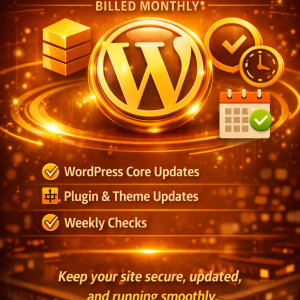
WordPress Care Essentials is designed to provide a comprehensive maintenance package that includes:
- WordPress core updates
- Plugin & theme updates
- Weekly checks
This combination ensures you’re not just applying updates in isolation; you’re integrating them into a disciplined maintenance routine. The result is a dependable process that keeps your site safer, faster, and more reliable, while also freeing your time to focus on content, customers, and growth. By having a predictable schedule, you reduce decision fatigue and create a reproducible pattern for your team or partners to follow.
The risks of neglecting updates
Failing to maintain updates can expose you to several risk vectors that erode the value of your WordPress investment:
- Security breaches and data exposure
- Performance degradation and slower page loads
- Compatibility problems after core or PHP version changes
- Broken functionality from outdated libraries
- Negative impact on search engine rankings due to security or performance issues
- Loss of customer trust when users encounter errors or downtime
Addressing updates proactively helps you avoid these consequences and keeps your site aligned with best practices in the WordPress ecosystem.
Practical strategies for safe updates
To implement updates safely, you’ll want a practical approach that fits your resources and risk tolerance. Consider the following strategies:
- Use a staging environment for major updates or themes that touch layout or functionality
- Back up before applying any update, including database backups if possible
- Test critical features after updates in a controlled setting
- Check for plugin and theme compatibility with the current WordPress core
- Review security scan alerts and fix any detected issues promptly
- Monitor performance and error logs after updates to catch subtle regressions
- Maintain a rollback plan in case an update introduces an unforeseen problem
These strategies help you maintain control of the process and protect your investment across updates.
A closer look at the maintenance workflow
Here’s a practical view of how the maintenance workflow unfolds week by week. You don’t have to implement every step in a single sitting, but you can schedule these tasks to fit your capacity. The idea is to build a repeatable cycle that gradually reduces risk and strengthens confidence in your site’s health.
- Week 1: Confirm backups are recent and recoverable; review recent updates; run a quick security sweep; perform essential performance checks.
- Week 2: Apply core updates if available; update a subset of plugins/themes with known compatibility; run functional tests on key flows.
- Week 3: Expand testing to a broader set of plugins/themes; review uptime and error logs; check content integrity (images, links, media).
- Week 4: Conduct a deeper performance assessment; verify SEO-related configurations (sitemaps, robots.txt, structured data) still function; audit accessibility basics.
Over time, you’ll refine the cadence to match your site’s traffic patterns, plugin stack, and business priorities. The important part is consistency—your weekly check becomes a shield against drift and a predictor of reliability.
Backups: the safety net that makes updates practical
Backups are the safety net that makes updates practical rather than scary. Before you apply any update, you want a reliable restore point. If an update introduces an incompatibility or a performance regression, you can revert to the previous version without losing content or business continuity. Regular backups give you the courage to update promptly, knowing you can recover quickly if something goes wrong. In the context of weekly checks, validating that backups exist and can be restored is as essential as the updates themselves.
Testing before you update: what to test and how
Testing is not optional; it’s a core component of protecting your investment. In practice, you should test for the critical pathways that drive your site’s value. For many sites, this includes:
- User registration and login workflows
- E-commerce checkout and payment flows
- Contact forms and lead capture mechanisms
- Content creation, editing, and publishing processes
- Search and navigation, including filtering or site-wide search
- Media upload, resizing, and display across devices
Testing doesn’t have to be exhaustive every time. Start with the highest-risk areas and gradually broaden your checks as you gain confidence. If you’re running a storefront or membership site, prioritize the parts of your system that handle payments or protected content.
The value of a staging environment
A staging environment lets you test updates in a replica of your live site before they affect real users. It’s where you can observe how changes interact with your theme, your installed plugins, and your custom code. If you have limited resources, you can still simulate a staged approach by creating a local or remote copy of your site for testing, then apply only the changes that pass your tests to the live environment. The staging step dramatically reduces the chance of disruption and gives you a safe space to validate compatibility.
The role of automation without losing control
Automation can streamline updates and weekly checks, saving you time and reducing human error. You can automate reminders, backup verifications, vulnerability scanning, and some update processes. However, maintain a human-in-the-loop approach for critical decisions. Automation handles routine tasks, while you review release notes, test outcomes, and any edge-case issues that require your judgment. The balance between automation and careful oversight is your best defense against both boredom and risk.
How to handle a problematic update
Sometimes an update doesn’t behave as expected. You’ll want a plan that minimizes downtime and preserves your site’s integrity. Key steps include:
- Stop new data input temporarily if possible (e.g., maintenance mode)
- Confirm the problem with clear error messages or logs
- Roll back to the previous stable version if needed
- Check compatibility notes, forum threads, or support channels for known issues
- Apply a targeted fix or wait for a patched release if the issue is widespread
- Test thoroughly in staging before re-launching to the live site
Having a pre-defined rollback and contingency plan helps you respond quickly and calmly when things don’t go as planned.
Common myths about updates—and why they’re not true for your site
- Myth: Updates always break things. Reality: While conflicts can occur, careful testing and staged deployments reduce risk and often prevent major downtime.
- Myth: You must update everything at once. Reality: Prioritize updates based on risk, compatibility, and business impact; you don’t need to update every item every week.
- Myth: Updates slow down your site forever. Reality: Most updates optimize performance or address inefficiencies; improvements are common after a well-planned update.
- Myth: Security is someone else’s job. Reality: Security is everyone’s job—systematically applying updates is a shared responsibility that protects visitors and your brand.
A practical implementation plan you can start today
If you’re ready to adopt a robust update and weekly check routine, here’s a straightforward plan you can begin this week:
- Audit your current stack: List your WordPress version, plugins, and themes. Note which are actively maintained and which may need replacements.
- Establish a backup protocol: Schedule automatic backups with a tested restore process.
- Create a staging workflow: If you don’t have a staging site, set up a local clone you can use for testing.
- Define a weekly check template: Build a repeatable checklist for updates, security scans, backups, performance checks, and content integrity.
- Schedule updates strategically: Prioritize core updates and high-risk plugins, then test in staging before pushing to live.
- Monitor continuously: Use uptime monitors and error reporting to catch issues early and respond quickly.
By following these steps, you begin to cultivate a reliable update culture that protects your site without consuming all your time.
A simple, reproducible weekly update checklist
To keep things practical, you can adopt a compact weekly checklist that you can perform in under an hour if your site is modest in size. The goal is consistency and visibility, not perfection in a single session.
- Verify backup integrity for last 7 days
- Check for WordPress core updates and apply if appropriate
- Review plugin and theme update notices; prioritize high-risk items
- Run security scans and review any alerts
- Perform quick functionality checks (login, forms, cart, search)
- Review uptime metrics and performance indicators
- Check for broken links and media integrity
- Inspect critical pages for layout or style shifts after updates
- Document any issues and the actions taken
Over time, this checklist becomes second nature, almost automatic, and you’ll notice fewer unexpected problems.
A practical table: weekly update checklist at a glance
| Item | What to Do | Why it Matters | Time Estimate |
|---|---|---|---|
| Backups | Confirm last backup is complete and restorable | Provides a restore point if something goes wrong | 5-10 minutes |
| Core updates | Check for WordPress core updates; apply if safe | Keeps security and functionality current | 5-15 minutes |
| Plugin updates | Review and apply high-risk plugin updates | Reduces vulnerability and compatibility risks | 10-20 minutes |
| Theme updates | Check for theme updates; test critical pages | Maintains design integrity and accessibility | 10-15 minutes |
| Security checks | Run a security scan; review alerts | Detects vulnerabilities early | 5-10 minutes |
| Functionality tests | Quick tests of login, forms, carts | Ensures essential flows work after updates | 10-15 minutes |
| Performance checks | Run a quick performance test; review metrics | Ensures users still experience fast loading | 5-10 minutes |
| Content/link integrity | Scan for broken links or missing media | Preserves user experience and SEO health | 5-10 minutes |
| Documentation | Log issues and outcomes | Creates a traceable improvement history | 5 minutes |
This table gives you a practical, repeatable pattern you can reuse every week. You can adjust the time estimates based on your site’s size and complexity, but the cadence remains valuable for keeping your site healthy and trustworthy.
The ROI of regular updates: staying aligned with your goals
Investing in plugin and theme updates and weekly checks isn’t a tax on your time; it’s a strategic move that protects and grows your business. When your site stays secure and reliable, you reduce the likelihood of costly downtime, data breaches, or customer churn. The return on investment comes in several forms:
- Lower total cost of ownership through reduced emergency fixes
- Higher conversion rates due to reliable shopping experiences
- Improved search visibility from faster, safer sites
- Greater developer and user confidence in your brand
- Long-term compatibility with new technologies and standards
Each of these factors compounds over time, reinforcing why a consistent maintenance routine is a smart, forward-looking decision.
How to communicate updates to stakeholders
If you manage a site for clients or a team, you’ll benefit from communicating updates and weekly checks in a clear, non-technical way. Use simple language to explain:
- What was updated and why
- The expected benefits (security, performance, compatibility)
- Any issues found and how they were resolved
- Any steps needed from stakeholders (content freezes, approvals)
Clear communication reduces uncertainty and helps you demonstrate the ongoing value of maintenance work as part of your service or internal program.
The broader picture: maintenance as a competitive advantage
In markets where competitors have basic sites and you’re investing in a disciplined maintenance approach, you may gain a meaningful edge. A consistently updated site signals reliability and professionalism to customers, partners, and search engines. It becomes part of your brand story: you take care of your digital presence with intention and care. That mindset translates into trust, repeat visits, and better word-of-mouth referrals—all of which contribute to your growth and resilience.
Common questions you may have about updates
- How often should I update? Aim for regular core updates when available, with timely plugin/theme updates, and a weekly check rhythm, rather than trying to chase every single update the moment it’s released.
- Should I update during business hours or off-hours? For smaller sites, a low-traffic period is often best for applying updates in a staging environment, followed by careful testing. If you’re confident, you can apply updates during off-peak hours on live sites after testing.
- What if an update breaks something? Have a rollback plan and access to backups. Use staging for testing and, if needed, revert to the previous version while you investigate a fix or alternative solution.
- Do I still need a maintenance package? A maintenance package can simplify the process by providing structure, accountability, and expertise, especially if you’re managing multiple sites or lack the time to perform routine checks yourself.
A closing reminder: you control the pace and the safety of your site
You aren’t simply updating software; you’re maintaining a living asset that represents your brand, your work, and your relationship with your audience. By embracing updates as a core practice and embedding weekly checks into your routine, you protect your site’s security, performance, and user experience. You also create a scalable approach that can grow with your business—from a single site to an entire portfolio—without sacrificing reliability.
A summary you can put into practice
- Treat WordPress core, plugin, and theme updates as essential protection rather than afterthoughts.
- Implement weekly checks to catch issues early, verify backups, and confirm continued performance.
- Use staging environments for testing updates before applying them to live sites.
- Build a consistent update and testing routine that fits your workflow and resources.
- Leverage a maintenance package like WordPress Care Essentials to streamline the process and ensure nothing slips through the cracks.
The bottom line
Your investment in WordPress goes beyond the initial setup. It’s about ongoing stewardship that keeps your site secure, stable, and aligned with your business goals. Updates are your front-line defense against risk, and weekly checks are your safety net that ensures you stay on the right track. When you prioritize these practices, you affirm your commitment to your audience, your brand, and your long-term success.
If you’re ready to take this next step, consider how WordPress Care Essentials can support you in implementing this maintainable, repeatable routine. You’ll gain more peace of mind, more reliability for your visitors, and more time to focus on growth—knowing that your WordPress investment is protected by a thoughtful, proactive maintenance strategy.






0 Comments