


Are you confident your WordPress site stays secure, fast, and reliable, or are you risking problems by ignoring updates?

Common Problems Caused By Ignoring WordPress Updates
Staying current with WordPress updates isn’t just about having the latest features. It’s a core part of keeping your site secure, fast, and dependable for your visitors. When you let updates stack up, you’re inviting a cascade of issues that can undermine your site’s performance, safety, and trust. In this article, you’ll learn why updates matter, what specific problems can arise when you ignore them, and how weekly checks fit into a practical, sustainable maintenance routine. You’ll also see how WordPress Care Essentials can support you in keeping core, plugins, and themes up to date, while providing regular, lightweight checks that prevent small issues from turning into big headaches.
Why updates matter for WordPress in plain language
Updates are more than cosmetic. They fix security holes, patch bugs, improve performance, and ensure compatibility with other software and services you rely on. When you delay updates, you miss these fixes, and your risk exposure grows. Think of updates as a continuous, proactive shield rather than a one-time fix. Keeping your WordPress core, your plugins, and your themes current reduces the chance of security breaches, compatibility breakages, and user frustrations.
The core, plugins, and themes all need attention
WordPress operates on three moving parts that work in concert:
- The WordPress core: The central software that powers your site.
- Plugins: Add specific features or functionality.
- Themes: Control appearance and some behavior.
Each of these parts receives updates at different cadences. When you skip updates for any one of them, you create mismatches that can cause errors, crashes, or degraded performance. Consistency across all three is essential for a smooth-running site.
Why ignoring updates leads to security problems
Security should be the top reason you keep WordPress updated. New vulnerabilities are discovered regularly, and threat actors routinely scan sites for outdated software to exploit. If you fall behind, you increase your probability of being compromised. The outcomes can be severe:
- Unauthorized access: Attackers may gain control of your site or server, enabling data theft, defacement, or use of your site to host malware.
- Credential and data breaches: Outdated software can expose login mechanisms and user data to exploitation.
- Botnet recruitment: Compromised sites can be enlisted in large-scale botnets used for distributed denial-of-service (DDoS) attacks or mass spam campaigns.
- SEO penalties: Search engines may punish sites with known security weaknesses, reducing visibility and traffic.
These risks aren’t theoretical. They’re real-world threats that affect your brand, your visitors’ trust, and your site’s revenue. Updates are your first line of defense.
How neglecting updates can affect site performance
Security isn’t the only concern. Performance can degrade when you ignore updates, for reasons including:
- Inefficient code: Updates often optimize processes, improve caching behavior, or reduce memory usage.
- Compatibility glitches: Outdated components may conflict with newer server configurations, PHP versions, or other software stack changes.
- Increased load times: When issues pile up, you can experience longer page rendering, heavier resource demands, and slower user experiences.
Visitors won’t tolerate slow sites. Even a small delay can cause higher bounce rates and lower engagement, which, in turn, affects conversions and revenue.
How ignoring updates creates compatibility issues
Your site exists in a web ecosystem: the browser, hosting environment, PHP version, and other software all interact. When you delay updates, you increase the chance that:
- Core, plugin, or theme changes become incompatible with each other.
- Security patches rely on updated dependencies that are not in place, leading to unexpected behavior.
- API changes in third-party services break integrations you rely on, such as payment processors or analytics tools.
Compatibility issues often show up as white screens, error messages, missing features, or broken forms. Even if your site looks okay at a glance, small, invisible misalignments can degrade functionality over time.
The user experience impact of ignoring updates
From a visitor’s perspective, an outdated WordPress site can feel unstable or unreliable. You might notice:
- Inconsistent design or layout problems on different devices or browsers.
- Broken contact forms, comment systems, or e-commerce checkout.
- Widgets or interactive features that fail to load or misbehave.
- Frequent 500 errors or site crashes after minor changes.
A poor user experience damages trust. Visitors are less likely to convert, sign up, or return. In competitive markets, that kind friction translates directly into lost revenue and diminished brand credibility.
How maintenance reduces risk and builds reliability
A disciplined maintenance routine reduces risk across three pillars:
- Security: Regular updates close known vulnerabilities, making your site much harder to compromise.
- Reliability: Consistent compatibility and tested updates minimize downtime and user-facing errors.
- Predictability: A plan that includes routine checks provides stable performance, easier troubleshooting, and a smoother path to growth.
When you establish a cadence for updates and checks, you shift from a reactionary mindset to a proactive one. You catch issues early, before they escalate, and you create a reassuring experience for your visitors.
The role of weekly checks in a healthy WordPress site
Weekly checks act as a lightweight, preventive layer. They’re not a one-time audit; they’re a recurring discipline designed to catch small problems before they become urgent. Here’s what weekly checks accomplish:
- Early detection: You find minor issues such as minor plugin conflicts, broken updates, or outdated caches before they cause downtime.
- Stability: Regular checks help ensure your site behaves consistently, with fewer surprises on busy days or during traffic spikes.
- Confidence: Knowing you have a routine in place reduces anxiety about updates and gives you a clear path to maintenance.
A weekly rhythm also makes it easier to allocate time and resources. Rather than a sprawling monthly or quarterly overhaul, you handle focused, achievable tasks in small chunks. That makes maintenance sustainable, not burdensome.
What weekly checks typically include
Weekly checks are purposefully lean. They focus on essential maintenance tasks that have a direct impact on site health. Here are common elements you’d expect in a weekly maintenance routine:
- Update review: Check for available WordPress core updates, plugin updates, and theme updates. Prioritize critical security patches.
- Backup verification: Confirm that the latest backups completed successfully and can be restored if needed.
- Security checks: Review firewall rules, login activity, and any unusual access patterns.
- Performance checks: Monitor page load speeds, check for caching issues, and ensure CDN integration is functioning as expected.
- Functionality smoke test: Quick checks on core features, contact forms, e-commerce carts, and key workflows.
- Uptime monitoring: Verify that the site is reachable and serving content as expected.
- Error log review: Scan for PHP notices or warnings that could signal deeper issues.
If you use a maintenance package, these tasks are often automated or semi-automated, with you receiving a concise report that highlights any action items.
A practical table: weekly checks at a glance
| Check area | What to look for | Why it matters |
|---|---|---|
| WordPress core | Availability of updates, compatibility notices | Keeps security and features current |
| Plugins and themes | Updates pending, conflicts with other components | Reduces breakage and security gaps |
| Backups | Last backup succeeded, ability to restore | Ensures data safety and quick recovery |
| Security | Login attempts, failed logins, unusual activity | Prevents breaches and credential theft |
| Performance | Load times, caching status, CDN health | Maintains fast user experience |
| Functionality tests | Key forms, checkout, search, navigation | Confirms user workflows work as intended |
| Uptime | Site accessibility, HTTP status codes | Detects outages early |
| Error logs | PHP notices, fatal errors, deprecated calls | Signals deeper software issues |
This table is a quick reference. In practice, your weekly checks will reflect your site’s unique setup and risk profile. The important thing is to keep a consistent cadence and document any issues you find so you can track trends over time.
How weekly checks prevent small problems from becoming big ones
Think of weekly checks as the equivalent of preventive maintenance for a car. You don’t wait for a warning light to start caring for it; you service it on a schedule to keep everything running smoothly. In a WordPress context, weekly checks do the following:
- Early warning signs: Minor issues, such as a deprecated function warning or a plugin conflict, can be resolved quickly if caught early.
- Cost control: Fixing a small problem is often much cheaper than recovering from a major outage or data loss.
- Reduced downtime: Regular checks identify bottlenecks and misconfigurations that could lead to downtime during peak traffic.
- Consistency: A weekly process creates predictable outcomes and reduces the stress of ad-hoc maintenance.
When you treat updates as ongoing maintenance rather than a once- or twice-year event, you protect your site’s uptime, security, and user experience.
Common reasons people update less frequently than recommended
People sometimes delay updates because they fear breaking something or because the process seems time-consuming. Here’s why those concerns are often overstated and how to address them:
- Fear of breaking the site: In practice, updates are designed to be safe when you test them. A controlled update process, including backups and staged testing when possible, greatly reduces risk.
- Time constraints: Weekly checks are intentionally light and short. Even 30–60 minutes per week can be enough to keep things in good shape.
- Perceived lack of value: Updates deliver concrete benefits in security, speed, and features. Seeing a few weeks of smooth operation often proves the value.
By reframing updating as a routine safeguard rather than a nuisance, you preserve the health and longevity of your site.
A closer look at WordPress Care Essentials
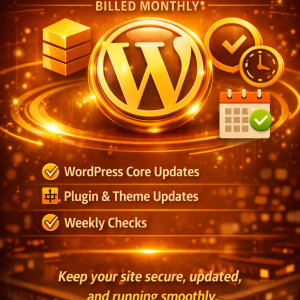
WordPress Care Essentials is a website maintenance package designed to simplify and standardize the ongoing care your site needs. It typically includes:
- WordPress core updates: Regular patch and feature updates to the core software.
- Plugin and theme updates: Timely updates for extensions and design elements you rely on.
- Weekly checks: A streamlined review process that covers backups, security, performance, and basic functionality.
This package helps you stay current without becoming overwhelmed. It creates a predictable routine that reduces risk and improves reliability. The value arises from combining automated safeguards with human oversight—keeping the site secure and performant while freeing you to focus on your business.
Why a weekly cadence makes sense for most sites
A weekly cadence captures the balance between urgency and practicality. Security updates and critical bug fixes can be deployed quickly, while less urgent improvements can be scheduled in a predictable rhythm. Weekly checks provide ongoing visibility into the health of your site, enabling proactive maintenance rather than reactive firefighting. For many site owners, this cadence is enough to maintain a robust, secure, and fast experience without the burden of daily checks.
Practical strategies for staying up to date
If you’re ready to implement reliable update practices, here are actionable steps you can take. The goal is a repeatable, low-friction process that fits your workflow.
- Establish a maintenance window: Block a regular time each week for updates and checks.
- Automate where safe: Use automated backups, automated core updates (where you’re comfortable), and monitoring alerts for uptime and security events.
- Maintain a staged environment: If possible, test updates in a staging or development environment before applying them to your live site.
- Create a rollback plan: Have a clear path to revert updates if something breaks; backups are essential for this.
- Document everything: Keep a log of updates applied, issues found, and fixes implemented. This history will help you spot recurring problems and plan improvements.
A straightforward checklist can be your best friend. Use it every week to ensure you don’t miss any critical steps. Over time, your familiarity with the process will grow, and your confidence will rise.
Common myths about updating WordPress
- Myth: Updates always break something. Reality: Updates are designed to improve security and functionality. When properly managed with backups and testing, updates rarely cause harm.
- Myth: I’ll update only when something breaks. Reality: Proactive updates reduce the likelihood of breakages and data loss.
- Myth: It’s enough to update occasionally. Reality: Regular, frequent updates are the foundation of site health.
- Myth: Backups are optional. Reality: Backups are your safety net. They’re essential whenever applying updates or making configuration changes.
Addressing these myths helps you adopt a healthier maintenance mindset and reduces the fear around updates.
Getting started: first steps to implement a regular update routine
If you’re just starting with a regular update routine, here are the initial steps to take. They’ll help you build momentum and establish a sustainable pattern.
- Assess your current setup: List all plugins, themes, and the PHP version in use. Note any that haven’t been updated in a while.
- Set up automated backups: Ensure you have reliable, automated backups with tested restore capabilities.
- Schedule weekly maintenance: Block a fixed time each week for updates and checks, and set up reminders.
- Create a simple test plan: Define a small set of checks you perform after updates (e.g., form submissions, basic navigation, checkout flow).
- Implement a rollback strategy: Ensure you can revert updates quickly if something goes wrong.
Starting small and staying consistent is more effective than trying to do everything at once. As you become more comfortable, you can expand the routine and add more checks as needed.
The business case: how updates save you money
You might wonder whether updates are worth the effort. The answer is yes for several reasons:
- Reduced downtime: Updates lower the chance of outages, preserving revenue and user trust.
- Lower risk of data loss: Security and stability improvements reduce the probability of data breaches or corruption.
- Efficiency and speed: Updated software often runs more efficiently, lowering hosting costs and improving user experience.
- Legal and compliance considerations: Some updates address data handling and privacy requirements, helping you stay compliant.
Over time, the cumulative savings from fewer outages, less downtime, and better performance can be substantial.
Troubleshooting common update-related issues
Even with a solid routine, you may encounter problems after updates. Here are common scenarios and quick approaches to handle them:
- White screen of death after update: Check the error log, disable conflicting plugins, revert to a previous backup if needed, then re-run updates one by one to identify the culprit.
- Broken plugin or theme after update: Deactivate the culprit, test with a default theme, and reach out to the plugin or theme author for guidance. In some cases, you may need to find an alternative.
- Slow performance after update: Clear caches, re-optimize database and images, check for new runtime requirements, and ensure hosting resources are adequate.
Having a rollback plan and a clear testing approach helps you respond calmly and effectively when issues arise.
Does updating affect SEO?
Yes, updates can influence SEO in several ways:
- Security improvements protect your site from vulnerabilities that could harm rankings.
- Performance improvements often correlate with better user experience, which can indirectly influence SEO signals.
- Compatibility updates ensure that your site remains accessible and usable across devices and browsers, which helps maintain positive user signals.
Neglecting updates can indirectly harm SEO by increasing downtime, causing poor user experience, and triggering security-related penalties. Keeping your site updated supports a healthier foundation for search visibility.
Safety-first practices for WordPress updates
To minimize risk, adopt safety-first practices:
- Always backup before applying updates.
- Test updates in a staging environment when possible.
- Update in small, incremental steps rather than all-at-once, especially on complex sites.
- Monitor after updates for any abnormal behavior or errors.
- Maintain a rollback plan and ensure it’s accessible.
These practices aren’t optional luxuries—they’re essential for maintaining safety, reliability, and peace of mind.
Advanced considerations for larger sites or teams
If you manage a larger site or work with a team, consider these additional practices:
- Role-based access and change control: Limit who can apply updates and require review for major changes.
- Change management documentation: Maintain detailed records of when updates were applied and what was changed.
- Staged deployment processes: Use a dedicated staging environment to test updates before pushing to production.
- Performance and security dashboards: Track key metrics to detect drift after updates.
These practices help maintain governance, accountability, and scalable reliability as your site and team grow.
A brief note on testing and compatibility
Testing is an often-underappreciated part of updating. Even with careful backups, you’ll get the most value from testing. A simple test plan might include:
- Functionality checks: Verify core actions like logging in, posting content, and completing purchases.
- Form validation: Ensure contact and checkout forms work and submit data correctly.
- Theme and plugin interactions: Check for layout integrity and feature behavior with updated components.
If you can, maintain a dedicated testing environment separate from your live site. This reduces risk and gives you a safe space to catch issues before they impact visitors.
How to evaluate whether your site is ready for updates
Not every site needs the same update frequency. Consider these readiness indicators:
- Security posture: If you’re exposed to high-risk traffic or sensitive data, you should err on the side of more frequent updates.
- Complexity of the site: A complex site with many plugins and customizations requires careful testing.
- Hosting environment: Some hosting environments offer robust update-safe options; others may require more cautious handling.
- Availability of a rollback plan: If you can rapidly revert updates, you’re in a better position to apply updates confidently.
If you’re unsure, start with a conservative schedule (e.g., weekly checks and quarterly major version updates) and adjust based on observed results.
The social proof: case expectations of a well-maintained WordPress site
Sustainable maintenance habits have proven benefits for many site owners and businesses. Sites that implement regular core, plugin, and theme updates alongside weekly checks report:
- Fewer security incidents and faster recovery when issues occur
- More stable performance and fewer traffic-related incidents
- Greater visitor trust and higher engagement due to reliability
- Improved ability to scale because maintenance integrates into project planning
These outcomes are not merely theoretical; they reflect real-world improvements that reflect the discipline of updating and checking consistently.
Final thoughts: building a resilient WordPress routine
If you want your WordPress site to remain secure, fast, and reliable, updates must be a central practice in your routine. Ignoring updates invites unnecessary risk, wasted time, and avoided opportunities. By embracing a steady cadence of WordPress core updates, plugin and theme updates, and weekly checks, you place your site on a path toward greater resilience.
The embedded logic is simple: update what matters, check what matters, and preserve what matters. Core updates fix vulnerabilities and performance issues at the source. Plugin and theme updates ensure compatibility and access to new features. Weekly checks provide a lightweight, practical mechanism to detect issues early and to confirm that your site remains healthy.
If you’re ready to implement this approach but want a guided, hands-off experience, consider WordPress Care Essentials as a structured maintenance package. It’s designed to handle the routine updates and weekly checks, so you can focus on delivering value to your audience rather than worrying about the underlying infrastructure. With this support, you gain a predictable, repeatable process that protects your site and your brand.
Would you like to see a simple starter plan that fits your site size and traffic, including weekly check templates and a rollout schedule for updates? If you share a bit about your current setup—how many plugins you use, your hosting environment, and whether you’re running a staging site—I can tailor a practical update and weekly-check plan that you can start using right away.








0 Comments