


Have you ever wondered how consistent WordPress updates impact your site’s stability?
How Consistent WordPress Updates Improve Website Stability
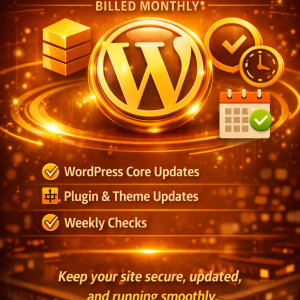
If you rely on WordPress to run your online presence, you know that small maintenance tasks can prevent big headaches. Consistency in updates isn’t just about staying current; it’s about keeping your site secure, fast, and dependable for your visitors. In this article, you’ll discover why updates are essential, how a structured maintenance routine helps you avoid outages, and how weekly checks fit into a larger strategy for long-term stability. You’ll also learn how a focused package like WordPress Care Essentials—covering core updates, plugin and theme updates, and weekly checks—can become your reliable framework for ongoing reliability.

Why regular updates matter for your website
Updates are more than cosmetic improvements or feature additions. They are built to address vulnerabilities, fix known bugs, and optimize performance. When you keep your WordPress core, themes, and plugins up to date, you reduce the risk of security breaches, compatibility issues, and slowdowns that can frustrate your users and damage your search rankings.
- Security patches close gaps that opportunistic attackers might exploit.
- Bug fixes resolve issues that cause erratic behavior or site crashes.
- Performance optimizations can improve page speed, which directly affects user experience and SEO.
- Compatibility updates ensure new features work smoothly with your site’s environment.
You might wonder how often updates should happen in practice. The short answer is: as often as needed to stay secure and stable, but with safeguards in place to avoid breaking changes. That’s where a thoughtful update cadence and weekly health checks come into play. By combining regular updates with proactive monitoring, you set up your site to recover quickly from any hiccup and maintain a steady performance baseline.
What you’ll get with WordPress Care Essentials
WordPress Care Essentials is designed to provide a comprehensive maintenance framework that keeps your site current and healthy. It focuses on three core activities: updating the WordPress core, updating plugins and themes, and performing weekly checks to catch problems early. Here’s a concise look at what this package includes and why each part matters.
| Component | What it covers | Frequency | Why it matters |
|---|---|---|---|
| WordPress core updates | Updates to the WordPress core, including security fixes, performance improvements, and new features | As release notes indicate; typically within days to weeks of a new version | Core updates are foundational. They patch vulnerabilities, improve code quality, and lay the groundwork for compatible plugins and themes. Delaying core updates increases exposure to attacks and incompatibilities. |
| Plugin & theme updates | Updates for installed plugins and themes, including security patches and compatibility tweaks | Weekly or as soon as updates are available | Plugins and themes extend functionality but can introduce conflicts if they lag behind WordPress core. Timely updates reduce risk and preserve site behavior. |
| Weekly checks | A round of checks that includes backups, security scans, uptime monitoring, performance analysis, and compatibility review | Weekly | Regular checks reveal issues before they escalate, enabling you to respond quickly and minimize downtime. Consistency builds trust with your audience and search engines. |
If you maintain WordPress Care Essentials, you’re not simply applying patches; you’re implementing a disciplined process that preserves your site’s integrity over time. Each element plays a distinct role, and together they create a safety net that helps you navigate updates with confidence.
How consistent updates improve site stability
Stability is about predictability. When you know your site behaves consistently under a given set of conditions, you can plan, scale, and respond to changes more effectively. Consistency in updates contributes to stability in several tangible ways:
- Reduced risk of security incidents: Regular core and plugin updates close known vulnerabilities, reducing the probability of breaches that can cause downtime or data loss.
- Fewer compatibility surprises: Updates are designed with compatibility in mind, but friction can occur when core and plugins are out of sync. A steady rhythm helps mitigate these friction points.
- Improved performance: Many updates include performance optimizations, which directly translate into faster page loads and better user experiences.
- Clear rollback options: When updates are planned and tested in a controlled environment, you gain safer rollback options if something unexpected occurs.
- Better error monitoring: Weekly checks create a routine where issues are identified early, logged, and acted upon, reducing the chance that a problem becomes widespread.
You might ask how weekly checks reinforce this stability. The answer is simple: preventive monitoring reduces the blast radius of issues. Instead of discovering a problem after your visitors notice it, you flag it, diagnose it, and fix it during a scheduled maintenance window. This proactive approach minimizes disruption and protects your brand’s reliability.
A closer look at weekly checks: what you should review every week
Weekly checks are the heartbeat of your maintenance routine. They’re not just a list of tasks; they’re a deliberate set of activities designed to detect small changes before they become big problems. Here’s a practical breakdown of what you should review each week and why it matters.
- Backups and recovery readiness
- What to check: Ensure the latest backup completed successfully, verify backup integrity, and confirm you can restore from the backup if needed.
- Why it matters: In a worst-case scenario—such as a malware infection, server failure, or accidental deletion—you need a reliable restore point to minimize downtime and data loss.
- Security posture
- What to check: Review security scans for malware, review login activity for unusual patterns, and confirm firewall and protection plugins are functioning correctly.
- Why it matters: Ongoing threats require ongoing vigilance. Regular checks reduce exposure to attacks and help you respond decisively when suspicious activity appears.
- Core, plugin, and theme update status
- What to check: Confirm there are no overdue updates; review changelogs and compatibility notes for any updates slated for the week.
- Why it matters: Timely updates reduce risk. Delayed updates can create a cascade of compatibility issues that are harder to resolve later.
- Uptime and performance metrics
- What to check: Review uptime monitors, page load times, server response times, and error rates; watch for spikes that need investigation.
- Why it matters: Speed and availability are fundamental to user experience and search engine ranking. Subtle performance regressions can erode satisfaction over time.
- Functionality and user experience checks
- What to check: Validate core interactions (forms, checkout, login), test critical flows, and ensure accessibility standards remain intact.
- Why it matters: A smooth, accessible experience supports conversions, engagement, and trust.
- SEO health and indexing
- What to check: Ensure there are no crawl errors, monitor for broken links, and verify that sitemaps and meta data remain accurate.
- Why it matters: SEO health is a long-term investment. Small issues can influence rankings and visibility.
- Caching and delivery optimization
- What to check: Confirm caching layers are serving the latest content, check purging rules, and verify CDN performance.
- Why it matters: Correct caching ensures fast delivery without serving stale content, which can frustrate visitors and degrade trust.
- Accessibility and inclusivity checks
- What to check: Run basic accessibility checks to confirm that content remains navigable by screen readers and keyboard-only users.
- Why it matters: Accessibility expands your audience and aligns with current legal and ethical standards.
To keep this systematic, you can document your weekly checks in a compact table that you reuse every week. The table below is a practical template you can adapt to your stack.
| Check category | What you’re looking for | Why it matters | How you know it’s OK |
|---|---|---|---|
| Backups | Ensure backup exists, runs successfully, and can be restored | Protects against data loss | Restore test completes within your target recovery window |
| Security | Malware scans clean, no unusual login activity | Prevents breaches | Alerts cleared and no new vulnerabilities detected |
| Updates | Core/plugins/themes up-to-date | Reduces risk of incompatibilities | No overdue updates; changelogs reviewed |
| Uptime | Site reachable, low latency | Maintains availability | Uptime report shows 99.9%+ in the period |
| Performance | Page speed and server response under threshold | Improves UX and SEO | Core web vitals within target ranges |
| Functionality | Key flows work as expected | Maintains conversions and user satisfaction | Passes predefined test scenarios |
| SEO health | No broken links, sitemaps accurate | Keeps rankings healthy | SEO dashboard reports clean errors |
| Caching | Cache purges and content freshness | Ensures fresh content delivery | No stale content or misconfigured cache rules |
| Accessibility | Keyboard navigation and simple ARIA checks | Broadens inclusivity | Passes basic accessibility checks |
If you adopt a weekly checks framework, you’ll notice that many issues have a predictable pattern. For example, a delayed plugin update may cause a temporary mismatch with the latest PHP version, which in turn affects compatibility with your theme. By having a weekly checklist, you remove the guesswork and create a consistent cadence for reviewing and addressing those mismatches before they become customer-visible issues.
The practical benefits of consistent updates for stability
Now that you’ve seen the components and the weekly checks, you might wonder what these practices translate to in real terms. Here are several practical outcomes you can expect when updates happen consistently and checks are performed weekly.
- Fewer unplanned outages: By catching issues early, you reduce the frequency and duration of unplanned downtime.
- More predictable maintenance windows: When you maintain a steady cadence, your maintenance windows become predictable for both your team and your audience.
- Reduced firefighting: Consistent upkeep shifts your team from reactive troubleshooting to proactive improvement, lowering stress and fatigue.
- Improved user trust and retention: A stable, fast site encourages visitors to stay longer, complete actions, and return.
- Better long-term cost efficiency: Preventative maintenance tends to cost less than emergency remediation after a failure or breach.
- Stronger security posture: Regular patches close known gaps, making your site a harder target for attackers.
Best practices for implementing updates without disruption
Applying updates without causing disruption requires a thoughtful approach. Here are practical steps you can follow to minimize risk while keeping your site fresh.
- Create a maintenance window
- Choose a time with minimal traffic to apply updates. Communicate the window to your users if necessary.
- Use a staging environment
- Mirror your live site in a staging environment where you can test updates before pushing them to production.
- Back up before updating
- Take a full backup of your database and files, so you can revert if something goes wrong.
- Update in a controlled sequence
- Start with the WordPress core, then plugins, and finally themes. Monitor at each stage.
- Review changelogs and compatibility notes
- Read the update notes to anticipate potential conflicts or required adjustments.
- Run a quick post-update test
- Check critical paths (login, forms, checkout, search) to ensure nothing regressed.
- Have a rollback plan
- Know how to revert to a previous core, plugin, or theme version if issues arise.
- Document the outcome
- Record what was updated, any issues, and how you resolved them. This builds institutional knowledge.
Case studies and practical scenarios
To illustrate how these concepts play out in real sites, consider two hypothetical scenarios that demonstrate the value of consistent updates and weekly checks.
Scenario A: Small business site with e-commerce
- Problem: A sudden security warning appears after a plugin update, and the site briefly goes offline.
- Solution: The core and plugin updates were scheduled within a maintenance window. A staging environment was used to verify compatibility with the current theme and payment gateway. A backup was restored to a clean state, and the issue was resolved by applying a compatible plugin version. Weekly checks caught the warning before it reached production, allowing preemptive action.
- Outcome: Downtime was minimized, and the site returned to full functionality quickly. The incident reinforced the importance of weekly checks and a tested rollback plan.
Scenario B: Content-driven site with high traffic
- Problem: A theme update introduces a layout shift on mobile devices, affecting user experience.
- Solution: The update was tested on staging, and a small CSS tweak was applied to restore the mobile layout while delaying the full theme update until a more compatible version was available. Backups and a rollback plan were in place; the issue was contained in hours rather than days.
- Outcome: The adjustment preserved user experience and avoided a broader redesign, demonstrating how careful stage testing and weekly checks can prevent widespread disruption.
The human side: balancing automation with oversight
Automation can handle repetitive tasks, but your judgment remains essential. Updates can occasionally trigger unexpected consequences that require human oversight. Here are a few considerations to keep in mind as you balance automation and hands-on management.
- Automation accelerates speed but can miss nuance: Automated update processes can apply changes quickly, yet they might not detect a business-specific impact (like a custom integration behaving differently after an update). Pair automation with manual checks for critical flows and KPIs.
- Oversight reduces risk: Even with automated systems, you should review update notes, test results, and user-facing changes. This helps you choose the right moment to deploy and helps you communicate changes to stakeholders.
- Documentation supports continuity: Maintaining a record of what was updated, why it was updated, and what issues occurred creates a knowledge base you can rely on for future decisions.
How to implement a weekly maintenance routine
If you’re building a maintenance routine from scratch, start with the three pillars of WordPress Care Essentials and then layer in a weekly checks protocol. Here’s a practical blueprint you can adapt to your needs.
- Define your maintenance cadence
- Decide how often you will perform updates (for example, every week or every two weeks) and how often you’ll review backups, security, and performance.
- Set up a staging environment
- Create a staging site that mirrors your production environment. Use it to test core, plugin, and theme updates before applying them on live.
- Build a robust backup routine
- Ensure you have automated, reliable backups for both files and the database. Schedule periodic restore tests to validate recoverability.
- Establish a weekly checks checklist
- Create a standardized checklist (like the table above) and run it every week. Use a shared document or automation tool to track results.
- Create a risk-based update strategy
- Prioritize updates based on severity and impact. Critical security patches get precedence; feature updates can be staged as needed.
- Communicate with stakeholders
- Keep your team and clients informed about maintenance windows, expected downtime (if any), and the outcomes of updates.
- Measure and adjust
- Track metrics such as uptime, page speed, error rates, and user feedback. Use these insights to refine your routine.
Common concerns and how to address them
You may have concerns about updates disrupting your site or breaking functionality. Here are some common worries and practical ways to address them.
- Concern: Updates cause site downtime.
- Response: Plan maintenance windows, use a staging environment, and ensure reliable backups. Pre-test updates and have a rollback plan ready.
- Concern: Updates break custom code or integrations.
- Response: Test in a staging environment, review compatibility notes, and consider delaying non-critical updates until compatibility is confirmed.
- Concern: Updates are time-consuming.
- Response: Automate where possible, and delegate routine checks to teammates or a maintenance service. Treat updates as a standard cost of doing business rather than a one-off burden.
- Concern: Security remains a challenge.
- Response: Pair regular patching with proactive monitoring, incident response planning, and user education about best security practices.
- Concern: Website performance declines after updates.
- Response: Re-evaluate caching rules, run performance tests after updates, and apply targeted optimizations as needed.
Why weekly checks complement updates
Updates provide the essential protection and feature parity, but weekly checks are the frictionless way you keep the site honest. They create a feedback loop that helps you notice subtle changes, such as a plugin that gradually slows down or a login page that becomes slightly less responsive. In combination, updates and weekly checks create a disciplined workflow that preserves the user experience and reduces risk over time.
- You gain early warnings before issues escalate.
- You reinforce a culture of accountability and continuous improvement.
- You build a robust governance framework that can scale with your site.
A practical view: how this approach translates into day-to-day life
You’re not trying to chase every possible problem; you’re creating a dependable rhythm that makes your site safer, faster, and more reliable. The combination of consistent updates and weekly checks changes your daily experience in concrete ways:
- You spend less time firefighting because issues are identified early and resolved promptly.
- You maintain confidence that critical pathways in your site remain accessible and functional.
- You can communicate more clearly with clients, teammates, and stakeholders about what’s happening, when, and why.
How to start with WordPress Care Essentials
If you’re ready to adopt a structured approach to WordPress maintenance, the WordPress Care Essentials package provides a clear and practical framework. It focuses on three core activities that align with the goals of stability, security, and performance.
- WordPress core updates: Keep your core software current to minimize vulnerabilities and maintain compatibility with themes and plugins.
- Plugin & theme updates: Stay current with the extensions that power your site’s features, ensuring compatibility and security.
- Weekly checks: Establish a reliable routine for monitoring backups, security, uptime, performance, and user experience.
To get started, you can follow these steps:
- Assess your current maintenance state
- Review your existing update cadence, backup strategy, and monitoring setup. Identify gaps and prioritize improvements.
- Choose a staging workflow
- If you don’t already have a staging environment, consider implementing one. This step is crucial for safe testing.
- Implement a weekly checks schedule
- Create a reusable checklist (like the one outlined above) and assign ownership for each item.
- Establish a standard operating procedure (SOP)
- Document the exact steps you’ll take for updates, backups, and checks so that anyone on your team can follow them.
- Monitor, adjust, and optimize
- Track outcomes, refine the cadence as needed, and continuously improve your maintenance process.
A closer look at the broader impact on your website
Maintaining a stable WordPress site isn’t only about preventing outages; it’s about preserving the trust and authority you’ve built with your audience. Here are additional ways that consistent updates and weekly checks contribute to long-term success:
- Trust and credibility: A well-maintained site signals reliability to your visitors and customers, which supports engagement and conversions.
- Consistency in branding and experience: Regular maintenance reduces the likelihood of disruptive changes that could affect your branding or user experience.
- Better data protection: Regularly patched software reduces the risk of data breaches, helping you protect sensitive information and comply with data protection practices.
- Smooth scalability: As your site grows, a stable foundation makes it easier to add new features and expand your audience without jeopardizing performance.
- Clear governance and accountability: A documented maintenance routine creates transparency, which is valuable for teams and stakeholders who depend on the site’s stability.
A final note on your maintenance journey
You don’t have to tackle this alone. Many site owners find that partnering with a maintenance package like WordPress Care Essentials makes the process more predictable, more efficient, and more effective. The combination of core updates, plugin & theme updates, and weekly checks provides a structured path toward ongoing stability, security, and performance. Whether you’re running a small personal blog or a large e-commerce storefront, a disciplined approach to updates and checks is a wise investment that pays dividends over time.
If you’re considering next steps, think about your specific site needs, your team’s bandwidth, and your tolerance for risk. You can start by consolidating updates into a weekly cycle, then add weekly checks as a standard practice. As you gain experience with this rhythm, you’ll likely find that your site’s resilience grows, your user experience improves, and your confidence in managing WordPress increases.
Summary: the core takeaway
- Consistent WordPress updates are a foundational element of website stability, security, and performance.
- A structured maintenance package like WordPress Care Essentials ensures you cover core updates, plugin & theme updates, and weekly checks—three interlocking pieces that protect your site over time.
- Weekly checks provide a proactive layer of protection, enabling you to catch and address issues before they impact your visitors.
- A sound update strategy, paired with staged testing and reliable backups, minimizes risk and supports steady growth.
- By combining automation with human oversight, you create a sustainable maintenance routine that you can rely on day in and day out.
If you’d like, I can tailor this framework to your specific WordPress setup, including a customized weekly checks checklist and a sample staging workflow that fits your hosting environment and team structure. The goal is simple: you want a site that stays stable, fast, and secure without turning maintenance into a constant headache. With a clear plan in place and a commitment to consistent practice, you can achieve that stability—and enjoy the peace of mind that comes with knowing your site is well cared for.








0 Comments