

Have you ever wondered how small, regular maintenance tasks can save you from major outages and costly repairs down the road?

How Routine WordPress Maintenance Helps Avoid Costly Repairs
In this article, you’ll discover how keeping your WordPress site up to date and routinely checked protects your hard work, your visitors, and your budget. You’ll learn why updates are essential, why weekly checks matter, and how a structured maintenance routine—such as WordPress Care Essentials—can keep your site running smoothly, securely, and fast. By the end, you’ll have a clear picture of how routine maintenance acts as an insurance policy against expensive fixes and downtime.
The value proposition of regular maintenance
You rely on your website for business, lead generation, education, or community building. When you neglect maintenance, you’re playing a high-stakes game where a small vulnerability can turn into a big problem. Regular maintenance isn’t just about software upgrades; it’s about proactive health monitoring, continuity planning, and performance optimization. You invest a little time on a schedule, and you gain reliability, trust, and a safer online presence. Think of it as preventative care for your digital storefront.
What you’ll gain from routine WordPress maintenance
- Fewer unplanned outages and urgent repairs
- Improved security and protection against hackers and malware
- Consistent site speed and user experience
- Better search engine visibility due to stable performance
- Predictable budgeting with fewer surprise incident costs
- Peace of mind knowing you have a tested backup and recovery process
- A straightforward path to scalable growth as your site evolves
Below, you’ll find a detailed, practical exploration of why updates matter, why weekly checks are necessary, and how a maintenance package like WordPress Care Essentials fits into your ongoing strategy.
Why Updates Matter
Updates are the most visible and often the most misunderstood aspect of website maintenance. They’re not cosmetic; they’re essential for security, compatibility, and performance. When you delay updates, you open doors to problems that can cascade into downtime, data loss, and expensive repair work.
WordPress core updates: Why they are non-negotiable
Your WordPress core is the backbone of the site. Core updates address security vulnerabilities, fix bugs, and introduce improvements that ensure compatibility with modern PHP versions, web servers, and technologies. When you delay core updates, you increase the risk of a publish-and-rotate scenario where a plugin or theme compatible with your old core becomes incompatible with newer standards. That misalignment can cause broken functionality, page errors, or even an unusable site.
- Core updates patch known security holes that attackers routinely target.
- They improve performance, accessibility, and platform stability.
- They ensure your site remains compatible with the latest PHP, database behavior, and hosting environments.
What you should do: establish a routine to test and apply core updates in a controlled way. Many sites run core updates in a staging environment first and then push to live after a quick verification. This minimizes risk and preserves your visitor experience.
Plugin updates: Keeping your extensions healthy
Plugins extend WordPress capabilities, but each plugin is another potential point of failure. A plugin update can fix a vulnerability, add a feature, or improve compatibility. It can also break something if there’s a conflict with another plugin or with the active theme. Regular plugin updates reduce the “low-hanging fruit” risk: an out-of-date plugin that’s exploited or causes a fatal error after a change in WordPress.
- Update frequency should be guided by risk assessment and vendor recommendations.
- After updating, you should verify that critical functionality (forms, e-commerce, memberships) still works as expected.
- Remove or deactivate plugins that are no longer maintained or necessary.
What you should do: monitor plugin update notes, test in a staging environment when possible, and set up a rollback plan if an update causes issues. Tools like copy-on-write backups and one-click restores can help you recover quickly.
Theme updates: Design stability meets code health
Themes control the look and behavior of your site. A theme update can bring visual improvements and new features, but it can also introduce CSS/JS conflicts or layout changes that affect responsive behavior, accessibility, or plugin compatibility. Keeping your theme up to date is essential not just for aesthetics but for security and performance as well.
- Theme updates may alter templates or hooks that other plugins rely on.
- Maintaining a consistent design system reduces the risk of layout breaks on mobile devices.
- WordPress themes from trusted vendors typically release security patches and compatibility fixes alongside feature updates.
What you should do: test theme updates in a staging environment, review the changelog, and confirm that critical templates and child themes (customizations) still function correctly.
The risk of neglect: how failures compound
Delaying updates can turn manageable issues into complex and costly repairs. A single security vulnerability can be leveraged to access passwords, inject malware, or deploy defacements, all of which harm user trust and search rankings. A minor plugin conflict today can cascade into broken checkout, failed form submissions, or broken pages tomorrow. Neglect creates a complacency loop: you don’t notice small problems until they explode into urgent, resource-intensive fixes.
- Security breaches can lead to data loss, downtime, and regulatory concerns.
- Performance regressions accumulate as traffic grows, affecting conversions and user satisfaction.
- Dependency drift (core, plugins, and themes moving at different paces) increases the chance of incompatibilities.
By staying current with updates, you reduce the probability of those scenarios and create a healthier, more predictable online presence.
The Role of Weekly Checks
If updates are the “why,” weekly checks are the “how” that ensures your site actually remains healthy. Weekly checks create a safety net that captures issues early when they’re easiest and cheapest to fix.
What weekly checks typically cover
- Uptime and performance monitoring: Are pages loading quickly? Is there unusual latency? Are there any downtime events?
- Backup verification: Are your automated backups running? Can you restore a recent backup successfully?
- Security monitoring: Are you seeing signs of malware, unauthorized file changes, or login attempts? Is your firewall filtering properly?
- Update status review: Which plugins, themes, or WordPress core versions are out of date? Are there pending updates that require testing?
- Broken links and content health: Do internal and external links still work? Are there 404 errors that degrade user experience?
- Quality assurance checks: Do forms submit correctly? Do e-commerce transactions process as expected? Are third-party integrations functioning?
- Performance hygiene: Are caching layers and CDN configurations optimized? Are images properly optimized without sacrificing quality?
- Accessibility and usability checks: Do key navigation elements work for keyboard users? Are ARIA attributes present where needed?
What you should do: you should run these checks on a regular cadence, and document any issues with steps to reproduce and a plan for resolution. The goal is to catch problems before your visitors notice them.
Why weekly checks are better than monthly checks
Weekly checks strike a balance between operational overhead and risk reduction. They give you enough visibility to spot early problems without needing a full-time, around-the-clock monitoring team. With weekly checks, you’re operating on a proactive model rather than a reactive one. You’re not waiting for a customer report of a broken form or a page that won’t load; you’re catching it in your internal health review and fixing it before it becomes public.
- Early detection reduces repair costs and downtime
- You maintain a more consistent user experience
- Your SEO performance stays stable because user signals and crawl behavior aren’t disrupted by errors
Practical steps to implement weekly checks
- Create a simple checklist template you can reuse every week.
- Schedule a recurring maintenance window that fits your business rhythm.
- Use monitoring tools with alerting so you’re notified when something requires attention.
- Maintain a knowledge base of common issues and your standard recovery playbooks.
- Document changes so you can track what fixes were implemented and why.
Introducing WordPress Care Essentials
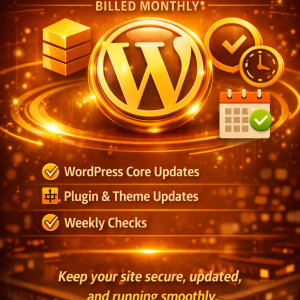
WordPress Care Essentials is a website maintenance package designed to simplify the ongoing care your site needs. It focuses on three core pillars: core updates, plugin & theme updates, and weekly checks. By consolidating these tasks into a repeatable process, you can keep your site secure, fast, and reliable without reinventing the wheel every week.
What this package includes
- WordPress core updates: Regularly keeping the WordPress core up to date to protect against vulnerabilities and improve performance and compatibility.
- Plugin & theme updates: Timely updates to extensions and themes to maintain security and feature compatibility.
- Weekly checks: A consistent, proactive review of site health, including backups, security, performance, and content integrity.
The emphasis is on consistency, risk reduction, and predictable maintenance costs. When you commit to a regular routine, you’re investing in the long-term health of your site.
Table: WordPress Care Essentials components and focus
| Component | Focus | Why it matters |
|---|---|---|
| WordPress core updates | Security, compatibility, performance | Reduces risk of exploit, ensures compatibility with hosting and plugins |
| Plugin updates | Security, features, bug fixes | Addresses vulnerabilities, prevents conflicts, maintains functionality |
| Theme updates | Security, design stability, accessibility | Keeps visuals consistent and code healthy |
| Weekly checks | Health monitoring, backups, performance | Early problem detection, reliable recovery, steady user experience |
How weekly checks fit into your bigger maintenance plan
Weekly checks are a crucial cadence within a broader maintenance strategy. They complement more in-depth quarterly or semi-annual reviews, content audits, and performance optimizations. While updates are essential when they’re released, weekly checks ensure you’re aware of issues as soon as they appear and can respond quickly. This combination minimizes risk, protects your revenue streams, and preserves your site’s credibility with visitors.
Best Practices for a Practical Maintenance Routine
A robust maintenance routine combines automation, discipline, and human oversight. You want processes that are repeatable, auditable, and scalable as your site grows.
Build a maintenance calendar you can actually keep
- Set a regular day and time for updates and checks, and treat it as non-negotiable.
- Create a staging environment and phantom test data to verify updates before applying them to live.
- Establish a rollback plan for each major update or change.
What you should do: use a shared calendar or a task management tool to assign responsibilities, track progress, and store notes about issues and fixes. The goal is transparency and reliability.
Establish a reliable backup and recovery strategy
Backups are your safety net. They’re non-negotiable for prevention and recovery. You should have:
- Regular automated backups (daily or more frequent for high-traffic sites)
- Off-site storage to guard against hosting failures
- Verified restore tests to validate that backups can be used to recover
- Versioned backups so you can roll back to specific points in time
What you should do: test restores on a non-production environment to confirm you can recover quickly. Document restore steps so your team can act without delay during an incident.
Security hygiene that pays off
Security is not a set-it-and-forget-it concern. Adopting ongoing security hygiene can prevent breaches and minimize impact when an incident occurs.
- Use strong authentication: multi-factor authentication (MFA) for admin accounts, strong passwords, and least privilege access.
- Limit login attempts and protect against brute force attacks.
- Keep active security plugins updated and configure firewall rules that block suspicious traffic.
- Regularly review user roles and remove unnecessary accounts.
- Monitor file integrity to detect changes that may indicate compromise.
What you should do: set up automated security scans, review alerts weekly, and implement a staged response plan for alerts.
Performance optimization as a continuous activity
Performance is a user experience and SEO issue. Slow sites frustrate visitors and can drive away potential customers. You should focus on:
- Caching strategies that reduce load times and server load
- Image optimization that balances quality and file size
- Database cleanups to remove overhead and improve query performance
- CDN usage to deliver content quickly to a global audience
- Minification and concatenation of CSS/JS where appropriate
What you should do: regularly review performance metrics (Time to First Byte, Largest Contentful Paint, etc.) and adjust configurations to maintain fast, stable responses.
Content health and accessibility checks
Maintenance isn’t only about code; your content matters too. Content health includes ensuring that posts, pages, and media are accurate, up to date, and accessible.
- Check for broken links and 404 errors; fix or redirect as needed.
- Update outdated content that references old policies, products, or pricing.
- Ensure accessibility basics (alt text for images, proper heading structure, keyboard navigation) are in place.
What you should do: schedule periodic content audits and accessibility reviews to preserve quality and reach.
A Practical, Step-by-Step Schedule
To help you implement a durable maintenance routine, here is a practical weekly schedule you can adapt to your site’s needs. This plan keeps updates timely and checks thorough without overwhelming you.
- Monday: Core and essential plugin updates in a staging environment
- Review release notes and potential impacts
- Run automated tests and manual checks on the staging site
- If everything passes, push updates to live with a quick backup
- Tuesday: Backup verification and security sweep
- Verify that nightly backups ran and can be restored
- Run security scans and examine any alerts
- Review login activity and user roles
- Wednesday: Performance and optimization pass
- Check caching and CDN configurations
- Optimize new or large media files
- Run a quick performance test and address any regression
- Thursday: Content health and link integrity
- Check for broken internal and external links
- Update stale content and fix outdated references
- Validate forms and checkout flows if you run a store
- Friday: Accessibility and UX polish
- Review keyboard navigation and screen reader compatibility
- Check color contrast and responsive behavior across devices
- Ensure important CTAs remain visible and functional
- Weekend: Emergency drill and documentation update
- Review and update your incident response plan
- Refresh documentation on maintenance procedures and rollback steps
This schedule is a template. You’ll adjust frequency for high-traffic weeks, product launches, or major campaigns. The key is consistency and documentation so you or your team can execute quickly when issues arise.
Implementing Maintenance at Scale
If your site grows, maintenance can become more complex. You’ll want scalable processes that remain manageable as you add features, pages, products, or services.
Automate what you can, document what you can’t
Automation reduces repetitive, error-prone tasks. Use:
- Automatic backups on a schedule you can trust
- Automatic core/theme/plugin update checks with staged rollouts
- Monitoring tools that alert you to performance or security anomalies
But you’ll still need human oversight for updates that affect critical flows, content changes, and business-specific configurations.
Build a repeatable, auditable process
Document every maintenance activity. Include:
- Date and time of each update
- Versions of core, plugins, and themes before and after
- Steps you took to verify functionality
- Any rollback steps you performed and why
Auditable processes help you learn from each maintenance cycle, improve your plan, and demonstrate due care if you ever need to explain changes to clients or stakeholders.
Training and knowledge sharing
As you scale, train teammates to perform routine maintenance tasks. A concise playbook or checklist reduces the risk of mistakes and accelerates response times during incidents. Regularly review procedures and incorporate lessons learned from past maintenance cycles.
Real-World Scenarios: How Routine Maintenance Prevents Costly Repairs
To illustrate the value of routine maintenance, consider a few common scenarios and how a steady maintenance routine prevents expensive outcomes.
Scenario 1: A vulnerability in a plugin is disclosed by the vendor
- Without routine checks, you might miss a critical plugin update, leaving your site exposed.
- With weekly checks, you quickly apply the update in a controlled manner, verify compatibility, and minimize exposure.
Scenario 2: A theme update creates a layout mismatch on mobile
- A staged deployment helps you catch responsive issues before live deployment.
- With a rollback plan, you revert to the previous version and investigate the root cause without downtime.
Scenario 3: A failed backup during a disaster event
- Regular backup verification ensures you know whether restoration is possible.
- If a backup fails, you fix the backup process promptly and avoid data loss.
Scenario 4: A sudden traffic spike reveals a performance bottleneck
- Ongoing performance optimization helps you adjust caching, images, and database queries.
- A CDN and optimized assets reduce load times, preserving user experience and conversions.
These scenarios show that a disciplined maintenance routine isn’t theoretical. It’s practical risk management that protects your site, your users, and your business.
Tables for Quick Reference
Table: Maintenance task cadence and focus
| Cadence | Focus | Examples |
|---|---|---|
| Daily (optional) | Quick health checks | Uptime alerts, error logs, failed requests |
| Weekly | Core/Plugin/Theme updates in staging, backups verified, security scans, health checks | Review updates, test in staging, confirm backups, check for malware |
| Monthly | Performance audits, UX refinements, content health | Check page speed, review accessibility, update outdated content |
| Quarterly | Security policy review, disaster recovery drill | Review incident response plan, test full restore from backup |
| As needed | Emergency fixes | Rollback, hotfix deployments, site hardening |
Table: Quick decision guide for updates
| Situation | Action | Rationale |
|---|---|---|
| Core update released with high-risk CVE | Update in staging, test, deploy to live | Reduces exposure to critical vulnerabilities |
| Plugin update introduces conflict | Revert plugin, investigate alternative, contact support | Maintains site functionality while seeking a solution |
| Theme update includes visual changes | Test in staging, communicate changes to stakeholders | Maintains user experience while enabling improvements |
| No known issues after testing | Deploy to live with backups | Efficiently moves improvements to users |
Table: Weekly checks checklist (condensed)
| Area | What to check | Acceptance criteria |
|---|---|---|
| Backups | Run, verify restoration, review storage | Restore succeeds; backups cover the last 24–72 hours (as appropriate) |
| Security | Scan results, login activity, firewall status | No critical alerts; suspicious activity controlled |
| Performance | Load times, caching, CDN status | No regressions; response times under target thresholds |
| Content | Broken links, outdated content | No 404s; content accurate and up to date |
| Functionality | Forms, checkout, integrations | All critical paths work as expected |
Why You Need a Proactive Mindset
Maintenance isn’t a one-off or a passive activity. It requires a proactive mindset where you expect issues to arise and prepare for them before they disrupt your audience. The return on this proactive approach shows up as reliability, steady growth, and a stronger brand reputation. When your site runs smoothly, you can focus on creating value for your visitors rather than firefighting.
Align maintenance with business goals
Your maintenance plan should reflect your business priorities. If you sell products, you can place extra emphasis on checkout functionality and payment security. If your site showcases content, you may prioritize content health, accessibility, and SEO stability. Your weekly checks should be shaped by what matters most to you and your users.
Cost considerations and budgeting
Maintenance costs are often far lower than the cost of a major repair after a breach or downtime. A predictable maintenance plan helps you budget effectively, avoid emergency spending, and allocate resources toward growth initiatives rather than crisis management.
- Core updates are generally low-cost when performed on a schedule.
- Regular backups reduce the risk of data loss and the associated recovery costs.
- Proactive performance tuning reduces hosting expenses by lowering server load and improving conversion rates.
Getting stakeholder buy-in
If you’re collaborating with clients or teammates, present maintenance as an investment rather than a cost. Show how routine updates and weekly checks translate into reduced risk, better performance, and more reliable user experiences. A clear plan with measurable outcomes makes it easier to secure commitment and funding for ongoing maintenance.
Handling Common Objections
You may encounter questions about whether maintenance is necessary, how much time it takes, or what you’ll do if something goes wrong. Here are concise responses to common objections.
- Objection: “We rarely get hacked; why update?” Answer: Even without a breach, obsolete core, plugins, and themes create performance and compatibility risks that can affect user experience and SEO. Updates close vulnerabilities and improve stability.
- Objection: “Weekly checks sound like a lot of work.” Answer: The checks are structured and repeatable, reducing the time spent on emergencies. Automation and a clear playbook keep the workload manageable.
- Objection: “What if an update breaks something?” Answer: Use staging, test thoroughly, and maintain a rollback plan. Most issues are resolved quickly with a well-documented process.
- Objection: “We don’t have a dedicated admin.” Answer: A maintenance package can provide a comprehensive solution that doesn’t require you to become a full-time admin. Outsourcing or bundling services can fit your budget.
Final Thoughts
Regular WordPress maintenance is not a luxury; it’s an essential discipline for any site that wants to stay secure, fast, and reliable. Updates to WordPress core, plugins, and themes reduce exposure to vulnerabilities and incompatibilities. Weekly checks provide a practical, proactive approach to catching problems early, validating backups, and preserving a smooth visitor experience. When you combine these elements into a coherent plan—whether you implement WordPress Care Essentials or tailor a custom routine—you’re building resilience into your site’s DNA.
You now have a clear understanding of why routine maintenance matters, what needs to be done, and how to structure a practical schedule that fits your site. The next step is to commit to a consistent cadence, establish a testing environment for updates, and create a rollback-ready process. With that foundation, you’ll minimize costly repairs, protect your uptime, and keep your visitors engaged and satisfied.
If you’d like, I can help you tailor a maintenance plan that aligns with your website’s goals, traffic patterns, and technical stack. We can map out a weekly checklist, designate roles, and set up a basic staging and backup workflow so you’re ready to act quickly whenever updates are released or issues arise. Your site’s health is worth protecting, and a thoughtful maintenance routine is the best way to do that.








0 Comments