


Ready to ensure your WordPress site stays secure, fast, and reliable in 2026 and beyond?
The Business Case For WordPress Care Essentials In 2026
You entrust your website to represent your brand, convert visitors, and drive revenue. When you consider WordPress Care Essentials, you’re choosing a structured approach to keep your site healthy, compliant, and performing at its best. In this guide, you’ll see why updates, weekly checks, and a deliberate maintenance rhythm are not optional extras but essential investments for your business outcomes this year and into the next decade.

Why updates matter in 2026
Updates are not mere housekeeping. They fix security holes, improve compatibility, and provide performance enhancements that can affect every visitor interaction. In 2026, you’ll face an expanding ecosystem where plugins, themes, and the WordPress core evolve rapidly. Skipping updates creates a widening gap between your site and the current security and performance baseline. You’ll find that even small delays in applying a core update or a plugin patch can lead to cascading issues—from site downtime to broken features, sluggish pages, and degraded user experience. You deserve a proactive approach that reduces risk, preserves uptime, and maintains trust with your audience.
What WordPress Care Essentials includes
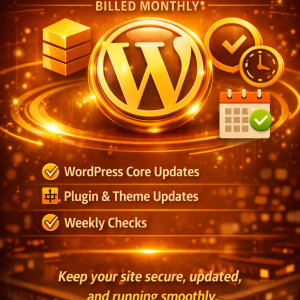
WordPress Care Essentials is a website maintenance package designed to cover three core areas: WordPress core updates, plugin and theme updates, and weekly checks. Together, these elements create a stable foundation for your site while freeing you to focus on growth and content. You’ll gain predictable operations, better security posture, and a clearer view of your site’s health over time.
- WordPress core updates: Regularly applying the latest WordPress releases to benefit from security patches, performance improvements, and new features that align with modern browsing environments.
- Plugin & theme updates: Keeping extensions current to prevent compatibility issues, security vulnerabilities, and deprecated APIs that can disrupt functionality.
- Weekly checks: A recurring review cycle to verify backups, test critical features, monitor uptime, and catch issues before they impact users.
To make this tangible, consider the following simple table that outlines how each component contributes to your business outcomes.
| Component | Primary benefit for your business | Why it matters now |
|---|---|---|
| WordPress core updates | Security patches, performance improvements, new features | Keeps your site defended against evolving threats and ensures compatibility with modern web standards |
| Plugin & theme updates | Bug fixes, security improvements, compatibility with latest core | Reduces the risk of plugin/theme conflicts that can break pages or forms |
| Weekly checks | Early detection of issues, consistent backups, performance surveillance | Minimizes downtime and supports a reliable customer journey |
In practice, Care Essentials is more than a checklist. It’s a disciplined routine designed to shield your brand, protect conversions, and preserve your site’s value over time.
Why weekly checks are necessary
Weekly checks create a deliberate cadence that prevents problems from piling up. You’ll gain visibility into tiny issues before they become big outages, and you’ll have a documented history that informs future decisions. This regularity aligns with the way modern sites operate: frequent content updates, dynamic plugins, and user expectations for fast, secure experiences. A weekly review doesn’t just catch problems; it creates a feedback loop that improves performance, security, and reliability week after week.
- You’ll verify that backups completed successfully and that you can restore quickly if needed.
- You’ll confirm uptime monitoring is reporting accurately and that no critical pages are degraded.
- You’ll re-test essential functionalities such as contact forms, checkout flows, login processes, and membership access.
- You’ll review security signals, plugin versions, and any incompatibilities introduced by recent changes.
To help you visualize the value of weekly checks, consider this comparison table that contrasts a reactive approach with a proactive, weekly-check approach.
| Approach | What you’re doing | Expected outcome |
|---|---|---|
| Reactive maintenance | You respond to issues after they surface | Unplanned downtime, reactive firefighting, unpredictable costs |
| Weekly checks | You perform a structured review each week | Fewer outages, faster issue resolution, ongoing optimization, predictable costs |
A weekly checks routine gives you a proactive stance in a landscape where threats, bugs, and performance regressions can creep in gradually. You’ll notice fewer emergency patches, lower emergency support costs, and a steadier trajectory for your site’s performance metrics.
The business value of a regular maintenance cadence
You may wonder how maintenance translates into hard business metrics. The answer lies in a combination of risk reduction, cost containment, and revenue protection. When you keep your WordPress environment current and healthy, you reduce the likelihood of:
- Security breaches that compromise customer data and erode trust
- Extended downtime that causes revenue loss and frustrates visitors
- Version incompatibilities that break critical site features like forms, e-commerce checkout, or membership access
- Search performance penalties tied to slow pages or broken structured data
This isn’t theoretical. It’s a practical approach to aligning your website health with your business goals—framing maintenance as an investment rather than a cost center. The next sections break down the business case in more detail, including financial implications and how to measure success.
The business case in numbers: ROI and risk mitigation
To frame the value of WordPress Care Essentials, you can look at two lenses: risk reduction and return on investment. The risk side captures the probability and cost of incidents that maintenance helps prevent, while the ROI side captures the financial savings and revenue protection from keeping the site running smoothly. The table below provides a simplified view. You can customize these numbers to fit your own site size, traffic, and business model.
| Dimension | Metric | Typical impact you might expect with Care Essentials (illustrative) | How it translates to your business |
|---|---|---|---|
| Uptime reliability | % uptime per month | 99.95%–99.99% with proactive checks | Fewer outages, higher conversions, better user experience |
| Security incidents | Incidents per year | Significant reduction due to patches and monitoring | Lower risk of data breach costs, compliance fines, and reputational damage |
| Backups and recoveries | Recovery time objective (RTO) | Quick restores with tested procedures | Shorter downtime, less revenue at risk per incident |
| Page performance | Time to first byte (TTFB) and Core Web Vitals | Maintains or improves scores through compatibility checks | Higher SEO rankings and better user engagement |
| Maintenance labor | In-house time vs. managed care | Predictable maintenance costs and dedicated cadence | Frees up internal resources for value-add work while controlling risk |
If you quantify your own site’s risk tolerance and typical maintenance costs, you’ll likely find that weekly care reduces the total cost of ownership (TCO) over time. You can use a simple model: estimate your monthly risk-adjusted cost (including downtime, support, security incidents, and customer churn) and compare it to the monthly cost of Care Essentials. In many cases, the maintenance investment pays for itself through reduced incidents and improved reliability.
The strategic alignment: care that supports your business goals
Care Essentials should be aligned with your strategic priorities. If your focus is growth, you gain stronger support for fast launches and frequent content updates without sacrificing reliability. If your aim is profitability, you protect margins by avoiding outages that drive customer abandoned carts or churn. If your priority is brand trust and compliance, regular updates and checks help you meet security, privacy, and accessibility expectations. In every case, you’re building a more resilient digital asset that contributes to revenue, customer satisfaction, and long-term value.
How updates drive security and performance
You already know that updates fix vulnerabilities. But updates also bring performance optimizations and compatibility improvements that directly influence your user experience. Core updates can improve page rendering, caching strategies, and scripting efficiency. Plugin updates resolve known issues that cause slowdowns or conflicts with the latest PHP or theme frameworks. Theme updates keep your front-end visuals aligned with modern best practices and accessibility guidelines.
- Security: Patches against known exploits reduce the risk of data breaches and malicious activity.
- Compatibility: Updated software reduces the likelihood of breaking changes when you upgrade server components or PHP versions.
- Performance: Efficient code paths and caching enhancements can shave milliseconds off page load times.
- Reliability: Fewer regressions mean a more predictable site behavior across devices and browsers.
How weekly checks support ongoing performance optimization
Weekly checks empower you to act on small performance signals before they become visible to users. You’ll monitor metrics like page speed, server response times, and resource utilization. If a plugin or theme update introduces a regression, you’ll spot it early and respond with a targeted fix or a rollback. Over time, you compile a performance calendar that reveals trends, such as:
- Which plugins contribute to slower pages and deserve re-architecting or replacement
- The impact of new content on server load during peak times
- The benefits of code-level optimizations that complement caching and hosting improvements
This data-driven approach helps you optimize not only for now but for future updates, content strategies, and traffic growth.
The care essentials framework: a practical blueprint for 2026
To implement a practical maintenance program, you can think of Care Essentials as a three-pillar framework, with continuous improvement built in:
- Pillar 1: Core updates and security hygiene
- Pillar 2: Plugin & theme management
- Pillar 3: Weekly health checks, backups, and performance monitoring
Each pillar has a set of tasks, acceptance criteria, and a cadence that keeps you on track. The next sections unpack what each pillar entails and why it matters for your business outcomes.
Pillar 1: Core updates and security hygiene
Core updates deliver security patches, performance improvements, and new features. Security hygiene means staying ahead of threats by applying patches promptly and verifying that your environment remains hardened against common attack vectors. You’ll implement a process that combines timely updates with validation steps to ensure the site remains functional after upgrades.
- Acceptable risk posture: you define a maximum window for applying updates (for example, within 7 days of release) and ensure you have tested rollback procedures.
- Validation steps: after each core update, you test essential site functions, verify form submissions, ensure login, and confirm media serving is intact.
Pillar 2: Plugin & theme management
Plugins and themes extend WordPress capabilities but can also introduce risk if they are outdated or incompatible with your core version. Regular management reduces this risk and preserves site stability. You’ll track plugin health, deprecations, and security advisories so you can act before issues appear on live pages.
- Inventory and risk assessment: keep an up-to-date list of all active plugins/themes and rate their importance to your user flows.
- Update protocol: create a staged approach where you test updates in a staging environment before applying them to production.
Pillar 3: Weekly health checks, backups, and performance monitoring
Weekly checks are the heartbeat of your maintenance program. This pillar ensures you’re not reacting to problems you could have prevented, and it builds a safety net through tested backups and proactive monitoring. You’ll define a check-list and a standard operating procedure that you can repeat with confidence.
- Backups: verify that backups are complete, stored securely, and restorable.
- Uptime and performance monitoring: confirm that pages load within target thresholds and that critical pages are accessible.
- Security checks: review firewall rules, malware scans, and login activity for anomalies.
How to measure success: KPIs and targets
To know whether WordPress Care Essentials is delivering value, you’ll want to track a small set of KPIs that reflect site health, user experience, and business impact. The following table highlights common KPIs, how you might measure them, and plausible target ranges you could adopt.
| KPI | How to measure | Target range (example) |
|---|---|---|
| Uptime | Monitoring service uptime reports | 99.95%–99.99% per month |
| Page load speed | Core Web Vitals + lab tests | LCP |










0 Comments