

Do you know what happens behind the scenes on your WordPress site when you click update?
The Importance Of Keeping WordPress Plugins And Themes Up To Date
You rely on your WordPress site to run smoothly, serve visitors, and grow your business or project. Keeping your plugins, themes, and core WordPress installation up to date is one of the simplest and most powerful ways to protect that reliability. When you stay current with updates, you reduce vulnerabilities, improve performance, and keep your site compatible with the latest technologies. This article will walk you through why updates matter, why weekly checks are essential, and how you can implement a practical maintenance routine that keeps your site healthy over time.

Why Updates Matter
Updates exist for reasons that go beyond adding new features. They close security gaps, fix bugs that could otherwise disrupt functionality, and ensure compatibility with evolving hosting environments and web standards. If you skip updates, you may miss important patches that defend against increasingly sophisticated threats. In short, updates are your primary line of defense and your best chance to maintain a reliable online presence.
Two core ideas drive the case for updates:
-
Security protection: Most updates include patches for newly discovered vulnerabilities. Even small, unseen weaknesses can become entry points for attackers or lead to data exposure if exploited. Regular updates minimize your attack surface and reduce risk.
-
Functional stability: Updates address compatibility issues that arise as other software changes, such as PHP versions, server configurations, or integrating with third-party services. When you keep plugins and themes current, you’re less likely to encounter fatal errors, broken layouts, or broken forms.
As you consider updates, you’ll recognize that they’re not a one-and-done task. They’re an ongoing part of site maintenance that compounds in value over time. The more consistently you apply updates, the more resistant your site becomes to surprising disruptions.
Understanding WordPress Core, Plugins, and Themes
Your WordPress site consists of three layers that require attention: core WordPress, plugins, and themes. Each layer contributes to the site’s functionality and appearance, and each requires mindful updates to stay in harmony with the rest of your stack.
-
WordPress core: The foundational software that powers your site. Core updates bring new features, performance improvements, and security patches that affect every site using WordPress.
-
Plugins: Small, specialized pieces of code that extend core functionality. Plugins enable features like contact forms, SEO optimization, image optimization, and e-commerce. They are also a common source of conflicts if not kept current.
-
Themes: The design layer that controls appearance and layout. Themes can influence accessibility, responsiveness, and visual consistency. Updates to themes often include security improvements and compatibility fixes with newer core or plugin versions.
You, as the site owner or manager, are responsible for monitoring all three layers. A well-coordinated update strategy helps prevent mismatches, reduces the chance of broken features, and keeps your visitors’ experience smooth and consistent.
Security Benefits of Regular Updates
Security considerations sit at the heart of why you should update promptly. A single outdated plugin or theme can introduce a vulnerability that a hacker could exploit, potentially compromising data or serving malware to your visitors. Regular updates help you stay ahead of these threats by applying the latest protections, performance improvements, and vulnerability fixes.
-
Patch known flaws: Vendors and developers publish updates after identifying vulnerabilities. Applying the patch reduces the window of opportunity for attackers.
-
Strengthened access controls: Some updates improve how your site handles authentication, login security, and session management, making it harder for unauthorized users to gain access.
-
Hardened server compatibility: Updates often optimize how code interacts with newer server configurations and PHP versions, reducing misconfigurations that can be exploited.
-
Reduced risk of supply-chain issues: When you rely on well-supported plugins and themes, you benefit from ongoing maintenance that aligns with the broader ecosystem and security trends.
While updates are not a silver bullet, they form a reliable, practical line of defense you can rely on daily. You don’t need to be a security expert to implement a basic update routine; you just need consistency and a plan.
Performance and Reliability Gains from Updates
Beyond security, updates can positively influence how quickly your site loads, how well it responds to user interactions, and how reliably it handles traffic. Developers continually optimize code for speed, efficiency, and resource usage. When you apply updates, you often benefit from these optimizations automatically.
-
Faster page loads: Performance-focused improvements in WordPress core, plugins, or themes can shave milliseconds off page rendering, contributing to a better user experience and SEO signals.
-
Reduced error rates: Fixed bugs and improved error handling reduce the chances of white-screen errors, broken forms, or failed AJAX requests that frustrate users.
-
Better resource management: Updated code often uses fewer server resources, which can help you serve more visitors on the same hosting plan.
-
Improved accessibility and UX: Updates frequently address accessibility improvements and UI polish that enhance usability for all visitors, including those using assistive technologies.
As you maintain updates, you create a more predictable performance profile for your site. Your pages stay responsive, your forms work reliably, and your visitors experience fewer friction points.
Compatibility and Avoiding Conflicts
One of the trickiest parts of site maintenance is ensuring that updates don’t introduce conflicts between WordPress core, plugins, and themes. Compatibility matters more than you might think: a new core feature could require updated hooks, or a plugin may rely on an older function that has since changed. Conversely, a theme update might assume certain styling or script behavior that another plugin uses, leading to layout shifts or broken interactions.
To minimize conflicts, you want updates to occur in a coordinated way. When you keep core, plugins, and themes current, you’re more likely to see harmonious interactions among them. Regular testing, whether in a staging environment or on a scheduled maintenance window, helps you catch conflicts before they affect your live site.
-
Dependency alignment: Many plugins rely on specific versions of WordPress core or other plugins. Updates help ensure compatibility across dependencies.
-
Reduced deprecated code: Updates phase out or replace deprecated functions, which can create incompatibilities if you’re running older code alongside newer features.
-
Consistent UI and behavior: Updates keep the user experience consistent, reducing surprises for your visitors and your content editors.
A proactive approach to compatibility means you’re less likely to experience disruptive downtime or unexpected layout changes after an update.
How Updates Prevent Downtime
Downtime can be costly in terms of user trust, SEO rankings, and revenue, especially if your site plays a critical role in your business. Regular updates reduce the likelihood of downtime by preventing issues that arise from outdated code, insecure configurations, and incompatible components.
-
Early problem detection: When you apply updates in a controlled manner, you can detect issues early and resolve them before a wider audience is affected.
-
Safe rollback options: With good backup practices and testing, you can revert to a known-good state if something goes wrong, minimizing downtime.
-
Predictable maintenance windows: A routine approach to updates gives you predictable downtime planning, so you can communicate with users and stakeholders and avoid surprise outages.
-
Fewer emergency patches: Routine updates reduce the need for urgent, unplanned patches that can disrupt publishing schedules or introduce new risks.
If you want to maintain uptime, you should view updates as an ongoing investment in stability—less downtime, fewer emergencies, and a smoother user experience.
The Role of Weekly Checks
Updates aren’t a one-time action; they’re part of a recurring maintenance cycle. Weekly checks provide a practical cadence to catch issues early, verify that features still work as expected, and confirm that security and performance remain solid. The purpose of weekly checks is not to overburden you but to create a reliable rhythm that preserves the health of your site over time.
-
Early anomaly detection: A short weekly audit helps you notice small changes that indicate problems, such as unusual traffic patterns, error logs, or changes in performance.
-
Consistency in content and functionality: Regular checks ensure that forms, e-commerce carts, search, and navigation are functioning as designed.
-
Backups and safety nets: Weekly checks are an ideal time to verify backup integrity, test restores, and confirm that you can recover quickly if something goes wrong.
-
Documentation and accountability: Consistent checks create a record of what you did and what you observed, making it easier to troubleshoot and prove compliance if needed.
A weekly rhythm reduces the risk of large-scale failures that derail your site’s operations. It also helps you stay proactive rather than reactive, keeping you in control of the site’s health rather than chasing after symptoms.
A Practical Weekly Maintenance Checklist
To make weekly checks actionable, you can follow a straightforward checklist. Each item has a clear purpose, and you can adapt the list to fit your site’s specific needs. The important thing is to stay consistent and document what you find so you can track trends over time.
-
Check for core, plugin, and theme updates: Review the available updates for WordPress core, installed plugins, and themes. Prioritize updates based on security implications and compatibility considerations.
-
Verify backups: Confirm that your last backup completed successfully and that you can restore from it. Test a quick restore on a staging environment if possible.
-
Review security events: Look at security logs, audit trails, and login activity. Watch for unusual IP addresses, failed login attempts, or changes to critical files.
-
Test essential functionality: Run through key site features—contact forms, sign-up processes, checkout flows, search, and navigational links—to ensure everything operates as expected.
-
Inspect performance metrics: Check load times, page rendering, and server resource usage. Note any regressions or spikes that demand investigation.
-
Examine analytics and traffic signals: Look for unusual traffic patterns, bounce rates, and conversion signals. Investigate if you notice declines that aren’t explained by content changes.
-
Check accessibility and mobile responsiveness: Verify that pages render correctly on mobile devices and that accessibility features remain intact.
-
Review site health and logs: Inspect logs for errors, warnings, or deprecated functions. Address issues or document them for future resolution.
-
Confirm plugin/theme compatibility: Ensure that updated plugins or themes do not conflict with critical site features or other essential plugins.
-
Prepare for changes: If a major update is scheduled, plan for a maintenance window, inform stakeholders, and ensure a rollback plan is in place.
By performing these checks every week, you create a stable baseline for your site. You’ll catch issues before they escalate, preserve user trust, and keep your site running efficiently. It’s a practical habit that pays dividends in uptime, performance, and security.
A Practical Weekly Maintenance Checklist (Table)
Below is a compact, at-a-glance view of the weekly maintenance steps. Use this as a quick reference when you sit down to work on your site each week.
| Activity | What to Look For | Why It Matters |
|---|---|---|
| Updates review | Core, plugins, themes | Security patches and feature compatibility |
| Backups | Last successful backup, restore test | Data protection and quick recovery |
| Security checks | Login activity, suspicious access | Reduce risk of unauthorized access |
| Core performance | Page speed, resource usage | Better UX and SEO signals |
| Functionality test | Forms, carts, search, navigation | Ensure user flows remain intact |
| Logs and errors | PHP errors, JavaScript errors | Early diagnosis of issues |
| Accessibility check | Keyboard navigation, screen reader | Inclusive design and compliance |
| Compatibility sanity | Interactions between components | Minimize conflicts and breakage |
| Documentation | Changes, observations | Traceability and accountability |
This table is a practical reference you can print or keep handy in your project notes. You don’t need to run every check in the same way every week, but you should complete the core items consistently. The goal is to maintain a reliable, predictable site experience that your visitors can trust.
How WordPress Care Essentials Supports Your Updates and Weekly Checks
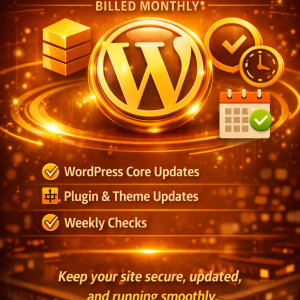
If you’re looking for a structured approach to maintenance, consider a service that combines core updates, plugin and theme updates, and weekly checks into a cohesive package. WordPress Care Essentials is a website maintenance package that includes the following:
-
WordPress core updates: You receive timely core updates that address security patches, bug fixes, and performance improvements.
-
Plugin & theme updates: You get curated updates for your installed plugins and themes to ensure compatibility and stability.
-
Weekly Checks: A routine health check that covers security, backups, performance, and functionality, helping you catch issues early.
With a package like this, you’ll have a predictable maintenance routine that reduces the risk of unexpected downtime and makes ongoing management easier. It also gives you a clear, repeatable process you can explain to collaborators or clients.
Why You Should Maintain a Structured Update Schedule
A structured update schedule helps you stay in control of your site’s health. Rather than reacting to problems after they occur, you become proactive. This shift yields several tangible benefits:
-
Fewer emergencies: When you stay on top of updates, you rarely encounter urgent, unplanned maintenance that disrupts your schedule.
-
Consistent user experience: Regular updates help ensure that visitors have a smooth experience, with fewer broken features and compatibility issues.
-
Improved security posture: A steady flow of patches reduces vulnerabilities, lowering the chance of a breach.
-
Easier troubleshooting: With a documented update history and weekly checks, you have a clear trail for diagnosing issues and knowing what changes were made when.
-
Better SEO and trust signals: A fast, secure, and reliable site contributes to better search rankings and higher trust among users.
If you’re serious about your site’s long-term health, adopting a structured update routine is a practical investment. You’ll feel the difference in uptime, performance, and confidence in the information you provide to your audience.
Practical Steps To Update Safely
Updating your WordPress site safely requires a few deliberate steps. You can implement a straightforward process that minimizes risk and maximizes the chance of a successful update on the first attempt.
-
Create a reliable backup: Before applying any update, ensure you have a complete backup of the site, including files and the database. This gives you a safety net if something goes wrong.
-
Use a staging environment: If possible, test updates in a staging environment that mirrors your live site. This isolation helps you catch conflicts without affecting real users.
-
Update in small increments: Apply updates in small groups rather than all at once. Start with core updates, then plugins, then themes. This approach makes it easier to identify the source of any issue.
-
Check after each update: After applying an update, thoroughly test the affected areas to confirm that everything still functions as expected. Don’t skip verification steps.
-
Review compatibility notes: Read the update notes from WordPress, plugins, and themes. Look for changes that may affect custom code, hooks, or template overrides.
-
Have a rollback plan: Know how to revert to the previous version if something goes wrong and document the process for future reference.
-
Schedule a follow-up: Plan a short follow-up check a day or two after an update to catch any delayed side effects or issues that surfaced under load.
By following these steps, you increase your odds of a clean update cycle with minimal disruption.
Common Myths About Updates
You may have heard several myths about updating WordPress. Some of these beliefs can lead you to delay or skip essential maintenance. Let’s address a few common ones directly:
-
Myth: Updates slow down the site permanently. Reality: Modern updates are generally designed to improve performance and security. Any temporary impact is usually outweighed by the long-term gains.
-
Myth: If the site works today, updates aren’t necessary. Reality: Security needs are ongoing. Even if your site appears to function, vulnerabilities can exist that updates address behind the scenes.
-
Myth: Updates always break things. Reality: While there is a risk of conflicts, a careful approach with backups, staging, and incremental updates minimizes this risk.
-
Myth: Paid updates aren’t worth it. Reality: The value of timely security patches and compatibility improvements often far exceeds the cost of maintenance services.
Don’t let myths deter you from implementing a thoughtful update strategy. The truth is that consistent maintenance reduces risk, improves reliability, and protects your visitors.
Final Thoughts and Next Steps
Keeping WordPress plugins and themes up to date is not a glamorous task, but it is a foundational practice for a healthy, secure, and high-performing site. You benefit from reduced security risk, improved reliability, and a smoother visitor experience. By adopting a weekly maintenance routine, you create a predictable system that supports your site’s growth and your peace of mind.
If you’re ready to take the next step, you can start by auditing your current setup:
- Make a list of all installed plugins and themes, noting their last update dates and compatibility notes.
- Identify any plugins or themes that do not have active support or frequent updates and plan for replacements or alternatives.
- Establish a weekly maintenance schedule that includes updates, backups, testing, and monitoring.
Consider trying a maintenance package like WordPress Care Essentials to simplify the process. With core updates, plugin and theme updates, and weekly checks bundled into a single, repeatable workflow, you can focus on content, growth, and strategy rather than wrestling with maintenance tasks.
Your site deserves the best possible care, and updates are a practical, powerful way to deliver that care. By staying deliberate about updates and keeping a consistent weekly rhythm, you’ll reduce risk, protect your data, and ensure your visitors have a dependable experience every time they arrive.
If you’d like, you can share details about your current setup—your WordPress version, the plugins you rely on, and your hosting environment—and I can help you tailor a safe, effective update and weekly-check plan that fits your needs.








0 Comments