


Website maintenance is often overlooked until something goes wrong. In 2026, ignoring routine maintenance can quietly expose a business website to downtime, security risks, and lost opportunities. While these problems may seem sudden, they are often the result of skipped or delayed maintenance tasks.
At its foundation, website maintenance comes down to three essential responsibilities: WordPress core updates, plugin and theme updates, and weekly checks. When these tasks are ignored, the long-term costs can far exceed the time or expense required to keep a website properly maintained.
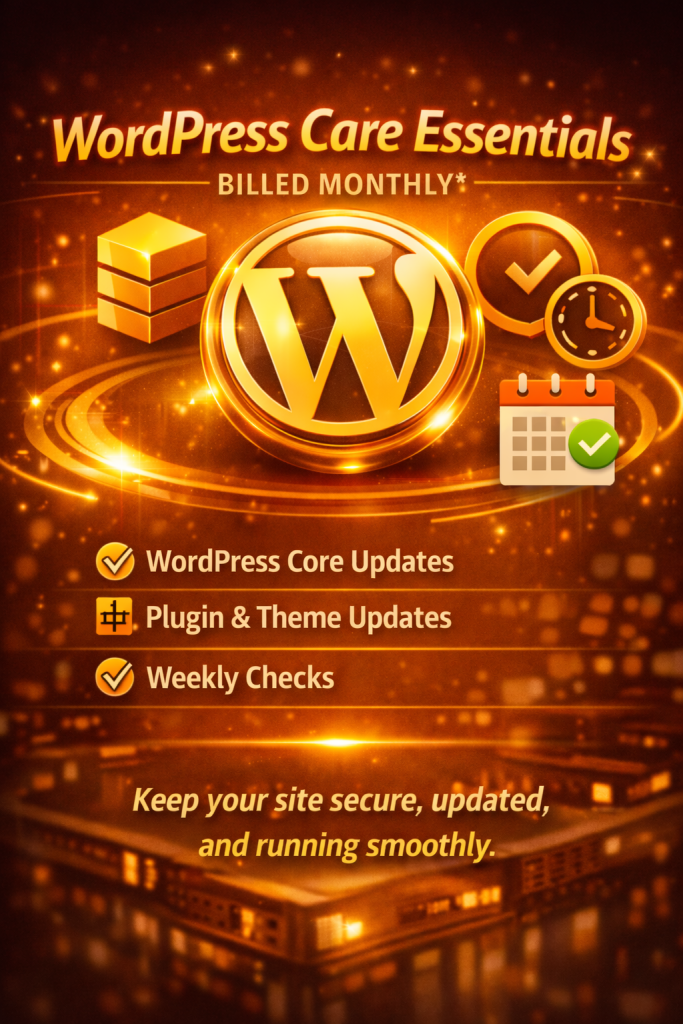
How Outdated WordPress Core Updates Lead to Downtime
WordPress core updates are essential to keeping a website stable and functional. Each update includes improvements that ensure WordPress continues to operate correctly with modern hosting environments, browsers, and web standards.
When WordPress core updates are ignored:
-
Compatibility issues can arise with plugins and themes
-
Website functionality may break unexpectedly
-
Pages may fail to load properly or become inaccessible
Downtime often occurs not because of a single event, but because outdated core software can no longer interact reliably with other parts of the website. Regular WordPress core updates reduce the likelihood of these disruptions and help keep the site consistently available.
Plugin and Theme Updates: A Common Source of Security Risks
Plugins and themes are powerful tools, but they also represent one of the most common points of failure when updates are ignored. Developers release plugin and theme updates to maintain compatibility with WordPress core and to address known issues within their software.
When plugin and theme updates are skipped:
-
Incompatibilities with newer WordPress core versions can cause errors
-
Site features may stop working correctly
-
Known vulnerabilities may remain unpatched
In 2026, outdated plugins and themes are a frequent cause of website compromises. Applying plugin and theme updates regularly helps reduce exposure to known risks and keeps website functionality intact.
Weekly Checks: The Difference Between Early Detection and Major Losses
Weekly checks provide consistent oversight that helps identify issues before they escalate. These checks confirm that the website remains accessible and that updates have not introduced visible problems.
Without weekly checks:
-
Downtime may go unnoticed for extended periods
-
Broken pages can remain live, frustrating visitors
-
Errors introduced by updates may persist unnoticed
Lost leads often occur not because a website is completely offline, but because something small is broken—such as a page failing to load or a feature not working as expected. Weekly checks help catch these issues early, reducing the likelihood of prolonged disruptions.
The Hidden Cost of Lost Leads
When a website experiences downtime or functionality issues, potential customers are often lost silently. Visitors who encounter errors rarely report them; instead, they leave and move on to a competitor.
Ignoring website maintenance increases the risk of:
-
Missed inquiries
-
Reduced trust in the business
-
Declining conversion rates
WordPress core updates, plugin and theme updates, and weekly checks all contribute to a smoother user experience. When these tasks are neglected, the website becomes less reliable, directly impacting lead generation and business growth.
Why Maintenance Is a Preventative Investment
Website maintenance is not just a technical task—it is a preventative business investment. Applying updates and performing weekly checks helps prevent avoidable downtime, reduces exposure to common vulnerabilities, and supports consistent website performance.
The cost of maintenance is predictable and manageable. The cost of ignoring maintenance—downtime, compromised security, and lost leads—is often unpredictable and far more expensive in the long run.
Maintaining Website Stability in 2026
In 2026, websites are expected to work flawlessly at all times. Search engines, users, and clients expect fast-loading, accessible, and reliable websites. Falling behind on maintenance puts a business at a disadvantage.
By focusing on:
-
WordPress core updates
-
Plugin and theme updates
-
Weekly checks
businesses can significantly reduce the risks associated with outdated software and unnoticed issues. These foundational maintenance tasks form the first line of defense against the real costs of neglect.
The Long-Term Impact of Ignoring Website Maintenance
Ignoring website maintenance rarely causes immediate failure. Instead, problems accumulate over time until they result in noticeable downtime, security incidents, or lost opportunities. By the time these issues become visible, the damage is often already done.
Consistent maintenance helps ensure that a website remains dependable, functional, and ready to support business goals—month after month, year after year.








0 Comments