


Website maintenance is a critical responsibility for any business operating online in 2026. Even well-designed websites rely on regular upkeep to remain secure, functional, and competitive. Without consistent maintenance, small technical issues can accumulate and impact performance, visibility, and user trust.
A reliable website maintenance checklist does not need to be complicated. At its core, effective monthly website maintenance focuses on three essential areas: WordPress core updates, plugin and theme updates, and weekly checks. These foundational tasks help ensure that a business website remains stable, current, and aligned with modern web standards.
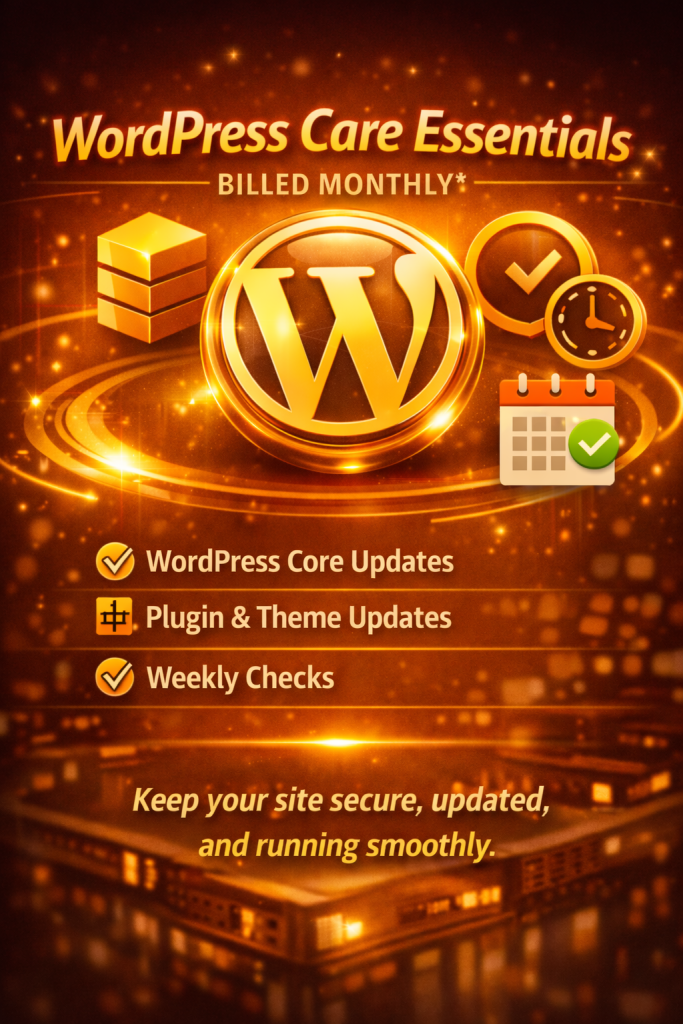
WordPress Core Updates: The Foundation of Monthly Maintenance
WordPress core updates are the backbone of any website maintenance checklist. The WordPress core controls how the website functions behind the scenes, including how it interacts with plugins, themes, and hosting environments.
Each WordPress core update may include:
-
Performance improvements
-
Compatibility updates
-
Bug fixes
-
Structural refinements to the platform
Keeping WordPress core up to date on a monthly basis helps ensure that the website continues to operate smoothly. Outdated core software can lead to conflicts with plugins and themes, reduce site stability, and increase the likelihood of errors. Regular WordPress core updates are essential for maintaining a reliable and functional business website.
Plugin and Theme Updates: Maintaining Compatibility and Performance
Plugins and themes are what give a WordPress website its features and appearance. However, they are also pieces of software that evolve over time. Developers routinely release updates to improve functionality, enhance performance, and maintain compatibility with the latest WordPress core versions.
Monthly plugin and theme updates help:
-
Prevent compatibility issues after core updates
-
Improve site performance and stability
-
Reduce the risk of layout or feature malfunctions
When plugins and themes are not updated regularly, websites may experience slow load times, broken features, or design inconsistencies. Including plugin and theme updates in a monthly website maintenance checklist helps keep all site components working together properly.
Weekly Checks: Ongoing Oversight Between Updates
While core, plugin, and theme updates are often handled monthly, weekly checks provide ongoing oversight throughout the month. Weekly checks help confirm that the website remains accessible and functional after updates or changes.
Weekly checks typically involve:
-
Confirming the website is online and accessible
-
Ensuring pages load correctly
-
Verifying that recent updates did not introduce visible issues
By reviewing the site on a weekly basis, potential issues can be identified early before they affect visitors or business operations. Weekly checks add consistency and accountability to the overall website maintenance process.
Why Monthly Website Maintenance Matters for Businesses
In 2026, business websites are expected to be reliable at all times. Customers rely on websites for information, contact details, and credibility. A website that is outdated or malfunctioning can negatively impact brand trust and user experience.
Monthly website maintenance helps businesses:
-
Maintain a stable and professional online presence
-
Reduce technical issues caused by outdated software
-
Ensure the website remains aligned with evolving web standards
WordPress core updates, plugin and theme updates, and weekly checks work together to support long-term website reliability.
Building a Simple and Effective Maintenance Routine
A successful website maintenance checklist does not require complex tools or advanced configurations. By focusing on these three essential tasks, businesses can maintain a website that performs consistently month after month.
An effective routine includes:
-
Applying WordPress core updates as they become available
-
Updating plugins and themes to maintain compatibility
-
Performing weekly checks to confirm site functionality
This structured approach ensures that maintenance is predictable, manageable, and effective.
Keeping Business Websites Reliable in 2026
As technology continues to evolve, websites must keep pace. WordPress core updates ensure that the platform remains current. Plugin and theme updates keep features and design functioning properly. Weekly checks provide ongoing confirmation that everything is working as expected.
Together, these tasks form the foundation of responsible website ownership. For businesses in 2026, following a clear website maintenance checklist is no longer optional—it is essential.








0 Comments