


Have you ever wondered what can go wrong if you skip WordPress core updates?

What Can Go Wrong Without Proper WordPress Core Updates
Your website relies on WordPress to run smoothly, securely, and efficiently. When you delay or skip core updates, you set your site up for a cascade of avoidable problems. In this section, you’ll learn why updates matter, what can happen when they’re neglected, and how a consistent maintenance routine can keep your site healthy.
WordPress core updates are more than cosmetic improvements. They address security vulnerabilities, fix bugs, improve performance, and sometimes add new features that you and your visitors benefit from every day. If your core software lags behind the latest version, you increase exposure to threats and reduce compatibility with newer plugins, themes, and PHP versions. This can ripple through your entire site, affecting security, speed, reliability, and search engine visibility.
Below you’ll find a clear breakdown of why updates are necessary, the risks you might face, and practical steps you can take to protect your site while keeping it fast and dependable. You’ll also discover how weekly checks fit into a sustainable maintenance plan that supports your business goals rather than becoming a chore you postpone.
Why updates matter for security and stability
When the WordPress core team releases an update, it often includes patches for security vulnerabilities that attackers have discovered or exploited. Even if you don’t see obvious signs of trouble, an unpatched core can be an open door through which malicious actors gain access, steal data, or deface pages. Security vulnerabilities are not a matter of if, but when—especially as threats evolve and automated tools become more capable.
Stability is equally important. Core updates address bugs that can cause crashes, white screens, or inconsistent behavior across your site. They also improve compatibility with PHP and database updates, reducing the chance of fatal errors when you or your hosting environment performs routine maintenance on the server.
Performance and efficiency improvements
New core releases typically include performance optimizations, caching improvements, and more efficient code paths. Even small gains in speed can translate into faster page loads, better user experience, and improved SEO signals. If you’re running a site with many visitors, a few milliseconds shaved off here and there can compound into meaningful outcomes for engagement and conversions.
Compatibility with plugins, themes, and hosting environments
Plugins and themes are built to work with specific ranges of WordPress versions. If you don’t update the core, you risk incompatibilities that create conflicts, break features, or cause plugin modules to stop functioning. Hosting environments also evolve; newer PHP versions or server configurations may require the latest WordPress core to operate correctly. Regular updates help ensure your entire stack remains compatible and supportable.
The risk of “update debt” and its consequences
Delay creates what you could call update debt: a backlog of changes that becomes harder to manage over time. When you finally attempt a major update after months of neglect, you may encounter a higher risk of conflicts, longer downtime, and a larger testing burden. This debt also makes it more difficult to roll back if something goes wrong, increasing repair time and frustration.
What you may miss after skipping updates
Missing out on new features can mean missed opportunities to improve workflows, security controls, and overall site performance. For example, modern PHP compatibility, improved REST API support, and better accessibility enhancements might be included in core updates. By not staying current, you’re limiting your site’s capacity to take advantage of ongoing improvements that could benefit your visitors and your team.
How WordPress core updates actually work
Core updates come in several forms: minor updates (typically for security and bug fixes) and major updates (often containing new features and significant changes). Minor updates tend to be more frequent and less disruptive, while major updates may require more testing, especially on complex sites. In all cases, updates are delivered through the official WordPress update system, and you have control over when and how you apply them.
Understanding this process helps you plan updates with lower risk. You can run a staging site for testing, ensure backups are in place, and verify that critical components continue to function as expected before applying changes to production.
The role of weekly checks in maintaining a healthy site
Weekly checks aren’t optional extras; they’re the practical backbone of a reliable maintenance routine. Regular checks let you confirm that updates didn’t introduce issues, monitor performance, and catch tiny problems before they become big outages. Weekly checks also create a predictable rhythm that reduces stress and makes it easier to communicate status with stakeholders or clients.
In the next sections, you’ll see how to structure a weekly regimen that covers updates, security, performance, content integrity, and user experience. You’ll also find practical templates and checklists you can adapt to your site’s needs.
Why weekly checks are essential for your site to run smoothly
Weekly checks serve several critical purposes. They ensure you maintain a secure, fast, and functional site; they help you track the health of your environment; and they provide a documented history that can guide future decisions. Here’s what weekly checks typically cover and why each item matters.
Security monitoring and updates alignment
Security is not a one-off task. It’s a process that combines staying current with proactive monitoring. Weekly checks help you verify that all security patches have been applied, review access logs for anomalous activity, and confirm that your firewall and security plugins are running correctly. This routine reduces the window of opportunity for attackers and keeps your defense posture consistent.
Backups verified and tested
Backups are your safety net. A weekly check ensures that automated backups ran successfully, that you have at least one complete off-site copy, and that you can restore a site from a backup if needed. You’ll also test a quick restore workflow to validate the integrity of the backup file and the restore process. This practice minimizes downtime and data loss in the event of a failure, breach, or update mishap.
Performance health and load testing
Speed is a competitive differentiator and a contributor to user satisfaction. Weekly checks include monitoring page load times, database growth, and server response times. If you notice a slowdown, you can address it before visitors are affected. Small, frequent improvements compound into smoother experiences for your audience and better engagement metrics.
Functionality and compatibility checks
New core, plugin, or theme updates can alter how features work or interact. Weekly checks help you verify that forms, e-commerce carts, membership systems, and other critical components still function as intended. You’ll check for broken links, failed AJAX calls, and any JavaScript console errors that could degrade functionality.
Content integrity and accessibility
Content updates and design changes should render consistently across devices and assistive technologies. Weekly checks include basic accessibility tests, responsive layout checks, and validation of critical content (like timestamps, pricing, and product details). This protects your user experience and helps you meet compliance requirements.
Documentation and change-log logging
A well-documented maintenance routine makes it easier to troubleshoot, onboard new team members, and communicate status to clients. Weekly checks should include notes on what was updated, any issues observed, and the actions taken to resolve them. This creates a transparent trail you can reference later.
A practical weekly maintenance plan you can implement
To make weekly checks actionable, you’ll want a concrete plan with clear steps. The following plan is designed to be straightforward, repeatable, and adaptable to most WordPress sites. It aligns with common maintenance packages and can be customized to fit your hosting environment and business needs.
Weekly checklist at a glance
- Verify automated backups completed successfully and test a restore on a staging environment
- Update WordPress core, plugins, and themes (with rollback plan)
- Run a quick security scan and review logs
- Check uptime and performance metrics
- Test critical site features (forms, checkout, login, membership areas)
- Audit content accuracy and accessibility basics
- Review the status of security headers, SSL configuration, and cache layers
- Review any user-reported issues and reproduce them in a staging environment
- Update internal documentation with changes and outcomes
Table: Weekly maintenance checklist
| Area | What to do | Why it matters | How often |
|---|---|---|---|
| Backups | Confirm success, store off-site, test restore | You must be able to recover quickly | Weekly |
| Core updates | Apply latest stable version | Security and stability; compatibility | Weekly or as soon as available (after testing) |
| Theme and plugin updates | Update all managed components | Security patches and feature compatibility | Weekly |
| Security scans | Run a vulnerability scan, review alerts | Early detection of threats | Weekly |
| Performance monitoring | Review page speed, database, caching | User experience and SEO | Weekly |
| Content checks | Validate dates, prices, media display | Accurate information, trust | Weekly |
| Accessibility checks | Test keyboard navigation, color contrast | Inclusive UX and compliance | Weekly |
| Logs and analytics | Scan for anomalies, spikes | Early warning signs of issues | Weekly |
| Documentation | Record changes, outcomes, next steps | Knowledge transfer and accountability | Weekly |
A deeper look at each category
- Backups: Weekly checks should include confirming that automatic backups ran without errors, that at least one recent backup is stored off-site, and that restoration from backup is feasible. Maintain multiple restore points to cover both small and large incidents. It’s wise to test at least one restore per month on a staging environment to validate that the backup data is usable.
- Core updates: When a new core version is released, you’ll want to test it in a staging environment before applying it on production. If your theme or plugins rely on specific WordPress features, testing helps you catch compatibility issues early. Create a rollback plan in case something goes wrong during update, and have a quick path to revert to the previous core version if needed.
- Theme and plugin updates: Themes and plugins can bring both enhancements and conflicts. A weekly routine should include updating all components in a controlled manner, preferably on a staging site. After updates, verify critical features, forms, and e-commerce workflows. If a major plugin update introduces breaking changes, you may need to adjust code snippets, CSS, or configuration.
- Security scans: Lightweight scans can identify suspicious files, changed permissions, or unusual login activity. Combine this with login security reviews, such as ensuring two-factor authentication is available for admin accounts, and verify that security plugins’ settings remain aligned with your policy.
- Performance monitoring: Track Core Web Vitals, page load times, and server response. If you observe degradation, you can identify whether caching, database queries, or external requests contribute to the slowdown. Small, targeted fixes—like optimizing images, enabling object caching, or adjusting CDN settings—can yield meaningful improvements.
- Content checks: Inaccurate dates, outdated offers, broken links, and missing images erode trust. Weekly checks help you maintain accuracy and brand consistency. This is especially important for sites with dynamic content, such as time-limited promotions or event calendars.
- Accessibility checks: Accessibility considerations are not just compliance; they enhance your user base by serving a broader audience. Test keyboard navigation, screen reader compatibility, and color contrast. Fixing these issues in a timely manner upholds a higher standard of usability.
- Logs and analytics: Review error logs and unusual activity patterns. A sudden spike in 500 errors or failed API calls can be an early warning of deeper problems that require investigation.
- Documentation: Document what was updated, why it was done, and the observed outcomes. Regular notes help you onboard new team members, coach clients, and maintain continuity across teams.
How to align WordPress core updates with a broader maintenance strategy
A well-rounded maintenance plan covers more than updates. It integrates security, performance, content governance, and user experience into a cohesive workflow. Here’s how you can align core updates with a broader strategy that keeps your site resilient.
Create a clear update policy
Define how you handle updates, including the order of operations (core first, then plugins and themes), the minimum backups you require, and the criteria for applying updates to production. Document a rollback process and establish thresholds for pausing updates (for example, if a particular plugin shows a known conflict with the current core version).
Use a staging environment for testing
A staging site mirrors your production environment and is essential for safe testing. When you apply core, plugin, and theme updates on staging first, you can observe behavior, test critical flows, and catch issues that could disrupt live users. A staging-to-production workflow helps you minimize downtime and protect your user experience.
Leverage automation without sacrificing control
Automation can handle repetitive tasks like applying updates and running basic checks, but human oversight remains crucial. Use automation to reduce manual effort while maintaining a gatekeeping process for testing in staging and approving updates for production.
Implement strong backup and recovery practices
Backups are your safety net. Invest in reliable off-site storage and implement tested restore procedures. Schedule regular drills to ensure you can recover quickly after an incident. Your recovery time objective (RTO) and recovery point objective (RPO) will guide how you structure backup frequency and retention.
Monitor security posture continuously
Beyond weekly checks, consider real-time monitoring for login attempts, file integrity, and suspicious activity. A layered security approach, including firewalls, malware scanners, and strict access controls, strengthens your defense and reduces the likelihood of a successful breach.
Maintain documentation and reporting
Keep an accessible record of all maintenance activities, including updates applied, tests performed, issues encountered, and outcomes. This documentation supports accountability, helps with audits, and improves communication with clients or stakeholders.
The WordPress Care Essentials package you mentioned
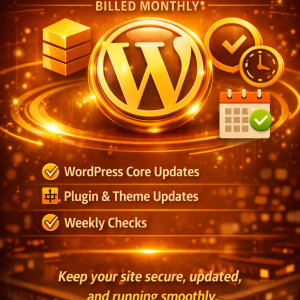
Your reference to WordPress Care Essentials describes a practical maintenance package that focuses on three core activities:
- WordPress core updates
- Plugin & theme updates
- Weekly checks
This combination provides a balanced approach to security, stability, and ongoing health. The package emphasizes timely updates and recurring checks, which together reduce risk and improve uptime. Here’s how each element contributes:
- WordPress core updates: Regular core updates address security vulnerabilities and performance improvements. By staying current, you ensure your site benefits from the latest fixes and enhancements.
- Plugin & theme updates: Plugins and themes add functionality but can introduce conflicts if not kept up to date. Routine updates help maintain compatibility with the latest WordPress core and hosting environment.
- Weekly checks: Consistent weekly checks give you a predictable cadence for monitoring health, validating backups, testing critical features, and identifying issues early.
If you’re evaluating this package for your site, you can expect a structured routine that minimizes risk, improves reliability, and supports sustainable growth. You’ll also be able to measure progress through documented outcomes, such as successful test restores, performance improvements, and reduced incident response times.
Practical steps to implement a robust update and maintenance practice
To translate the theory into action, follow a practical, repeatable workflow. The steps below outline a safe, end-to-end process you can adapt to your site size and complexity.
-
Establish a maintenance window and a predictable cadence
- Decide on a weekly update window, and define a time when you’ll perform backups, updates, and checks. Consistency helps you anticipate and manage changes without surprises.
-
Prepare a staging environment
- Always test updates on a staging site before applying them to production. This is your sandbox for validating compatibility and catching issues before your visitors are impacted.
-
Perform a full backup before any changes
- Create a complete backup of files and database, store it off-site, and verify its integrity. A clean restore is your safety net.
-
Apply core updates in a controlled sequence
- Update WordPress core first, then proceed to plugins and themes. If you have a large number of updates, you may do them in batches to limit risk and minimize downtime.
-
Validate critical site functionality
- After applying updates, test forms, checkout flows, login processes, and any custom functionality that your site relies on daily.
-
Run quick security and performance checks
- Verify that security plugins are active, that there are no unusual logs, and that page speeds remain within expected ranges.
-
Review content and accessibility
- Check for broken links, missing media, and accessibility issues that could impact user experience.
-
Document outcomes and plan follow-up actions
- Record what was updated, what passed validation, and any issues requiring follow-up work. Schedule any additional fixes if needed.
-
Monitor for 24–72 hours after updates
- Continue to observe performance and error reports as visitors interact with the site. Be prepared to respond to any unexpected behavior quickly.
-
Reflect and refine
- Use outcomes from the update cycle to refine your maintenance plan, update playbooks, and adjust your weekly checks.
Common risks during updates and how to mitigate them
Even with a thoughtful plan, updates can introduce challenges. Being prepared helps you minimize disruption and preserve site integrity.
- White screen of death (WSOD)
- Causes: Incompatibilities between core and a plugin, insufficient PHP memory, or a broken update. Mitigation: Use staging, implement a robust backup-and-rollback plan, and keep a log of changes to roll back quickly if WSOD occurs.
- Plugin or theme conflicts
- Causes: Updates may alter hooks, functions, or assets that plugins rely on. Mitigation: Test on staging, disable conflicting plugins temporarily if needed, and report incompatibilities to developers for timely fixes.
- Broken database migrations
- Causes: Core or plugin updates that run database migrations can fail on certain configurations. Mitigation: Back up before applying migrations, run updates in small batches, and have a rollback path.
- Performance regressions
- Causes: New code paths or heavier features can impact performance. Mitigation: Monitor performance metrics post-update and optimize assets, caching, and queries as needed.
- Security regression
- Causes: In rare cases, updates may introduce new vulnerabilities or misconfigurations. Mitigation: Complement updates with security scans and verify security settings after updates.
Table: Common risks and mitigations
| Risk | How it manifests | Mitigation strategy |
|---|---|---|
| WSOD after update | Blank or error screen on load | Update on staging; verify PHP memory; rollback if needed |
| Plugin/theme conflicts | Features stop working or break layout | Test in staging; temporarily disable conflicting components; report issues |
| Database migration failure | Updates stall or corrupt data | Backups; staged migrations; rollback plan |
| Performance degradation | Page loads slow, timeouts | Post-update performance checks; optimize caching and queries |
| Security exposure | New vulnerabilities or misconfigurations | Run security scans; verify settings; keep environment monitored |
Measuring success: what good maintenance looks like
A healthy maintenance program yields tangible indicators you can track over time. Here are some metrics and signals that tell you you’re on the right track.
- Uptime consistency: Minimal unplanned downtime and quick recovery when issues occur.
- Update success rate: A high percentage of updates applied without requiring rollback or emergency interventions.
- Backup reliability: Regularly successful backups with verified restoration processes.
- Performance stability or improvement: Page speed and server response times stay stable or improve after updates.
- Security posture: No unresolved alerts, vulnerabilities, or inconsistent security controls.
- Content accuracy: Low incidence of broken links or outdated information.
- User experience metrics: Positive engagement signals, low bounce rates, and good conversion rates.
Tables that summarize the approach
Table: Core updates impact by category
| Category | Impact | Example benefits |
|---|---|---|
| Security | Reduces risk of exploits | Patches for known vulnerabilities reduce attack surface |
| Stability | Fixes bugs and edge-case issues | Fewer crashes and errors, smoother admin experience |
| Compatibility | Keeps pace with new PHP versions and hosting environments | Reduced conflicts with plugins/themes |
| Performance | Optimizations and improvements | Faster page loads, better user satisfaction |
| Features | Access to new capabilities | Improved workflows and potential for better UX |
Table: Update and maintenance rhythm
| Rhythm element | Purpose | Frequency |
|---|---|---|
| Core updates | Security and stability | As released (often monthly or quarterly, depending on your site) |
| Plugin/theme updates | Compatibility and features | Weekly or as needed |
| Weekly checks | Health verification | Weekly |
| Backups | Recovery and safety | Weekly with off-site retention |
| Staging/testing | Safe validation | Per update cycle or before major changes |
Practical examples and scenarios
To help you see how this works in real life, consider a few common site situations and how a consistent update and weekly check approach can help.
-
Scenario A: A small business site with a couple of plugins
- After a routine weekly check, updates are applied in staging. A minor conflict is found between a form plugin and the new core version. The conflict is resolved in staging, and the update is released to production with a quick rollback plan. The site remains stable, and the form continues to function smoothly.
-
Scenario B: An e-commerce site with high traffic
- Core updates are tested on staging during a low-traffic window. A caching mismatch is identified after the core update, affecting checkout speed. The issue is resolved by adjusting cache rules and optimizing queries. The site’s performance remains strong, and revenue impact is minimized.
-
Scenario C: A content-heavy site with multiple contributors
- Weekly checks catch a handful of broken internal links after an update. The content team is notified, links are repaired, and a content audit is completed. The user experience stays consistent, search rankings aren’t disrupted, and reader trust remains intact.
Why a maintenance package helps you stay on track
A maintenance package, such as WordPress Care Essentials, can take the guesswork out of keeping your site secure and reliable. Here are the benefits you can count on when you adopt a structured maintenance program:
- Predictable cadence: You know when and how maintenance tasks will occur, reducing surprise outages or slowdowns.
- Reduced risk: Regular updates with testing in a staging environment minimize the likelihood of live-site disruptions.
- Time savings: Automation for repetitive tasks (backups, status checks) frees your team to focus on value-adding work.
- Clear accountability: A documented process with outcomes helps you communicate with clients, stakeholders, or internal teams.
- Peace of mind: You gain confidence that your site is protected, up-to-date, and performing as expected.
If you decide to work with a maintenance partner or package, look for clarity in the process, a transparent rollback plan, and a demonstrated track record of stable deployments. A thoughtful approach to updates and weekly checks can save you time, headaches, and more importantly, ensure your visitors have a reliable and secure experience.
How to tailor this approach to different site types
Your site’s requirements can influence how aggressively you apply updates and how you structure weekly checks. Here are some general guidelines you can adapt to your situation.
-
Small business blog or portfolio
- Frequency: Weekly for updates and checks, with a stronger emphasis on uptime and backups.
- Focus: Content integrity, media handling, contact forms, and basic SEO health.
-
E-commerce site
- Frequency: Core and plugin updates on a tightly managed schedule; staging is essential for checkout-related components.
- Focus: Payment gateways, cart behavior, order processing, and security of customer data.
-
Membership or learning platform
- Frequency: Regular updates with particular attention to access control, course downloads, and streaming compatibility.
- Focus: User authentication, access rules, content protection, and performance under load.
-
Enterprise or high-traffic site
- Frequency: Prioritize staged testing, load testing, and a robust rollback plan; consider more frequent monitoring and alerting.
- Focus: Security, performance, analytics integrity, and integration with external systems.
Best practices to keep in mind
- Always test in a staging environment before updating production.
- Maintain a clear rollback plan and ensure you can revert rapidly if needed.
- Keep a running log of all maintenance activities and outcomes.
- Use reputable tools for backups, security scans, and performance monitoring.
- Invest in a good hosting environment with reliable uptime, scalable resources, and solid security features.
- Involve your team in the process to distribute responsibilities and improve coverage.
A closing thought on why you should care about updates and weekly checks
You invest time and resources into creating a site that supports your goals, serves your audience, and represents your brand well. Keeping WordPress core, plugins, and themes up to date isn’t just about staying current; it’s about protecting that investment from preventable risks. Regular weekly checks provide you with a disciplined approach to maintenance—one that reduces downtime, safeguards data, preserves performance, and keeps your visitors satisfied.
By integrating the three core pillars—core updates, plugin and theme updates, and weekly checks—you’re building a resilient foundation for your site. This combination addresses security, stability, and performance in a cohesive way, rather than treating maintenance as a one-off event. When you commit to a thoughtful maintenance routine, you’re not just preventing problems; you’re creating an environment where your site can grow with confidence and reliably support your business objectives.
Final notes and practical takeaways
- Prioritize core updates to lock in security and stability, then tackle plugins and themes with care.
- Use staging environments as your testing ground to catch issues before they affect visitors.
- Maintain consistent weekly checks to monitor health, verify backups, and catch problems early.
- Document changes and outcomes to keep everyone aligned and prepared for future cycles.
- Consider a maintenance package like WordPress Care Essentials if you want a structured, repeatable approach that emphasizes updates and weekly checks.
If you adopt this approach, you’ll likely notice fewer emergencies, smoother site operations, and a more predictable workflow for you and your team. Your site deserves reliable maintenance, and a well-planned update and weekly-check routine is the foundation that makes that possible. By treating updates not as a one-time task but as an ongoing practice, you’ll position your WordPress site to perform at its best today and adapt smoothly to changes tomorrow.








0 Comments