


Do you know what happens when you don’t update WordPress core, plugins, and themes?

What Happens When You Don’t Update WordPress Core, Plugins, And Themes
Keeping your WordPress site up to date is not just a nice-to-have — it’s a foundational part of running a secure, reliable, and fast website. When you ignore updates, you set your site up for a cascade of problems that can affect security, performance, and user trust. In this article, you’ll learn why updates are essential, what can go wrong if you skip them, and how weekly checks play a crucial role in keeping your site healthy. You’ll also see how a service like WordPress Care Essentials fits into a practical maintenance plan that protects your digital presence.
Why updates matter: the core reasons you should keep things current
Updates exist for three main reasons: security, compatibility, and performance. Each one matters to you because your visitors expect a fast, safe, and smooth experience.
- Security: Updates fix known vulnerabilities. If you delay, you create an open door for attackers to exploit weaknesses, gain access to sensitive data, or inject malware. A compromised site can lead to data loss, spam, blacklisting, and long-term damage to your reputation.
- Compatibility: Core changes, plugin and theme updates, and PHP or server-side changes can affect how your site functions. If you stay on old versions, you risk broken features, form submissions that don’t work, or incompatible code that causes errors or crashes.
- Performance and stability: Updates often include performance improvements, bug fixes, and better resource management. You’ll experience fewer errors, faster page loads, and a more reliable admin experience.
You’ll also benefit from access to new features and improved developer tooling. While new capabilities may not always be immediately necessary, they can help you grow, optimize, and future-proof your site.
Core WordPress updates: what you gain and what you risk
WordPress core updates apply to the platform’s main software that powers your site. These updates are not cosmetic—they address fundamental architecture, security, and performance concerns.
- What you gain:
- Security patches that close vulnerabilities attackers could exploit.
- Bug fixes that reduce operational quirks and errors in the admin area and front end.
- Performance and efficiency improvements that can lower hosting costs and improve user experience.
- Access to compatibility improvements with modern PHP versions and server technologies.
- What you risk if you don’t update:
- Your site becomes more susceptible to security breaches with every unpatched vulnerability.
- Your plugins and themes may stop functioning correctly as they rely on a compatible core.
- You may miss out on accessibility, UX, and developer experience enhancements that could help you manage the site more effectively.
Tips for you:
- Test updates in a staging environment before applying them to your live site, especially on high-traffic sites or those with custom code.
- Keep a rollback plan ready. If a core update causes a problem, you should be able to revert quickly while you troubleshoot.
Plugin updates: why they’re a constant for site health
Plugins extend your WordPress site’s capabilities, but that extension comes with ongoing maintenance requirements.
- What you gain:
- Security fixes for plugins that handle login forms, contact forms, e-commerce, SEO, caching, analytics, and more.
- Bug fixes and compatibility improvements with the latest WordPress core and PHP versions.
- Feature enhancements that can improve functionality and user experience.
- What you risk if you don’t update:
- Vulnerabilities in plugins can be a common entry point for attackers.
- Incompatibilities between plugins and the WordPress core or PHP can lead to broken pages, white screens, or failed form submissions.
- Conflicts among plugins may arise after core updates, causing unpredictable behavior.
Practical approach for you:
- Update in small batches rather than all at once. This makes it easier to pinpoint the source if something goes wrong.
- Maintain a clean plugin roster—remove or replace plugins that are no longer maintained or show recurrent issues.
- Always back up before updating essential plugins, especially security-related or complex ones (like e-commerce or membership plugins).
Theme updates: why keeping your design current matters
Your theme determines how your site looks and behaves. Theme updates can address accessibility, performance, and compatibility with WordPress core and plugins.
- What you gain:
- Style and layout refinements that can improve readability and user engagement.
- Security fixes in the theme’s codebase to reduce exposure to vulnerabilities.
- Compatibility improvements that align with newer WordPress features and PHP versions.
- What you risk if you don’t update:
- Theme code may be using deprecated functions that can break with core updates.
- Visual or interactive elements may stop working, negatively impacting user experience.
- You could miss out on performance enhancements or accessibility improvements.
Guidance for you:
- Test theme updates in staging to ensure layout integrity and customizations still render correctly.
- If you’ve made child-theme modifications, verify that they remain compatible after updates and adjust as needed.
The consequences of skipping updates: a closer look
If you’re not diligent about updates, several adverse effects can accumulate. Here’s a practical breakdown so you can see how each choice matters.
- Security breaches and data loss: Outdated software is an inviting target for hackers. A successful breach can expose customer data, alter content, or inject malicious code. Recovery can be costly and time-consuming, and trust may be damaged long-term.
- Downtime and degraded user experience: Incompatibilities and broken features can crash pages or forms, leading to lost inquiries, failed purchases, or frustrated visitors who leave never to return.
- SEO and reputation impact: Slow performance, broken pages, and security warnings can harm your search rankings and click-through rates. A poor user experience translates into reduced engagement and conversions.
- Maintenance debt and escalation: Delayed updates compound. A single core or plugin vulnerability can require urgent remediation, a rushed patch, or temporary shutdowns that disrupt your business operations.
- Compatibility headaches: When your site is out of sync with PHP versions or server updates, you may encounter errors, longer load times, and more difficult debugging.
If you’re thinking, “I can keep things running without updates,” you’re choosing a risk path. You should instead adopt a proactive approach to maintenance that reduces risk and builds resilience.
The role of weekly checks in keeping your site smooth
Weekly checks are the proactive discipline that helps you catch issues before they become crises. They complement automatic updates by adding human oversight and verification.
What you’ll commonly check during a weekly maintenance routine:
- Update status: Confirm all core, plugin, and theme updates have been applied and verify there were no errors during the process.
- Backups: Ensure the latest backups completed successfully and verify that restoration from a backup would work if needed.
- Security checks: Run quick scans for malware, unusual file changes, and unauthorized admin activity.
- Performance checks: Review site speed, caching effectiveness, and any new bottlenecks after updates.
- Uptime monitoring: Check that the site is online and available to users; investigate any downtime events.
- Broken links and forms: Look for 404s, broken internal links, and form submission errors.
- Database health: Run light maintenance tasks like optimizing tables and cleaning up transient data if your setup supports it.
- Accessibility and usability checks: Ensure that interactive elements still function and that the site remains accessible to all users.
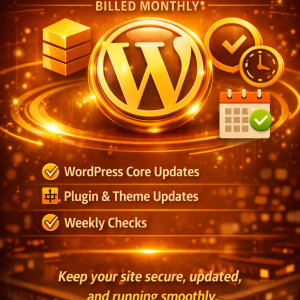
WordPress Care Essentials is designed to cover these bases. It explicitly includes core updates, plugin & theme updates, and weekly checks to give you a robust, reliable maintenance framework. By integrating weekly checks with routine updates, you reduce risk, catch issues early, and keep your site performing at its best.
A practical overview: risk, impact, and mitigation
To help you visualize implications, here’s a compact reference you can keep handy.
| Update Type | Typical Risk If Left Unupdated | Potential Impact on Your Site | Mitigation You Can Use |
|---|---|---|---|
| Core WordPress Updates | Security vulnerabilities persist; feature regressions unknown | Increased breach risk, admin errors, compatibility issues | Schedule regular core updates; use staging for testing; keep backups |
| Plugins Updates | Vulnerabilities in plugins; API changes causing breakage | User-facing errors, broken forms, checkout failures, security risk | Update in small batches; vet plugins for maintenance; test critical plugins first |
| Themes Updates | Deprecated functions; CSS/JS incompatibilities; visual glitches | Layout shifts, broken styling, accessibility problems | Test updates on staging; ensure child themes stay compatible; verify responsiveness |
| Weekly Checks | Delayed discovery of issues | Accumulated problems, longer downtime, degraded performance | Implement a routine checklist; document issues and resolutions; use monitoring tools |
This table is a quick guide. Your situation may require tailoring, especially if you rely on custom code, unique integrations, or high-security needs.
The practical steps you can take now
If you want to keep your site stable and secure, use the following action-oriented plan. This plan mirrors what WordPress Care Essentials provides but is useful whether you’re handling updates yourself or coordinating with a maintenance provider.
- Establish a maintenance cadence
- Decide on a routine that includes: (a) core updates, (b) plugin updates, (c) theme updates, and (d) a weekly checks window for verification, testing, and documentation.
- Create a dependable backup strategy
- Use automated, off-site backups that are tested for recoverability. Keep at least two recent restore points (one current and one from a prior period) to cover unexpected issues.
- Use staging before live deployment
- Push updates to a staging environment first. Verify that the site functions as expected with the new core, plugins, and theme versions.
- Update in controlled batches
- Apply updates in small groups (e.g., one or two plugins at a time) to isolate any issues. Always monitor after each batch.
- Monitor after updates
- Check form submissions, e-commerce checkout flows, login processes, and interactive features. Verify page loads across devices and browsers.
- Schedule weekly checks with a clear checklist
- Maintain a documented process that covers backups, update verification, security scans, performance tests, uptime checks, and content integrity reviews.
- Keep an eye on PHP and server compatibility
- Ensure your hosting environment supports the PHP version recommended by WordPress and your plugins/themes. Plan upgrades when a PHP version reaches end of life.
- Audit for deprecated or abandoned components
- Remove or replace plugins or themes that no longer receive updates or support. This reduces risk and simplifies maintenance.
- Maintain documentation
- Record what you updated, when, and any issues that arose. Documentation helps your team or future you understand decisions and learn from history.
Automatic updates vs. manual updates: finding your balance
Automatic updates can be convenient, but they come with trade-offs. You gain convenience and speed, but you may miss the opportunity to test critical updates before they affect your live site. Manual updates give you control and visibility, particularly for high-traffic sites or those with complex customizations.
- When you might want automatic updates:
- Security-focused core updates and minor releases that are known to be non-disruptive.
- Routine, low-risk plugin updates that don’t alter critical functionality.
- When you might want manual updates:
- Major core updates or plugins that alter fundamental features.
- Sites with custom code or heavy integrations that require compatibility testing.
- High-traffic sites where any downtime or error has a larger impact.
Even if you opt for automatic updates for some components, maintain weekly checks to verify everything remains stable and secure. A hybrid approach often delivers the best balance between safety and efficiency.
What weekly checks add to your process
Weekly checks are not a chore; they are the guardrails that keep you from drifting into risky territory. They’re about proactive risk management and ensuring your site’s health, not reacting after the fact.
- Early risk detection: You catch small issues before they become big problems.
- Consistent performance: You verify that updates do not degrade speed or reliability.
- Compliance and standards: You ensure accessibility and functional standards remain satisfied.
- Confidence in operations: You gain a clear, auditable trail of maintenance activities and outcomes.
If you’re working with a service like WordPress Care Essentials, you’re choosing a structured, repeatable process that aligns updates with weekly health checks. This approach reduces surprises and gives you predictable performance and security.
A closer look at WordPress Care Essentials
WordPress Care Essentials is designed to be your maintenance backbone. It codifies three essential components:
- WordPress core updates: Regular core updates to keep your site secure and compatible with the latest features and standards.
- Plugin & theme updates: Ongoing updates for extensions and design components to reduce vulnerabilities and maintain functionality.
- Weekly checks: A proactive review cycle that validates backups, tests updates, scans for threats, and checks performance and uptime.
With this package, you get a disciplined cadence that minimizes risk and maximizes reliability. It’s particularly valuable if you’re balancing a growing site, multiple contributors, or limited internal technical capacity.
A deeper dive into risks and how to mitigate them
Let’s revisit the risk landscape with some practical mitigation steps you can implement on your own or request from your maintenance partner.
- Security risk mitigation:
- Keep core, plugins, and themes updated.
- Run regular malware scans and implement a firewall where possible.
- Enforce strong passwords, two-factor authentication, and least-privilege access for administrators.
- Compatibility risk mitigation:
- Test updates in staging first, especially for critical components like checkout, membership, or custom post types.
- Maintain a changelog of updates and monitor for any breaking changes.
- Performance risk mitigation:
- After updates, run performance tests and monitor page load times.
- Review caching settings and ensure resources like CDN integrations remain properly configured.
- Data integrity risk mitigation:
- Maintain reliable backups and verify restore procedures.
- Use versioned backups so you can revert to a known good state if something goes wrong.
A note on testing and rollback
Testing and rollback are your safety nets. A tested update process reduces downtime and user disruption. If an update causes issues, you should be able to revert quickly to a stable state and reapply the update after addressing the root cause. Your rollback plan should include:
- A clearly documented step-by-step process to revert to a prior version.
- A tested backup restoration path that you’ve actually executed in a non-production environment.
- A plan to re-test critical features after rollback and post-update re-implementation.
Real-world scenarios you might encounter
- Scenario 1: A core update introduces a minor CSS clash with a custom theme. In staging, you identify the clash and adjust your child theme or CSS in a safe, reversible way before pushing to production.
- Scenario 2: A plugin update alters form validation behavior. You test the form on key pages and confirm compatibility, then document the change in your maintenance log.
- Scenario 3: A big theme update modifies header markup. Your staging environment reveals layout issues that you fix with a small, targeted patch in your child theme.
In each scenario, the disciplined process of testing and staged deployment prevents user-facing problems and protects data integrity.
How you can align your site with best practices
- Prioritize security updates: Treat security updates as non-optional. They’re your fastest path to reducing risk.
- Maintain a lean extension set: Regularly audit plugins and themes for maintenance status and compatibility. Remove or replace items that are no longer supported.
- Schedule ongoing education: Keep yourself and your team informed about WordPress release cycles, best practices, and emerging security threats.
- Ensure your hosting aligns with your maintenance plan: A hosting environment that supports staging, automated backups, and easy deployment will save you time and reduce risk.
Quick-start checklist you can use today
- Identify all active plugins and themes and check their update status.
- Create a fresh backup and verify its integrity.
- Set up a staging site or a local test environment for updates.
- Apply core updates in staging first, then move to production after verification.
- Update plugins in small batches, testing critical features after each batch.
- Update themes, especially if you’ve customized them with a child theme.
- Run weekly checks and record findings in your maintenance log.
- Review security scans and uptime data; address any anomalies.
- Reassess the need for automatic updates on a component-by-component basis.
The long-term payoff of consistent maintenance
By maintaining a disciplined update regime and weekly health checks, you’re investing in a site that remains secure, fast, and trustworthy. You’ll spend less time diagnosing mysterious errors, experience fewer outages, and maintain a higher standard of user experience. In practice, the effort you invest in updates and checks translates into higher uptime, better performance, and stronger confidence from your visitors and customers.
Conclusion
In short, not updating WordPress core, plugins, and themes creates a chain of avoidable risks that can undermine security, performance, and reliability. Updates are your first line of defense, and weekly checks are your steady guard against surprises. By embracing a maintenance mindset—whether you manage updates yourself, work with a team, or use a service like WordPress Care Essentials—you can protect your site’s integrity, preserve your SEO, and deliver a consistently positive experience to your audience.
If you’re ready to implement a robust maintenance routine or want to learn more about how WordPress Care Essentials can help you maintain a secure, fast, and reliable site, you can start by outlining your current update cadence and weekly checks. Then compare it with the comprehensive approach outlined here and consider whether a structured plan might bring you fewer headaches and more predictable results over time.
Remember, your website is a living, evolving asset. Treat updates as essential maintenance, not optional maintenance, and your future self—and your users—will thank you.







0 Comments