


How confident are you that your WordPress site is secure, fast, and delivering a seamless experience to your visitors today?
Why Professional WordPress Maintenance Matters More Than Ever
In today’s digital landscape, your WordPress site faces more moving parts than ever before. You rely on a mix of core software, third‑party plugins, and custom themes that all need to stay in harmony. When one piece is out of date or out of sync, you can run into slower performance, security vulnerabilities, broken features, and a less-than-stellar user experience. That’s why professional maintenance matters more than ever. You aren’t just maintaining a website; you’re maintaining a critical piece of your business infrastructure and your brand’s trust with your audience.
To put this into practical terms, you may already have a WordPress Care plan in mind or be considering one. If you’re evaluating options, you’ll want to understand what true maintenance entails, why updates matter, and why weekly checks are not optional extras but essential safeguards for your site’s health. In the sections that follow, you’ll find a clear, comprehensive breakdown of the why and the how—grounded in real-world outcomes and the specific benefits of a structured maintenance approach like WordPress Care Essentials, which focuses on core updates, plugin and theme updates, and weekly checks.

What maintenance really covers
Before you commit to a maintenance program, you should have a clear picture of what “maintenance” means in practice. It isn’t just about pushing code changes. It’s a deliberate, ongoing process designed to keep your site secure, fast, and reliable. A robust maintenance plan includes:
- Regular WordPress core updates: Security patches, bug fixes, and performance improvements that come from WordPress core releases. Keeping the core up to date reduces your exposure to known vulnerabilities and ensures you can leverage the latest features and compatibility improvements.
- Timely plugin and theme updates: Plugins and themes extend functionality, but they can also introduce conflicts or security gaps if they lag behind. Regular updates help you stay protected and compatible with the latest WordPress core. It’s not just about new features; it’s about stability and safety.
- Proactive weekly checks: Each week, you should verify the site’s overall health, confirm that essential services are running, and catch issues before they affect visitors. A good weekly check routine includes uptime monitoring, backup verification, security checks, performance assessments, and link/content integrity checks.
Think of maintenance as a disciplined, repeatable workflow that minimizes risk and maximizes uptime. When you have a defined process, you reduce the chance that a small issue grows into a major outage or a visible problem for your audience.
The core of WordPress Care Essentials
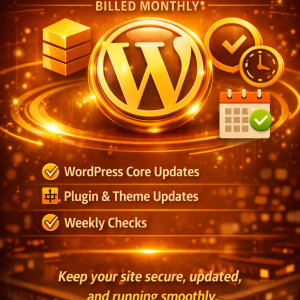
WordPress Care Essentials is designed to give you a practical, reliable foundation for ongoing site health. It centers on three core elements, each playing a distinct role in keeping your site safe and smooth.
- WordPress core updates
- Plugin & theme updates
- Weekly checks
To make this clearer, here is a concise snapshot of what you get and why it matters.
| Component | What it covers | Why it matters | Frequency |
|---|---|---|---|
| WordPress core updates | Patches and improvements released by the WordPress project | Keeps your site protected from newly discovered vulnerabilities and ensures compatibility with themes and plugins you rely on | As released by WordPress; usually monthly or when critical updates arrive |
| Plugin & theme updates | Updates to third‑party plugins and your active themes | Addresses security holes, fixes bugs, and preserves compatibility with WordPress core and other extensions | As released; often weekly or when updates are made available |
| Weekly checks | A structured review of site health, backups, performance, and security indicators | Catches issues early, reduces downtime, and provides a reliable baseline for decision‑making | Every week |
This table is more than a checklist; it’s a compact map of how your site stays in balance over time. The goal is to reduce risk and create a predictable pathway for your site’s ongoing health so you can focus on growth, content, and engagement rather than firefighting.
Why updates are non-negotiable
Updates are not optional maintenance; they are your primary defense against a world of evolving threats and changing technical requirements. Here’s why they deserve your utmost attention:
- Security vulnerabilities are a fact of life on the web. Every new update for WordPress core, a plugin, or a theme often includes fixes for newly discovered security holes. If you lag behind, you’re giving attackers an open door to exploit your site. You don’t want your visitors’ data to be at risk, nor do you want your reputation compromised by a breach.
- Compatibility depends on timely updates. WordPress core evolves, and plugins/themes rely on those changes to function correctly. When you postpone updates, you risk incompatibilities that can crash features you rely on—forms, payment gateways, membership sites, or e-commerce carts. Incompatibilities tend to cascade, creating more work to fix than the initial update would have required.
- Performance and stability improve with updates. Performance enhancements, caching improvements, and efficiency optimizations can come with core and plugin updates. If you ignore updates, you might miss opportunities to serve faster pages, handle greater traffic, and deliver a better user experience, which can also influence your search rankings.
- SEO benefits and user trust hinge on reliability. Search engines favor sites that provide reliable experiences and quickly resolve issues. When your site runs smoothly and stays secure, you reduce the risk of penalties for downtime or security incidents, and you preserve your audience’s trust.
- Safer backups and rollbacks. Regular updates pair well with robust backup strategies. If an update causes an unintended consequence, a recent backup plus a tested rollback plan can be the difference between a quick recovery and a prolonged outage. Updates become part of a controlled risk management approach rather than an unpredictable gamble.
In short, updates are your frontline defense against risk. They protect the integrity of your site, keep features working, and preserve the trust your visitors place in you. Skipping or postponing updates tends to compound problems—and the cost to fix them grows over time.
Why weekly checks are essential
Weekly checks are the heartbeat of a healthy WordPress site. They provide a steady cadence for discovering issues before they become visible problems to your customers or search engines. Here are the primary reasons weekly checks matter:
- Early issue detection reduces downtime. If a plugin conflict, a failed update, or an outage emerges, catching it early means you can respond quickly, often before anyone notices there was a problem.
- Backups that are actually usable. It’s not enough to have backups; you must know they can be restored. Weekly checks verify that your backups exist, are complete, and can be restored to a working state. This eliminates a common blind spot and protects you against data loss.
- Performance consistency. Average load times and server responses can drift due to changes in plugins, caching behavior, or traffic patterns. Weekly checks help you spot gradual performance degradation and address it before it worsens.
- Security posture validation. Routine checks include scanning for malware, verifying login security, and confirming that security configurations remain effective. A week can pass quickly, but vulnerabilities can emerge in that window if you don’t monitor continuously.
- Content and link integrity. Broken links or outdated content can harm user experience and SEO. Weekly checks provide a regular opportunity to refresh content, fix links, and ensure your pages reflect current offerings and policies.
- Compliance and accessibility alignment. For sites that must meet specific accessibility or regulatory standards, weekly reviews help you maintain compliance through small, manageable steps rather than large, disruptive overhauls.
A weekly checklist creates a predictable rhythm. You’ll know what gets checked, what gets updated, and what the outcomes should look like. That predictability reduces anxiety, helps you plan better, and gives you a clear record you can share with stakeholders.
How maintenance translates to real-world outcomes
Maintenance isn’t a theoretical exercise; it translates into tangible benefits you can measure and experience in everyday operations. Here are several outcomes you’re likely to notice when you commit to a disciplined WordPress maintenance routine:
- Higher uptime and reliability. With proactive monitoring and timely updates, you’ll spend less time dealing with unplanned outages and more time keeping your site available when your audience needs it.
- Faster, more consistent performance. Core improvements and well‑managed plugins contribute to faster page loads and more reliable responses, which can enhance user engagement and conversion rates.
- Better security posture. Regular patches and security checks reduce exposure to common attack vectors. You’ll sleep a little easier knowing your site has fewer surface areas for attackers.
- Improved SEO health. Search engines reward sites that load quickly, remain accessible, and offer a positive user experience. Regular maintenance supports these signals and can help protect or improve your rankings.
- More predictable operations. A routine schedule and documented processes make your site easier to manage, especially as teams grow or you bring in contractors. You’ll have a clear path for updates, checks, and recovery if problems arise.
- Peace of mind for you and your team. Knowing there’s a plan in place to keep the site healthy frees you to focus on content, marketing, and growth without constant firefighting.
These outcomes aren’t just theoretical. They’re the observed results of sites that implement a disciplined maintenance regime, especially when that regime is aligned with a package like WordPress Care Essentials, which emphasizes core updates, plugin/theme updates, and weekly checks as foundational elements.
A closer look at update dynamics and risk management
Understanding how updates work helps you manage risk more effectively. Here’s a practical view of the update dynamics you’re likely dealing with:
- Update cadence varies by component. Core updates typically arrive on a predictable cadence from WordPress. Plugins and themes are updated as developers release fixes or improvements. Some updates are minor (security patches) and some are major (new features, breaking changes). Your maintenance plan should account for both, ensuring you apply critical updates promptly while testing major changes in a staging environment when possible.
- Compatibility testing matters. Before applying updates, especially major ones, it’s wise to test compatibility with your current theme, essential plugins, and any custom code. A staged approach or a controlled test environment minimizes the risk of disruption on your live site.
- Staging environments reduce risk. Where feasible, updates can be tested in a staging environment that mirrors your live site. If something breaks, you can fix it there before it affects your visitors. This practice dramatically reduces the potential for unplanned downtime.
- Backups as a safety net. Regular, verified backups are not a luxury—they’re a safety net that enables you to recover quickly from failed updates, compatibility issues, or data loss. Your maintenance plan should include a clear backup policy and a tested restore process.
- Monitoring and rollback readiness. After updates, you should monitor critical metrics and be prepared to rollback if something goes wrong. A well‑defined rollback plan minimizes disruption and speeds recovery.
By treating updates as a managed process rather than a series of one‑off actions, you reduce risk, protect your assets, and maintain a stable platform for growth. A professional maintenance approach helps you implement these best practices consistently.
A practical weekly maintenance workflow
To give you a concrete sense of what weekly maintenance looks like, here’s a practical workflow you can expect from a professional maintenance program. This captures the rhythm you’ll experience and the kinds of checks that keep your site healthy.
- Week-start health check
- Confirm uptime and site availability.
- Review alerts from monitoring tools or hosting dashboards.
- Check for any unusual traffic spikes or error codes.
- Core updates and plugin/theme updates
- Apply WordPress core updates when necessary and safe.
- Update installed plugins and themes, prioritizing security patches and critical fixes.
- Document what was updated and any impact observed.
- Backup verification
- Ensure the latest backup runs successfully.
- Verify that backups are restorable by performing a test restore on a staging environment or a test file.
- Review backup retention and storage locations.
- Security and performance checks
- Run a quick security scan for malware or suspicious activity.
- Check login activity, rate limits, and access controls.
- Run performance tests (page speed, caching behavior) and note any anomalies.
- Content and linkage review
- Scan for broken links and 404 errors.
- Validate recent content for accuracy, SEO alignment, and internal linking structure.
- Ensure that metadata, titles, and schema markup stay aligned with optimization goals.
- Accessibility and user experience checks
- Confirm that critical pages remain accessible across devices and browsers.
- Identify any accessibility barriers and plan fixes if needed.
- Reporting and planning
- Prepare a concise health report summarizing updates, tests, outcomes, and recommended next steps.
- Schedule any necessary follow-up actions or fixes for the upcoming week.
This workflow isn’t just about ticking boxes; it’s about maintaining a living, responsive site that continues to meet your audience’s expectations. When you have a reliable weekly rhythm, you can anticipate issues and address them before they become visible problems, preserving momentum in your content and marketing efforts.
The value proposition of professional maintenance
You might wonder how much value you should expect from a maintenance program and whether it’s worth the investment. The answer is typically yes—when you consider the costs of downtime, data loss, or a poorly performing site against the relatively modest ongoing cost of regular maintenance. Here are the main value drivers:
- Reduced risk of downtime. Regular updates and ongoing monitoring dramatically reduce the likelihood of unexpected outages. This is especially important for sites with high traffic, e-commerce capabilities, or critical services.
- Confidence in security. A proactive approach to security helps you defend against common attack vectors, protecting customer data and preserving your reputation.
- Consistent performance. A stable, well‑optimized site performs better in user engagement metrics, conversions, and search visibility.
- Predictable operations. You’ll have a clear schedule, documented processes, and measurable outcomes that you can share with stakeholders.
- Improved resilience. The combination of backups, monitoring, and tested recovery practices makes your site more resilient to incidents and faster to recover when something does occur.
When you compare these value drivers to the alternative of sporadic maintenance or ad hoc updates, the benefits of a professional maintenance approach become clearer. You’ll gain more reliable operations, better user experiences, and greater confidence that your site is ready to support your business goals.
Getting the most from WordPress Care Essentials
WordPress Care Essentials focuses on three core elements—core updates, plugin & theme updates, and weekly checks—delivering a practical framework for maintaining your site’s health. Here are a few best practices to get the most from this package:
- Align updates with your business calendar. If you have launches, promotions, or new content planned, coordinate updates to minimize the risk of disruption during critical periods.
- Embrace testing in a staging environment when possible. For major updates or significant plugin changes, staging helps you identify conflicts without affecting live users.
- Keep a robust backup routine. Use a trusted backup solution and verify restores on a regular cadence. Backups are the safety net that makes updates feasible with lower risk.
- Maintain documentation. Keep a log of all updates, checks, and changes. Documentation supports accountability and helps you communicate progress to stakeholders or new team members.
- Prioritize critical issues. If you notice a security alert or a high‑risk compatibility problem, escalate it promptly. Quick action reduces exposure and keeps your site stable.
These practices help you extract maximum value from WordPress Care Essentials and turn a maintenance program into a strategic asset for your online presence.
What to expect when you engage a maintenance partner
If you’re considering working with a professional maintenance provider, here are the kinds of assurances and capabilities you should look for:
- Clear scope and transparency. A well-defined scope (like core updates, plugin/theme updates, weekly checks) with explicit deliverables helps you understand what you’re paying for and what you should expect.
- Regular reporting. Expect concise health reports, update logs, and metrics that matter to your business (uptime, backup status, security checks, and performance indicators).
- Timely response and support. A predictable support window and defined response times matter when you encounter issues that could impact conversions or user experience.
- Safe change management. Look for a partner who emphasizes testing, staging, and rollback options to minimize risk and maintain control over what gets deployed.
- Scalable solutions. Your needs may change over time. A good partner will adapt to growing traffic, more complex configurations, and evolving business goals.
Choosing a maintenance partner means choosing a reliable extension of your team. It’s not just about technical tasks; it’s about reducing risk, protecting customers, and enabling you to focus on strategy, content, and growth.
A short guide to deciding whether maintenance is right for you
If you’re on the fence about maintenance, consider these questions:
- Do you rely on your website for revenue, inquiries, or lead generation? If yes, downtime or performance issues can be costly.
- Have you experienced security warnings, plugin conflicts, or broken features in the past year? Regular maintenance helps mitigate recurring problems.
- Do you want to save time and mental energy by leaving routine updates and checks to professionals? A maintenance plan can free you to focus on your core business.
- Are you prepared to invest in backups and monitoring that protect your data and visitor trust? A structured program makes it easier to manage risk.
If you answered yes to any of these, professional maintenance with a package like WordPress Care Essentials is likely a wise fit. It’s not about overdoing updates; it’s about a thoughtfully managed cadence that keeps your site healthy and resilient.
A practical look at a maintenance plan in action
To illustrate how the pieces come together, imagine you run a mid‑sized business with a content site, a small e‑commerce component, and a common set of plugins for SEO, analytics, and forms. Your WordPress Care Essentials agreement would ensure:
- Core updates arrive promptly and are applied with care to maintain compatibility.
- Plugins and themes receive critical updates as soon as they’re deemed safe and compatible with your site’s configuration.
- Weekly checks verify that backups exist, uptime is stable, security alerts are addressed, and performance remains within target ranges.
Over time, you would expect fewer disruptive moments, faster recovery if something goes wrong, and a more reliable platform for your content and customers. The cumulative effect is a smoother experience for your visitors and a calmer operating environment for you and your team.
A concluding perspective
Professional WordPress maintenance matters now more than ever because the landscape you operate in is more complex and more dangerous to ignore than ever before. Updates are the first line of defense against security threats and compatibility issues, while weekly checks provide a disciplined approach to long‑term health. When you pair these practices with a clear, practical package like WordPress Care Essentials, you gain a reliable framework that supports your site’s performance, security, and longevity.
If you’re weighing your options, you owe it to your site and your audience to consider a maintenance approach that treats health as an ongoing priority rather than an occasional afterthought. Your site, your visitors, and your business deserve nothing less.
Frequently considered questions (concise)
- Do I need weekly checks if I already have automatic updates enabled? Automatic updates reduce some risk but don’t replace the value of a proactive weekly health review. Weekly checks catch issues automatic updates might miss, such as performance drifts, broken links, or content inconsistencies.
- Can I handle maintenance myself? If you have the time, expertise, and a reliable testing environment, you can manage updates and checks in‑house. However, many site owners find professional maintenance cost‑effective because it reduces downtime, increases security, and frees you to focus on core activities.
- What makes WordPress Care Essentials different? It emphasizes a disciplined, repeatable process—the three core elements you asked for—ensuring you have a practical, actionable plan for ongoing site health rather than a miscellaneous set of tasks.
If you’re ready to move forward, you can start by assessing your current update cadence, the reliability of your backups, and your weekly routines. Then consider how a structured package like WordPress Care Essentials could formalize and strengthen that routine, giving you a clear path to better security, performance, and user experience for your WordPress site.








0 Comments