


Have you ever wondered how weekly WordPress maintenance could save your business time and money?

Why Weekly WordPress Maintenance Saves Businesses Time And Money
You manage a growing business and rely on your website to attract customers, convert leads, and support your brand. When you think about maintenance, you might picture routine annoyances or a vague obligation to keep things secure. What you may not realize is how a consistent weekly maintenance routine can become one of your strongest time- and money-saving assets. By investing a regular, proactive pattern, you reduce the risk of emergencies, streamline operations, and create a smoother experience for your visitors. In this article, you’ll discover why weekly maintenance matters, how it translates into tangible savings, and how a straightforward package like WordPress Care Essentials can fit into your business calendar.
You’ll stay ahead of compatibility and security issues
Weekly maintenance isn’t just about keeping software up to date. It’s about staying ahead of compatibility pitfalls and security vulnerabilities before they impact your site’s performance. When you check for updates on a regular cadence, you’re less likely to encounter plugin conflicts, broken themes, or deprecated code that could slow your site or create downtime. By making these checks a habit, you maintain a stable foundation for your content, e-commerce, and customer interactions.
You’ll reduce downtime and protect revenue
Downtime is expensive, especially if your site serves customers during peak hours or runs e-commerce storefronts. A weekly routine helps you catch issues early—before they escalate into outages or slow-loading pages. When your site runs smoothly, customers stay engaged, conversion rates stay healthier, and search engines reward consistent performance with better rankings. You protect revenue by preventing interruptions and maintaining a reliable user experience.
You’ll save time across teams and tasks
Think about the time your team spends reacting to urgent site problems, redoing broken pages, or chasing compatibility fixes. A weekly maintenance plan shifts many of those ad hoc activities into a predictable schedule. Your developers, marketers, and customer support teams can operate with clarity, knowing issues will be identified and addressed on a known cadence. Time saved in the week compounds into a more productive month and quarter.
You’ll extend the life of your site’s technology stack
When you update WordPress core, themes, and plugins regularly, you minimize the risk of aging software dragging down performance or creating security loopholes. Regular checks also catch outdated code that could cause future compatibility headaches. A well-maintained site behaves more consistently across browsers and devices, which means fewer emergency fixes and longer asset life.
You’ll create a defensible, scalable maintenance habit
A weekly routine isn’t just for today; it’s a scalable practice you can fold into your business processes as you grow. If you add new features, expand your product catalog, or onboard new teams, a proven maintenance habit provides a reliable spine for ongoing improvements. Your site becomes easier to manage, audit, and delegate as responsibilities shift within your organization.
You’ll communicate value to stakeholders
Owners, executives, or investors often want to understand how technical activities translate into business outcomes. A clear weekly maintenance plan demonstrates proactivity, accountability, and measurable results. When you can point to reduced downtime, faster page loads, and fewer bug reports, you’ve got solid evidence of prudent, money-smart governance for your digital presence.
You’ll protect your brand and trust with customers
Trust is built on reliability. A site that consistently performs well reinforces your brand’s credibility. Regular maintenance shows customers that you care about their experience and security. It’s not just about keeping software updated; it’s about preserving your reputation and giving your audience a dependable place to visit, buy, or engage.
You’ll align maintenance with your business calendar
Weekly maintenance fits neatly into most business rhythms. You can schedule a fixed window on a predictable day, align it with other weekly routines (like content publishing or reporting), and keep stakeholders informed. A regular cadence reduces the cognitive load of “when will this be fixed?” and helps you maintain clarity about what’s being done and why.
You’ll simplify audits and compliance checks
Many industries require audits or compliance checks for security, privacy, or accessibility. A weekly maintenance practice makes it easier to generate evidence of continuing protection and governance. You’ll have up-to-date records of updates, backups, and checks, which helps you demonstrate diligence during audits or contract renewals.
You’ll empower faster onboarding and knowledge transfer
When your site has a documented weekly maintenance workflow, onboarding new team members becomes smoother. You’ll share clear steps, responsibilities, and checklists, reducing the time needed for training. New staff can contribute sooner and with less risk of causing issues while they learn.
The core components of weekly WordPress maintenance
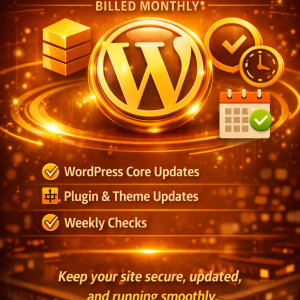
To understand why weekly maintenance saves time and money, you need a concrete picture of what the routine covers. The WordPress Care Essentials package is a practical way to package these activities so you can implement them consistently. It includes three core elements:
- WordPress core updates
- Plugin & theme updates
- Weekly checks
WordPress core updates
Keeping the WordPress core up to date is foundational. Each update often contains security patches, performance improvements, and compatibility tweaks. Even minor version updates can close gaps that attackers might exploit or features that your site relies on. By installing core updates weekly, you minimize the window of exposure and ensure you’re running code that is supported by the WordPress ecosystem.
A steady cadence also helps you avoid the reactive, “one big sprint” approach where you chase dozens of changes at once. When updates are handled regularly, you maintain a more predictable risk profile and a more stable test environment. You’ll experience fewer surprise conflicts with themes or plugins when the core is refreshed in smaller, controlled steps.
Plugin & theme updates
Plugins and themes extend WordPress with the features your site depends on for functionality and design. However, they also introduce risk: a plugin that works today might conflict with a new update tomorrow, or a theme could rely on code that becomes deprecated. Regularly updating plugins and themes reduces the chance of security holes, performance regressions, and compatibility issues.
With weekly checks, you verify that updates apply cleanly, consider compatibility with your current configurations, and review any new settings that affect user experience. This approach minimizes the downtime that sometimes accompanies large, infrequent updates and keeps your site aligned with the latest capabilities.
Weekly checks
Weekly checks are the backbone of a proactive maintenance approach. They usually cover a set of checks that you perform on a predictable schedule:
- Uptime and performance monitoring: ensuring your site loads quickly and stays online.
- Backups: confirming that backups run correctly, are stored securely, and can be restored.
- Security scans: checking for malware, unauthorized access, or suspicious activity.
- Functionality verification: testing critical features (forms, e-commerce checkout, login, search) to confirm they work as expected.
- Content and SEO health: ensuring pages are indexed, metadata is correct, and no broken links exist.
- Performance optimization: reviewing caching, image optimization, and resource usage.
- Accessibility and compliance checks: verifying that accessibility basics are met and privacy preferences are respected.
Together, these three components create a strong, resilient foundation. They work in concert to prevent problems, catch them early, and minimize disruption to your users.
Table: Weekly maintenance components and their impact
| Component | What it does | Benefit to your business | Frequency |
|---|---|---|---|
| WordPress core updates | Keeps the core software current and supported | Reduces security risk, improves performance, ensures compatibility | Weekly |
| Plugin & theme updates | Keeps extensions current and compatible | Lowers conflict risk, adds features securely, preserves design integrity | Weekly |
| Weekly checks | Routine verification of uptime, backups, security, performance | Early detection, fast recovery, consistent user experience | Weekly |
Why weekly maintenance is necessary
You might wonder, why not do updates less frequently and perform bigger maintenance windows? The reality is that larger, infrequent updates increase risk. They can introduce multiple issues at once, making it harder to identify the root cause when something goes wrong. Weekly maintenance minimizes the blast radius of changes and helps you isolate problems quickly.
Updates reduce the attack surface
The longer you delay updates, the larger the window for a vulnerability to be exploited. Cybercriminals often scan sites for unpatched weaknesses. By applying weekly updates, you limit that window and reduce your site’s exposure. This isn’t a theoretical concern—malware and hack attempts are ongoing realities for many sites. Regular updates are a simple, effective defense.
Compatibility is preserved more predictably
Plugins and themes evolve. If you wait months between updates, you may face a cascade of incompatible changes that require significant debugging. Weekly updates help you observe how new releases interact with your current stack on a manageable, incremental basis. This makes troubleshooting easier and faster.
Performance improvements are incremental and noticeable
Core and plugin updates often come with performance enhancements. By maintaining a weekly rhythm, you can observe small, cumulative gains instead of waiting for a big, uncertain improvement after a long period of time. Your site may become faster, more responsive, and more scalable with less effort.
Security requires ongoing attention
Security isn’t a one-and-done task. It’s about a continual sequence of adjustments and checks. A weekly routine provides a security baseline that’s refreshed on a regular basis, making it harder for threats to slip through gaps in protection.
Backups are a safety net that you can trust
Backups protect your business from human error, plugin failures, and unplanned outages. Weekly checks ensure backups are configured correctly and can be restored when needed. The confidence you gain from reliable backups translates into less stress and faster recovery during incidents.
The cost of neglect
If you ignore weekly maintenance, you’re trading potential savings for bigger risks. The consequences often accumulate over time and can be far more expensive than the effort of a weekly routine. Here are some typical scenarios you might encounter:
- Prolonged downtime during a critical product launch or sale event. Even a few hours of outage can cost you revenue and customer trust.
- Security incidents that require incident response, forensic analysis, and remediation, plus potential liability or regulatory costs.
- Data loss or corruption that demands expensive recovery efforts and reputational repair.
- Fragmented experiences due to plugin conflicts or theme issues, leading to high bounce rates and lower conversions.
- Emergency development sprints that disrupt planned work and cause fatigue among your team.
Table: Estimated costs associated with neglect (illustrative ranges)
| Issue | Typical cost range (USD) | Why the cost occurs | How regular maintenance mitigates it |
|---|---|---|---|
| Downtime during peak hours | 500–5,000+ per hour for small-to-mid-size sites; larger sites can be much more | Revenue loss, customer drop-off, poor SEO signals | Early detection, tested updates, and quick rollback capabilities |
| Security breach remediation | 1,000–100,000+ depending on severity | Cleaning malware, restoring data, reputational impact | Timely security patches, monitoring, and quick containment |
| Backup restoration | 200–2,000+ depending on data size | Restore costs, data gaps, operational downtime | Regular backups and tested restoration processes |
| Developer time for ad hoc fixes | 50–200+ per hour | Unplanned work, context switching, rushed debugging | Structured weekly checks reduce emergent issues |
| Reduced conversions due to performance | measurable drop in revenue | Slower pages deter visitors | Performance-focused updates and tuning improve UX |
Even if you never experience a high-profile outage, the cumulative effect of not maintaining your site weekly can quietly erode performance, reliability, and customer trust. Regular maintenance acts like a shield and a steadying force, helping you protect your bottom line in ways that aren’t always dramatic, but consistently valuable.
The weekly maintenance workflow: a practical blueprint
To turn theory into action, you’ll want a concrete workflow you can follow every week. The following blueprint keeps tasks manageable and transparent. You can customize the steps to fit your team size, your hosting environment, and your business needs. The key is consistency and documentation.
Step 1: Verify backups and restoration readiness
- Confirm that automated backups ran successfully on a recent schedule.
- Validate a recent restore point by testing a dry run on a staging environment if possible.
- Ensure archives are encrypted and stored securely offsite or in a cloud bucket.
Why this matters: If disaster strikes, you want to have a working plan that you can execute without delay. A stored, tested backup is the most tangible evidence that your site can be recovered rapidly.
Step 2: Apply WordPress core updates
- Check for new core releases and plan updates during a low-traffic window.
- Review the release notes for security fixes and breaking changes.
- Apply updates first in a staging environment, then promote to production after a successful test.
Why this matters: Core updates often include security patches and performance enhancements. A careful, staged approach minimizes risk and ensures you’re benefiting from the newest capabilities without introducing instability.
Step 3: Apply plugin and theme updates
- Update plugins and themes in a controlled order, starting with those most critical to your site’s function.
- Check for compatibility issues and test key workflows (checkout, contact forms, login).
- Document any configuration changes and adjust notices for your team.
Why this matters: Many issues come from conflicts between plugins or deprecated functions. Regular, deliberate updates keep your site compatible and resilient.
Step 4: Run performance and health checks
- Run a quick performance test (page load times, time to first byte, and mobile performance).
- Review caching configuration, image optimization, and CDN behavior if you use one.
- Look for any error messages, 404s, or server-side warnings.
Why this matters: Small performance gains add up. Regular checks help you maintain fast, reliable pages that please visitors and search engines alike.
Step 5: Review security posture
- Scan for malware, suspicious files, or unexpected login events.
- Review user roles, credentials, and access permissions.
- Confirm security plugin settings and firewall rules are current.
Why this matters: Proactive security reduces vulnerability exposure and gives you a defensible security posture.
Step 6: Content and SEO health sweep
- Check for broken links, outdated content, and optimization opportunities.
- Ensure metadata (titles, descriptions) aligns with current campaigns and keyword strategy.
- Validate structured data or schema markup where applicable.
Why this matters: A healthy site not only ranks better but also delivers a clear, trustworthy experience to visitors.
Step 7: Documentation and communication
- Update your maintenance log with what was changed, why, and when.
- Notify relevant stakeholders about completed updates and upcoming plans.
- Prepare a summary for leadership that highlights the business impact.
Why this matters: Transparent communication reduces confusion and helps your team coordinate around site health rather than reacting to issues after they arise.
The business case for WordPress Care Essentials
WordPress Care Essentials is designed to package these activities into a predictable, repeatable cadence. The package emphasizes three core actions—core updates, plugin and theme updates, and weekly checks—as the backbone of a robust maintenance program. While you could perform these tasks manually, a structured package helps you standardize the effort, set clear expectations, and scale maintenance as your site and business grow.
Why a package approach matters
- Consistency: You’ll have a repeatable process with defined responsibilities, reducing ambiguity.
- Predictability: Your team knows what to expect and when updates will take place.
- Risk reduction: Regular updates and checks catch issues while they’re small.
- Documentation: A formal log provides a trail for audits, onboarding, and accountability.
How the package translates into tangible business gains
- Fewer emergency fixes mean less disruption to launches, campaigns, and peak traffic times.
- More stable user experiences lead to higher conversions and customer satisfaction.
- Clear, auditable maintenance logs improve governance and stakeholder confidence.
- Time savings compound across weeks and quarters, delivering measurable ROI.
Time and money savings in practice: a closer look
You want numbers you can trust when planning budgets and calendars. While exact savings depend on site size, traffic, and your team, you can expect meaningful improvements in both time and money with a weekly maintenance rhythm. The following examples illustrate potential outcomes.
Time savings
- Reduced emergency debugging time: With weekly checks, you catch issues before they escalate, decreasing fire-fighting hours by a meaningful margin.
- Faster restoration after incidents: Regular backups and tested recovery cut restoration time dramatically.
- Streamlined decision-making: A known cadence reduces status meetings and unproductive chasing of issues.
Table: Estimated weekly time savings (illustrative)
| Activity | Before (approx. hours) | After (approx. hours) | Net weekly savings (hours) |
|---|---|---|---|
| Emergency fixes from updates | 2–6 | 0.5–1 | 1–5 hours |
| Backup checks and testing | 1–2 | 0.25–0.5 | 0.5–1.5 hours |
| Performance and security checks | 1–2 | 0.5–1 | 0.5–1.5 hours |
| Testing and dry runs | 1–2 | 0.25–0.5 | 0.5–1.5 hours |
| Total weekly savings | 2–9 hours |
Monetary savings
- Reduced downtime costs: Even small improvements in uptime can translate into revenue protection and cost avoidance.
- Lower development costs: Regular maintenance reduces the frequency and scope of urgent, rush-work projects.
- Improved conversion and SEO performance: A fast, secure site with clean scripts and up-to-date content tends to retain visitors longer and convert more effectively.
Table: Estimated annual monetary impact (illustrative ranges)
| Benefit | Estimated annual impact (USD) | Why it matters |
|---|---|---|
| Downtime avoidance | 2,000–20,000+ | Revenue preservation and customer trust |
| Reduced incident response | 1,000–10,000 | Less contractor time and in-house distraction |
| SEO and performance gains | 1,000–15,000 | Higher traffic and conversions |
| Development overhead reduction | 1,000–12,000 | Smoother project cycles, less scope creep |
| Total potential savings | 5,000–57,000+ | Across a range of site sizes and industries |
These figures are illustrative. Your actual savings depend on your traffic, the complexity of your site, and how effectively you implement the weekly checks. The principle is clear: consistent weekly maintenance reduces the frequency and severity of problems, which translates into tangible time and money savings.
Real-world considerations: who benefits most
While every WordPress site can benefit from a weekly maintenance cadence, certain situations amplify the value:
- E-commerce stores with frequent promotions: Quick updates, stable checkout flows, and uninterrupted uptime are critical to revenue.
- Content-heavy sites with multiple contributors: Regular checks reduce the risk of publishing errors or broken templates that disrupt user experience.
- Sites with complex plugin ecosystems: A larger plugin stack increases the potential for conflicts; weekly updates help you manage risk more effectively.
- Agencies managing multiple client sites: A formal maintenance package provides scalable processes, saving project time and improving client confidence.
You’ll likely notice the biggest gains when you balance a robust maintenance routine with your actual publishing and marketing calendar. The cadence should align with your business cycles so that maintenance adds predictability rather than friction.
Best practices to maximize weekly maintenance effectiveness
- Automate where feasible: Use automation for backup verification, uptime monitoring, and alerting. Automation reduces manual overhead and ensures you don’t miss a check.
- Test updates in staging first: A staging environment helps you validate changes without affecting live users.
- Maintain a clear change log: Document what you updated, why, and any follow-up actions. This helps you track long-term outcomes and supports audits.
- Prioritize security posture: Treat security checks as non-negotiable; minor improvements can prevent serious incidents.
- Allocate a dedicated time window: A fixed weekly time helps your team stay aligned and reduces the risk of tasks slipping through the cracks.
- Communicate results: Share a brief weekly report with stakeholders that highlights wins, risks, and next steps.
Implementation tips: how you can start today
If you’re ready to begin or optimize your weekly maintenance routine, here are practical steps you can take right away:
- Assess your current setup: Look at your hosting environment, existing backup strategy, and the plugins/themes you rely on most. Identify any obvious gaps or bottlenecks.
- Choose a maintenance cadence: Decide on a specific day and time for your weekly maintenance window that won’t disrupt your peak traffic periods.
- Establish checklists: Create a simple, repeatable checklist for each weekly maintenance session. Include updates, backups, checks, and reporting.
- Invest in a reliable toolset: Use a combination of WordPress-native tools, security plugins, and performance optimizers that suit your site’s needs.
- Assign responsibilities: If you have a team, designate who handles core updates, who monitors backups, and who reviews the health checks. Clear ownership reduces ambiguity.
- Monitor results and adjust: Track metrics like uptime, page speed, and error rates. Use these insights to refine your process and timing.
Common objections and how to respond
You may hear concerns about weekly maintenance taking time away from more urgent tasks or about the cost of a maintenance package. Here are framed responses you can use to address typical objections:
- Objection: “Weekly maintenance is too time-consuming.” Response: “A well-structured weekly routine is designed to be efficient. The time you invest now prevents time-consuming emergencies later, and with automation and a clear checklist, the cadence becomes a predictable part of your workflow.”
- Objection: “We can handle updates as they come.” Response: “Ad-hoc updates lead to unpredictable risk. A weekly plan reduces the likelihood of conflicts and leverages small, incremental changes that are easier to manage and revert if necessary.”
- Objection: “We don’t have a dedicated DevOps team.” Response: “A maintenance package like WordPress Care Essentials is designed for teams of all sizes. It provides a disciplined framework that you can adopt without needing a full-time specialist.”
- Objection: “What about performance loss after updates?” Response: “Updates are tested in staging, and performance is reviewed after applying changes. If anything degrades, you have a rollback path, and you can adjust settings to restore performance quickly.”
Choosing the right approach for your business
There’s no one-size-fits-all answer to maintenance frequency, but weekly maintenance is a well-balanced starting point for many sites. If your site has extremely high uptime requirements, or you rely on a very dynamic stack, you might adopt more rigorous checks or tailored governance. If your site is relatively small with limited traffic, you could opt for a lighter version of the same philosophy, ensuring you still cover backups, security, and critical updates.
In all cases, the goal is steady risk reduction, predictable workflows, and improved user experiences. The exact approach should reflect your business priorities, risk tolerance, and the resources you can allocate.
A note on sustainability and growth
As your business grows, your site will likely gain more complexity: more products, more content authors, more third-party integrations, and more marketing experiments. A weekly maintenance routine scales with you. By committing to a steady rhythm, you create a sustainable foundation that remains manageable even as your workload expands. The maintenance habits you establish today become the platform for future enhancements, new features, and larger-scale launches.
FAQs: quick answers to common questions
-
Do I really need weekly maintenance if I’ve never had problems? Regular maintenance reduces the chance of problems and lowers the impact when something does go wrong. Even if you haven’t faced issues yet, updates and checks are a defense against unseen vulnerabilities.
-
Can I do maintenance myself, or should I hire a service? A service package like WordPress Care Essentials provides a structured process, consistency, and oversight. You can implement many elements in-house, but having a defined program and documentation helps you scale and stay accountable.
-
What should I expect in terms of downtime during updates? The goal is to minimize downtime. In most cases, core or plugin updates can be applied with minimal disruption, especially when tested in staging. If a rollback is needed, you’ll be prepared to execute it quickly.
-
How do I measure the impact of weekly maintenance? Track uptime, page speed, error rates, backup success, and incident response time. Use these metrics to quantify improvements over time and to communicate value to stakeholders.
Final thoughts: you’re laying a solid foundation for your website
Weekly WordPress maintenance isn’t merely an operational task. It’s a strategic investment in reliability, security, and growth. By committing to a regular rhythm that includes core updates, plugin and theme updates, and weekly checks, you create a foundation that supports your business objectives. You’ll reduce risk, improve performance, and free up time for your team to focus on growth initiatives instead of firefighting.
With a practical framework like WordPress Care Essentials, you gain a proven structure you can apply across multiple sites, campaigns, or client projects. You’ll develop a shared language for maintenance, align stakeholders around measurable outcomes, and demonstrate clear value to your customers and leadership teams. In short, you’re not just protecting a website—you’re safeguarding your brand, your revenue streams, and your future growth.
If you’re ready to start or refine your weekly maintenance journey, consider mapping your current process against the steps outlined above. Identify gaps, set a realistic cadence, and begin documenting outcomes. The return on this disciplined approach isn’t just about avoiding problems; it’s about delivering a consistently reliable, high-quality online experience that your visitors can trust and your business can depend on.
Appendix: quick reference checklist (condensed)
- Backups: verify latest backup exists, test restoration if possible
- Core updates: check for WordPress core releases, test in staging
- Plugin/theme updates: update critical components first, then broader set
- Security: run a scan, review user access, confirm firewall rules
- Performance: run quick page-speed tests, review caching and images
- Content: audit for broken links and outdated material
- Documentation: update the maintenance log with changes and rationale
- Communication: share a brief weekly report with stakeholders
Remember, the goal of weekly maintenance is not to complicate your routine but to simplify and protect it. With discipline, automation, and a clear process, you’ll keep your WordPress site performing at its best, while you focus on what you do best—running and growing your business.










0 Comments