


Have you ever wondered why WordPress core updates should never be delayed?

Why WordPress Core Updates Should Never Be Delayed
You rely on your website to attract, inform, and convert visitors. When you delay WordPress core updates, you’re not just postponing a set of minor changes; you’re risking security flaws, performance issues, and compatibility headaches that can impact your bottom line. In this article, you’ll discover why keeping WordPress core up to date is essential, how weekly checks play a critical role in keeping your site healthy, and how a focused maintenance package—like WordPress Care Essentials—can simplify the process while delivering real, measurable benefits.
Why updates matter, at a glance
Updates are not optional upgrades; they are protective measures and performance refinements. Each new version of WordPress can address known security vulnerabilities, optimize code paths, and improve compatibility with modern hosting environments. When you stay current, you are strengthening your site’s defenses against threats, reducing the likelihood of downtime, and ensuring your content loads quickly for your audience.
The core idea
Your goal is to maintain a reliable, fast, and secure online presence. Updates to the WordPress core are a fundamental part of that goal. They unlock improvements in security, performance, and compatibility, and they lay a solid foundation for all your plugins, themes, and customizations to work together smoothly. If you delay these updates, you create a growing gap between your site’s current state and its optimal state.
What happens when you delay core updates
You might think postponing updates saves you time or reduces the chance of breaking something on your site. In reality, delaying core updates often creates a different set of problems. You’ll confront more risk, more complexity, and more urgent maintenance needs down the line.
Security risks compound over time
Every WordPress release typically includes patches for discovered vulnerabilities. When you skip updates, you leave your site exposed to potential exploits that skilled attackers can leverage. Even if you haven’t noticed unusual behavior, attackers can quietly probe for weaknesses and gain a foothold. Your site’s user data, SEO trust, and reputation may be at stake.
Compatibility becomes a moving target
Plugins and themes also evolve, frequently aligning with the latest WordPress core changes. If you fall behind, you’ll face a higher probability of conflicts, broken features, or degraded user experiences. In some cases, you may need to perform more extensive maintenance, or even rework parts of your site, to restore compatibility after delays.
Performance can slip without timely improvements
WordPress core updates often include performance optimizations and efficiency improvements. If you postpone, you might miss opportunities to leverage faster code paths, better memory usage, or improved caching behavior. Your site could feel slower over time, which affects user satisfaction and conversion rates.
The cost of emergency fixes rises
Delays tend to turn routine maintenance into emergency work. Instead of scheduled, incremental updates, you may face critical outages or last-minute security patches. Emergency work is typically more disruptive, more expensive, and more stressful for you and your team.
A false sense of stability
If you assume your site is stable because nothing obvious is broken, you may overlook subtle issues that build up. Slow performance, small plugin conflicts, or intermittent errors can accumulate and eventually degrade the user experience. Routine updates help you catch these issues earlier and keep your site reliably healthy.
The weekly check framework: keeping your site healthy
Weekly checks are a proactive approach to site maintenance. Rather than waiting for a problem to become visible, you examine the site on a regular cadence to detect risks before they escalate. This practice keeps your site aligned with best practices and modern infrastructure.
What these weekly checks typically cover
- Core updates status and validation
- Plugin and theme update availability and compatibility checks
- Security scans for known vulnerabilities
- Performance monitoring and load-time checks
- Backups verification and restoration readiness
- Error log review and anomaly detection
- Accessibility and content integrity checks
- SEO health signals and redirection status
You may wonder how weekly checks translate into actual value. Think of them as a recurring health assessment for your site. By addressing small issues early, you prevent larger problems that require more time, money, or downtime to fix later.
Why weekly checks are especially important in WordPress
WordPress is a dynamic ecosystem with frequent releases, security patches, and plugin/theme updates. The more often you review your site, the more likely you are to catch misconfigurations, outdated dependencies, or plugin conflicts before they become obvious problems to your visitors. A weekly cadence provides a predictable maintenance rhythm that suits growing sites with regular content publishing and evolving feature needs.
The human factor: accountability and reporting
Weekly checks are not just a technical exercise; they are about accountability. You get a clear, actionable report that explains what was checked, what was found, and what you need to approve or implement. When you have visibility into the maintenance process, you can plan resources, coordinate with your team, and maintain confidence that your site is being cared for.
A closer look at the WordPress Care Essentials package
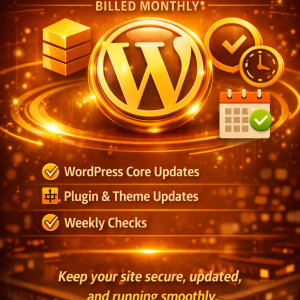
WordPress Care Essentials is a website maintenance package designed to cover the core areas that keep a site secure, fast, and reliable. The package focuses on three pillars: WordPress core updates, plugin and theme updates, and weekly checks. By aligning these three elements, you create a cohesive maintenance routine that reduces risk, improves performance, and delivers peace of mind.
- WordPress core updates: Regularly applied updates to the WordPress core, including security patches and feature refinements.
- Plugin & theme updates: Timely updates to extensions and themes to maintain compatibility and security.
- Weekly checks: A consistent review cycle that validates function, addresses vulnerabilities, and ensures performance remains strong.
Below, you’ll find a deeper breakdown of each component and how they work together to keep your site healthy and resilient.
What you gain with WordPress core updates
Core updates are the backbone of site security and compatibility. When you keep the core up to date, you gain access to the latest security patches, performance improvements, and new features that align with modern hosting environments and PHP versions. Core updates also help you avoid the cumulative complexity that arises from delaying essential changes.
- Security improvements: Patching known vulnerabilities reduces the attack surface for your site.
- Performance enhancements: Core improvements can improve response times and efficiency.
- Compatibility with modern PHP versions and hosting environments: This reduces the risk of issues caused by outdated PHP or server configurations.
- Reliability for future customizations: When the core is current, your customizations and extensions are less likely to break during upgrades.
How plugin and theme updates fit into the picture
Plugins and themes extend functionality. They rely on a compatible WordPress core to operate as intended. Regular updates for plugins and themes help you avoid conflicts and security gaps that arise due to out-of-date code.
- Security patches and vulnerability fixes: Extensions can be entry points for attacks if not kept current.
- Compatibility with core changes: As WordPress evolves, plugins and themes must adapt to avoid breakages.
- Feature enhancements and bug fixes: You gain improvements that enhance usability and reliability.
- Reduced maintenance tension: When the ecosystem is consistently updated, you experience fewer last-minute surprises.
The weekly check: turning maintenance into a proactive habit
Weekly checks ensure that updates are not just applied, but verified for impact. The process typically includes testing after updates, validating that critical features still work, and confirming that backups are intact.
- Verification after updates: You confirm that core, plugins, and themes update without breaking essential functionality.
- Backups are valid and restorable: You confirm you can recover in a worst-case scenario.
- Performance and speed checks: You detect any regressions or slowdowns promptly.
- Error and log monitoring: You catch issues that aren’t immediately visible to users.
How updates translate into site health: a practical perspective
To appreciate why updates should never be delayed, you can think of updates as ongoing maintenance for your digital property. Your site doesn’t exist in a vacuum; it lives on servers, relies on software layers, and serves visitors who expect quick, secure experiences. The interplay between the core, plugins, and your hosting environment means that neglecting updates creates a web of risk. When you address updates promptly, you are reinforcing the foundations that support all the site’s activities—content publishing, commerce, and community engagement.
Security posture improves, gradually and measurably
Security is not a one-and-done effort; it’s an ongoing discipline. Regular updates shrink the window of opportunity for attackers. The more current your software stack, the harder it is for someone to exploit stale code. You’ll frequently see fewer security incidents year over year, and you’ll reduce the probability of high-impact security breaches.
Stability and user experience become reliable
Updates often include fixes for bugs and performance improvements. Applying them promptly helps you maintain consistent behavior for your visitors. You’ll notice fewer rare or intermittent issues, smoother checkout flows (if you run an e-commerce site), and more consistent page load times across devices.
Your content and features stay aligned
New features, improvements, and security patches may affect how your content is displayed or how your site behaves in different environments. Keeping everything up to date ensures your content remains accessible and your interactive features work as intended. It also helps when you deploy new functionality, because you’re building on a stable, compatible baseline.
The maintenance effort scales predictably
When you maintain a regular rhythm of updates, you avoid a backlog that becomes more complex to manage. A predictable cadence—like weekly checks—lets you allocate resources efficiently, plan for testing, and schedule downtime if needed. You reduce the risk of surprise maintenance windows that disrupt your business operations.
Sizing up the risks of neglect: a practical comparison
To make the case more concrete, consider a comparison between two hypothetical sites with different maintenance practices. One site follows a disciplined update and weekly-check regimen, while the other delays core updates and performs checks infrequently.
- Security risk: The disciplined site has a lower exposure to known vulnerabilities; the other site remains a ripe target for exploitation during delays.
- Downtime frequency: The disciplined site experiences far fewer emergency maintenance windows because issues are caught early; the other site may face unplanned outages when problems compound.
- Performance stability: The disciplined site benefits from ongoing performance improvements; the other site may see gradual degradation as older code paths become less efficient with time.
- Developer effort: The disciplined site spends less time troubleshooting after updates, since tests are performed regularly; the other site spends more time triaging stubborn conflicts and urgent patches.
- Cost of remediation: Proactive maintenance is generally more cost-effective; emergencies and hotfixes tend to be more expensive and disruptive.
These scenarios illustrate why a proactive maintenance approach, including weekly checks and timely core updates, is often more cost-effective in the long run.
The role of weekly checks in risk management
Weekly checks are a practical embodiment of risk management for your WordPress site. They’re not about chasing perfection; they’re about reducing vulnerability and ensuring predictable performance. Here’s how weekly checks work in practice and why you should make them a routine part of your site care.
Detecting issues before they escalate
Small misconfigurations, plugin conflicts, or subtle performance regressions might not be obvious to casual visitors. Weekly checks give you a chance to notice problems before they affect real users. When you identify issues early, you can address them quickly—often with minimal disruption.
Maintaining a clean software environment
A clean, well-maintained environment reduces the chance that outdated components drift into critical parts of your stack. Regularly reviewing what’s installed, what versions are available, and what’s compatible helps you keep a lean, working setup.
Improving incident response readiness
Having a documented weekly process means you know exactly what to do when an issue arises. You’ll have prepared steps for rolling back updates, restoring backups, or applying hotfixes. This readiness minimizes downtime and accelerates recovery.
Providing ongoing visibility to stakeholders
Weekly reports give you tangible evidence of how your site is performing and what has been updated. This transparency is valuable for your team, your clients, or stakeholders who rely on you to keep the site secure and reliable.
The practical mechanics: how to carry out weekly checks
If you’re implementing weekly checks yourself or overseeing a maintenance partner, you’ll want a clear, repeatable process. The following outline provides a practical approach you can adapt to your site’s specifics.
- Pre-checks: Confirm backups are current and restorable; verify staging environment is ready; ensure you have access to update logs and error reports.
- Core update review: Check for available WordPress core updates and assess their release notes for security, performance, and compatibility implications.
- Plugin and theme review: Audit installed plugins and themes for updates; check for deprecations or known conflicts with the current WordPress core version.
- Compatibility testing: In staging or a controlled testing area, apply updates and test critical flows (login, forms, e-commerce carts, search, and content display).
- Performance checks: Run page speed tests or basic performance benchmarks to detect regressions after updates.
- Security checks: Scan for known vulnerabilities and confirm that security hardening measures remain in place.
- Backups and recovery test: Verify that recent backups exist and that the recovery process works as intended.
- Reporting and follow-up: Document findings, assign owners, and schedule any required follow-up actions or additional tests.
If you partner with a managed maintenance service, you’ll often receive a consolidated report with recommendations, along with an actionable plan for the upcoming week. That consistency helps you stay aligned with best practices without having to reinvent the wheel every time.
How to plan an update schedule that reduces risk
A well-planned update schedule is the backbone of a reliable WordPress site. The timing of updates, the environments you use, and how you validate changes all influence how smoothly changes are adopted.
- Establish a regular cadence: Set a specific day and time for core and plugin updates, and a separate window for testing and verification.
- Use a staging environment: Always validate updates in a staging environment that mirrors your production setup. This minimizes the risk of unexpected breakages on the live site.
- Maintain a dependable backup routine: Create and verify backups before applying updates. You should be able to restore quickly if something goes wrong.
- Prioritize high-risk updates: Some updates address critical security vulnerabilities or play a role in compliance. Treat these with a slightly higher urgency while still maintaining cautious testing.
- Communicate changes: Keep your team, clients, or stakeholders informed about planned updates and expected maintenance windows.
- Track outcomes: Document the results of updates, including any issues encountered and how they were resolved. Over time, you’ll learn which updates are more likely to require extra testing and affirmation.
With a thoughtful plan, you’ll find updates become routine tasks rather than disruptive events. You’ll gain confidence that your site remains secure, fast, and reliable, even as new features and fixes roll out.
Why weekly checks matter for site performance and SEO
Performance and SEO are intimately linked. Slow loading times and poor user experiences can hurt your rankings and conversions. Weekly checks contribute to both performance and SEO by ensuring the site remains fast, accessible, and stable.
Page speed and user experience
Search engines value fast-loading pages, and visitors are more likely to stay and convert when pages load quickly. Regular checks help you catch performance regressions caused by newer software versions, poorly optimized plugins, or configuration drift.
Accessibility and reliability
Weekly checks include checks for content accessibility and functional reliability. Ensuring that the site remains usable for all visitors, including those with disabilities, supports a broader audience and aligns with inclusive practices.
SEO health and indexability
While updates don’t directly “rank” the site, the performance and reliability improvements they enable can influence user satisfaction and search engine perception. A fast, well-maintained site tends to perform better in rankings and click-through rates over time.
A practical comparison: keeping up to date vs delaying updates
Here’s a simplified side-by-side view of outcomes you might experience if you keep to a steady update and weekly-check routine versus delaying updates.
- Security posture: Regular updates reduce vulnerability exposure; delayed updates increase risk.
- System stability: Routine checks quickly identify breaking changes; delayed updates may lead to bigger, harder-to-resolve issues.
- User experience: Consistent performance improves engagement; lagging updates can cause slower pages and inconsistent behavior.
- Maintenance costs: Proactive maintenance generally reduces emergency spending; delayed updates can lead to higher, unexpected costs.
- Compliance considerations: Staying up to date helps you align with evolving industry standards and security best practices.
The takeaway is straightforward: predictable maintenance yields more consistent performance, lower risk, and greater peace of mind.
A focused look at the service: WordPress Care Essentials in action
To help you gauge how this approach translates into real-world benefits, here is a detailed look at how WordPress Care Essentials functions and why it is well suited to many site owners.
How it works in practice
- Assessment and planning: You begin with a clear plan that outlines update priorities and testing steps.
- Execution: Core, plugin, and theme updates are applied with a focus on safety and minimal disruption.
- Validation: Post-update verification ensures that essential features work as intended and that backups are intact.
- Reporting and transparency: You receive a concise, actionable report with next steps and any issues encountered.
This cycle repeats weekly, creating a steady rhythm that keeps your site fresh, secure, and high-performing.
Real-world benefits you can expect
- Increased security posture: Regular patches reduce exposure to known vulnerabilities.
- Higher site reliability: Fewer emergencies mean less downtime and fewer service interruptions.
- Better performance: Updates often include performance improvements that translate into faster page loads.
- Improved compatibility: Plugins and themes stay aligned with the latest core changes.
How to get started with a maintenance plan
If you’re considering WordPress Care Essentials, you’ll want to evaluate your current maintenance practices, your hosting environment, and your traffic patterns. A tailored plan can match your site’s unique needs, including update frequency, testing scope, and reporting preferences. Whether you manage a blog, a corporate site, or an online store, a maintenance package can bring structure and predictability to your WordPress lifecycle.
Tables: quick reference for decision-making
Table 1: Risks of delaying core updates versus benefits of timely updates
| Factor | Delaying Core Updates (Risks) | Timely Core Updates (Benefits) |
|---|---|---|
| Security | Increased vulnerability window; higher chance of exploit | Patches protect against known vulnerabilities; lower risk of breach |
| Compatibility | Plugins/themes may drop compatibility; harder to resolve later | Consistent compatibility with core and extensions; fewer conflicts |
| Performance | Potential regressions go unnoticed; slower site over time | Access to performance improvements and efficiency gains |
| Downtime | Higher likelihood of emergency maintenance | Predictable maintenance windows; easier to manage |
| Cost | Emergency fixes and downtime cost more | Routine maintenance is typically less expensive and less disruptive |
| Visibility | Issues can remain hidden until they affect users | Regular reporting provides transparency and control |
Table 2: Weekly checks at a glance
| Area Reviewed | What you look for | Why it matters |
|---|---|---|
| Core updates | Availability, compatibility notes | Keeps security and stability current |
| Plugins | Updates, conflicts, deprecated functions | Prevents breakages and security holes |
| Themes | Updates, compatibility with core | Maintains consistent design and behavior |
| Backups | Fresh backups, restore test | Ensures recoverability in case of issues |
| Performance | Load times, resource usage | Maintains fast, responsive experience |
| Security | Scans, vulnerability status | Reduces exposure to threats |
| Logs | Errors, warnings | Early detection of issues |
Common myths about WordPress core updates
You may have heard some common beliefs about updates that aren’t accurate. Let’s address them directly so you can approach updates with confidence.
- Myth: Updates always break sites Reality: While conflicts can occur, a careful process with staging and testing minimizes breakages. Regular updates usually stabilize the environment and reduce the risk of major disruptions over time.
- Myth: Manual updates are enough Reality: Manual updates still require testing, backups, and verification. A structured weekly checks process adds a systematized layer of safety and consistency.
- Myth: Updates slow down the site Reality: Core updates often include performance improvements. If anything slows down, it’s typically a result of other factors that weekly checks help identify and address.
- Myth: You can defer updates forever Reality: Deferral increases risk and cost. A proactive approach keeps your site secure and functional with less last-minute pressure.
- Myth: Weekly checks are time-consuming and unnecessary Reality: Weekly checks are designed to be efficient and scalable. They protect your site by catching issues early and reducing long-term maintenance costs.
How to plan your future updates with confidence
Planning ahead helps you implement WordPress core updates and weekly checks with minimal friction. Consider these practical steps.
- Align with business rhythms: Schedule updates during times of low traffic to minimize impact.
- Engage the right people: Decide who approves updates, who tests in staging, and who signs off after verification.
- Use staging environments strategically: Always test in staging before affecting production.
- Keep a documented update policy: Define what triggers an update, how rollback is handled, and how success is measured.
- Maintain a vulnerability alert mechanism: Subscribe to security advisories to stay ahead of critical patches.
- Leverage automation where appropriate: While human oversight remains essential, automation can speed up repetitive tasks like backup verification and reporting.
By building a thoughtful plan, you transform updates from a reactive chore into a managed process that helps you meet business objectives and maintain user trust.
The human side of maintenance: trust, transparency, and partnership
Maintenance is not just a technical activity; it’s a service that affects your confidence in your online presence. When you partner with a reliable maintenance provider, you gain transparency about what’s happening under the hood, predictable scheduling, and the reassurance that your site is being looked after by people who understand WordPress as a living ecosystem.
- Trust: Regular communication and clear reporting build trust between you and your maintenance team.
- Transparency: You deserve to know what updates were applied, what tests were run, and what issues were found.
- Partnership: Your site is an asset; a maintenance partner offers ongoing guidance, optimization, and a forward-looking plan.
Final considerations: making the case for consistent maintenance
If you want your site to be secure, fast, and stable, the case for consistent maintenance is straightforward. Core updates are an essential shield against threats and regressions. Weekly checks turn maintenance into a disciplined practice that reduces risk and creates a reliable environment for growth. A maintenance package like WordPress Care Essentials provides an integrated framework for all these activities, ensuring that your site remains resilient as you publish more content, attract more visitors, and pursue your business goals.
- You gain security confidence: Regular patches and checks reduce exposure to vulnerabilities.
- You gain performance confidence: Ongoing improvements and testing keep your site fast and responsive.
- You gain operational confidence: A predictable maintenance rhythm simplifies planning, budgeting, and stakeholder communication.
- You gain peace of mind: Knowing that your site is actively cared for frees you to focus on content, marketing, and growth.
Closing reflection: your next steps
If you’re evaluating whether to implement a consistent update and weekly-check routine, you’re already taking the right approach. You can start by outlining a simple plan that includes:
- A fixed schedule for WordPress core updates and plugin/theme updates
- A staging environment for testing
- A weekly checklist to guide your maintenance activities
- A clear reporting structure to keep you informed
From there, you can decide whether WordPress Care Essentials fits your needs. If you choose to proceed, you’ll benefit from a holistic approach that keeps security, performance, and reliability at the forefront of your site management.
Remember, updates are not just about keeping software current; they are about sustaining trust with your audience, preserving your content’s integrity, and ensuring your business continues to operate smoothly online. By embracing timely core updates and structured weekly checks, you place your site on a path toward enduring performance and resilience.
Would you like to see a personalized plan that maps these principles to your specific WordPress setup, including your themes, plugins, and hosting environment? If so, you can share a brief overview of your current configuration, and you’ll receive a customized, step-by-step maintenance outline tailored to your site.










0 Comments