


Do you know what happens behind the scenes when you update plugins and themes on your WordPress site?

How Plugin And Theme Updates Improve Compatibility And Performance
Keeping your WordPress site running smoothly isn’t a one-and-done task. Updates to plugins, themes, and the WordPress core are ongoing requirements that layer together to deliver better compatibility, security, and speed. When you approach updates with a clear plan, you reduce downtime, minimize compatibility headaches, and give your visitors a consistently reliable experience. In this article, you’ll discover why updates matter, how they boost compatibility and performance, and how weekly checks fit into a practical maintenance routine you can depend on.
Updates are more than just new features
Updates aren’t optional add-ons; they’re essential maintenance actions that preserve the health of your site. When you keep your software current, you’re not just getting fancier features—you’re closing security gaps, fixing bugs, and aligning components so they work well together. You’ll also benefit from optimizations that can make your site faster and more efficient. Think of updates as routine servicing for a vehicle: it’s less about chasing shiny new things and more about preserving reliability and safety.
You control the pace and safety of changes
When you manage updates deliberately, you minimize the risk of breaking something delicate in your setup. You can plan updates during low-traffic periods, test them in a staging environment first, and have a rollback plan ready if something doesn’t go as expected. This approach protects you from surprise outages or feature incompatibilities that could disrupt your users’ experience.
Why Updates Are Essential
Updates matter for several core reasons. In this section, you’ll learn how updates contribute to security, compatibility, and long-term stability.
Security and vulnerability mitigation
Your site faces constant exposure to new threats. Plugins and themes can become attack vectors if they aren’t updated to address discovered vulnerabilities. Regular updates:
- Close known security holes
- Patch privilege escalation and injection risks
- Reduce the chance of malware getting a foothold
- Improve overall resilience against automated attacks
Security updates are particularly important because they often fix flaws that malicious actors actively exploit. If you skip updates, you create a growing gap between your site and the latest defensive measures. Even if you don’t add new functionality, you gain meaningful protection from risk by applying timely security patches.
Compatibility with WordPress core
WordPress core evolves with new versions that bring features, performance improvements, and security enhancements. When core updates are released, some plugins and themes rely on updated functions or APIs to operate correctly. If your plugins or themes lag behind, you can encounter:
- Fatal errors or white screens
- Missing features or broken workflows
- Deprecated function calls that trigger warnings
- Incompatibilities with PHP or server configurations
Keeping core and extensions up to date helps maintain a cohesive environment where all parts communicate through current, supported interfaces. This reduces the frequency and severity of conflicts.
Bug fixes, performance improvements, and stability
Beyond security and compatibility, updates address real-world issues you or your users may have noticed. Bug fixes can eliminate annoying glitches, while performance improvements can reduce load times and resource usage. When you continuously apply updates, you’re benefiting from:
- Resolved usability quirks
- Smoother interactions, faster page rendering, and better caching behavior
- More efficient database queries and improved memory management
- Better compatibility with modern server stacks and PHP versions
In practice, you’ll often see incremental improvements rather than a single dramatic change. Even small gains compound over time, contributing to a noticeably better user experience.
How Plugin And Theme Updates Affect Compatibility
Plugins and themes are the primary points of customization on your WordPress site. Their updates influence compatibility in nuanced ways, and understanding these relationships helps you plan updates more effectively.
Plugins: how updates support reliable operation
Plugins extend WordPress functionality, but their interoperability is only as strong as their code and dependencies. Regular plugin updates help in several ways:
- They adapt to changes in the WordPress core, ensuring functions you rely on remain available and correctly implemented.
- They fix conflicts with other plugins that arise when core or PHP versions change.
- They improve compatibility with new themes and with modern web standards (JavaScript modules, REST API usage, etc.).
- They resolve known bugs that could otherwise cause site instability or performance regressions.
If you have a large collection of plugins, you’ll occasionally encounter edge cases where two different plugins try to modify the same behavior. Timely updates reduce the odds of such conflicts and provide smoother integration across your ecosystem.
Themes: keeping your design and behavior aligned
Your theme controls how your site looks and how certain interactions behave. Theme updates matter for compatibility because:
- They align styling hooks and template structure with updated core features.
- They fix CSS or JavaScript issues that may appear as WordPress or plugin updates roll out.
- They ensure compatibility with new features in the editor, such as enhancements to block-based editing or theme JSON configuration.
- They address accessibility improvements and responsive behavior across devices.
A well-maintained theme helps ensure that your design remains faithful to your branding and user experience goals while staying compatible with underlying systems.
Core updates, hooks, and API changes
WordPress core updates often introduce changes to hooks, filters, and APIs that plugins and themes rely on. If your extensions aren’t updated to reflect those changes, you risk:
- Function calls that no longer exist
- Differences in data structures or validation rules
- Security-scoped changes that alter how data is accessed or stored
By updating cores and extensions together, you reduce the likelihood of mismatches. You preserve compatibility pathways that keep your customizations working as intended without requiring major rewrites.
The value of coordinated updates
Coordinated updates—core, plugins, and themes updated in harmony—provide a stable foundation for your site. The alternatives, such as picking and choosing updates without planning, increase complexity and risk:
- You may encounter cascading failures after a core change and a plugin that hasn’t been updated to support it.
- Minor version changes can alter how certain features behave, causing unexpected layout shifts or broken functionality.
- Staging and testing become more critical when updates are not bundled and scheduled.
A coordinated approach helps you maintain consistent behavior across your site, so your users experience predictable performance and appearance.
Performance Benefits of Regular Updates
Updating is not just about safety and compatibility; it’s also about speed and efficiency. Regular updates can unlock measurable performance gains in several areas.
Improved code efficiency and reduced resource use
Developers optimize plugins and themes for efficiency. Updates can improve:
- Reduced JavaScript and CSS footprint through minification and bundling improvements
- Cleaner, more efficient PHP code that uses less memory and CPU
- Better database queries and caching strategies
- More effective use of modern browser features and HTTP/2/3 optimizations
Even small improvements in loading time can add up across pages, reducing bounce rates and improving engagement.
Better integration with modern hosting environments
Hosting environments continually evolve, with newer PHP versions, caching layers, and server technologies. Updated plugins and themes are designed to take advantage of:
- PHP optimizations and newer language features
- Improved integration with object caching, opcode caching, and CDN workflows
- Enhanced compatibility with modern SSL/TLS configurations
When your site aligns with these optimizations, you typically see faster response times and more stable throughput, especially during traffic spikes.
Smooth front-end and back-end experiences
Updates often refine how front-end assets are loaded and how admin interfaces behave. You’ll experience:
- Fewer blocking scripts and faster render times
- More responsive editor experiences for content authors
- Consistent behavior across devices and browsers
A smoother experience translates into lower friction for your visitors and fewer support requests related to performance issues.
Why Weekly Checks Are Necessary
Setting up a schedule for weekly checks is a practical way to keep your site healthy without letting problems accumulate. Weekly checks create a cadence that catches issues early and reduces the chance of major outages.
What weekly checks typically involve
Weekly checks aren’t about chasing perfection every day; they’re about proactive monitoring and routine maintenance. A standard weekly checks plan includes:
- Core, plugin, and theme update checks and application
- Backups verification and quick restore tests
- Security vulnerability scans and malware checks
- Uptime monitoring to detect service interruptions
- Performance audits, including page speed and third-party script status
- Broken link and content integrity checks
- Accessibility and user experience sanity checks
This combination covers the most common failure vectors and ensures you’re aware of issues before your users notice them.
How weekly checks prevent downtime
Downtime is expensive in terms of reputation, trust, and financial impact. Regular weekly checks help in several ways:
- Early detection of incompatibilities before they affect visitors
- Timely security patches that close exposed gaps
- Quick identification of cascading problems—where one update causes another issue
- Faster recovery through tested backups and rollback options
In practice, a small, well-documented weekly routine reduces uncertainty and gives you clear action steps if something needs attention.
Weekly checks as part of a wider maintenance strategy
Weekly checks aren’t a standalone solution; they’re a key component of a broader maintenance strategy that includes:
- Regular updates to core, plugins, and themes
- Periodic staging and testing before applying changes to production
- Clear backup and rollback procedures
- Ongoing monitoring of performance and security indicators
Incorporating weekly checks into a consistent plan helps you maintain stability even as your site grows and evolves.
Practical Weekly Check Checklist (Table)
| Task | What to Do | Why it matters | Typical Frequency |
|---|---|---|---|
| Update awareness | Review available WordPress core, plugin, and theme updates | Keeps compatibility and security current | Weekly by default; additional updates as needed |
| Apply updates | Apply updates in staging; test; push to production | Prevents live-site breakage; ensures compatibility | Weekly or as updates accumulate |
| Backups | Verify last backup succeeds; run a quick restore test | Ensures you can recover from issues | Weekly + before major updates |
| Security scan | Run a vulnerability scan; review alerts | Detects threats early | Weekly |
| Performance check | Run quick performance test (LCP, TBT, TTFB) | Spot slowdowns tied to code changes | Weekly |
| Uptime monitoring | Check status dashboards and alerts | Detects outages quickly | Continuous; review weekly |
| Broken links and content checks | Run link checker and verify critical pages | Maintains user experience and SEO health | Weekly |
| Accessibility quick check | Verify headers, color contrast, and keyboard navigation | Ensures inclusive access | Weekly |
| Documentation review | Note changes and impacts for team or client | Keeps knowledge current | Weekly |
This table gives you a concrete set of activities you can adapt to your environment. You don’t need to perform every task in the exact same way, but following this framework helps you stay ahead of problems and maintain consistent performance.
The Role of WordPress Care Essentials
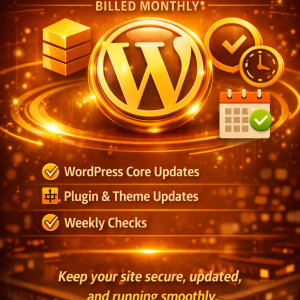
If you’re wondering how to structure this effectively, a maintenance package like WordPress Care Essentials can streamline the process. This kind of package typically includes three core elements:
- WordPress core updates: Regular updates to the WordPress core to patch security issues and improve performance.
- Plugin & theme updates: Ongoing management of your plugins and themes to ensure compatibility and stability.
- Weekly checks: A structured routine to verify backups, security, performance, and overall site health.
Having a formal package reduces the mental burden of daily maintenance and gives you predictable outcomes. It also ensures that updates don’t slip through the cracks and that weekly checks become a habitual best practice rather than an afterthought.
Real-World Scenarios: Before and After Updates
To bring this to life, consider two common situations and how timely updates and weekly checks can change the outcome.
Scenario 1: A plugin introduces a rare incompatibility after a core update
Before updates and checks, this situation could cause a live site outage or broken functionality on a busy page. With a disciplined routine:
- Core updates are tested in staging, alongside relevant plugins and themes
- A quick rollback plan is ready if something unexpected appears
- The production site remains stable while issues are diagnosed
- After issues are resolved, updates are re-applied with adjustments
Outcome: Reduced downtime, faster recovery, and continued user trust.
Scenario 2: A theme update improves performance, but a caching layer needs adjustment
Before a change, you might not notice the performance improvement because caching returns a stale version. After updates and weekly checks:
- Cache layers and asset optimization strategies are revisited
- The theme update is measured for performance impact in staging
- Production changes are deployed with verified improvements visible to users
Outcome: Actual speed gains that improve user experience and SEO performance.
Common Myths and Truths
There are a few misconceptions about updates that can hold you back. Here are some realities to consider:
-
Myth: Updates always break sites. Truth: While updates can cause issues if they’re not tested, structured processes (staging, backups, rollback) greatly mitigate risk.
-
Myth: You only need to update when something breaks. Truth: Proactive updates fix known vulnerabilities, improve performance, and prevent future compatibility problems.
-
Myth: Updates slow down the site. Truth: Updates can improve performance through code optimizations, better resource management, and compatibility improvements.
-
Myth: You can ignore weekly checks if you have automatic updates. Truth: Automatic updates can fail or introduce conflicts. Weekly checks provide human oversight, testing, and a safety net.
-
Myth: If a plugin is popular, it will always stay compatible. Truth: Popularity doesn’t guarantee compatibility over time; dependencies and core changes require ongoing monitoring and updates.
How to Implement Updates Safely
A practical, safe update strategy helps you keep your site stable while you benefit from improvements.
Step-by-step safe update workflow
- Back up your site: Take a complete backup of files and the database before applying updates. This gives you a solid restore point if anything goes wrong.
- Test in a staging environment: Clone your live site to a staging area. Apply updates here first to observe behavior without impacting users.
- Check critical functionality: Verify core workflows, eCommerce carts (if applicable), contact forms, and any custom integrations.
- Apply updates in small, manageable batches: Update a handful of plugins or a single theme at a time. This makes it easier to identify the source of any issue.
- Validate performance and security: Run speed tests and security scans after updates to ensure there are no regressions.
- Rollback if needed: If something breaks beyond quick fix, rollback to the previous version from your backup, and reassess.
- Document changes: Keep notes on what was updated, any issues found, and how they were resolved. This helps future maintenance.
Best practices for rollback and recovery
- Always maintain tested backup copies, including a way to restore the database and files quickly.
- Keep a version log of updates so you can identify when a problematic change was introduced.
- Use a staging site for high-risk updates (major core releases, big theme rewrites, or plugin major version changes).
Automation and monitoring aids
- Schedule automatic backups during updates to reduce manual steps.
- Set up monitoring for uptime and error logs to detect problems early.
- Use a staging environment or a clone for testing updates before going live.
Measuring Success: Performance and Compatibility Metrics
To know you’re benefiting from updates, you’ll want tangible metrics. The following indicators help you quantify improvements and justify ongoing maintenance.
Key performance indicators (KPIs) to track
- Core Web Vitals: LCP (Largest Contentful Paint), FID (First Input Delay), CLS (Cumulative Layout Shift)
- Page load times: Time to First Byte (TTFB), overall load time
- Server resources: CPU and memory usage during peak loads
- Cache hit rate: Effectiveness of page caching and CDN configuration
- Error rate:404s, 500s, and JavaScript console errors
- Uptime percentage: Availability of the site over time
Compatibility indicators
- Number of compatibility issues reported after updates
- Frequency of plugin/theme conflicts detected in staging
- Successful load tests across major browsers and devices
- API deprecation notices addressed by updated code
- Successful migrations when PHP or server configurations change
Concrete success scenarios
- A weekly check reveals a small JavaScript optimization in a plugin, reducing render-blocking time and lowering CLS.
- A theme update aligns with a new API introduced in the core, preventing a potential breaking change and maintaining design integrity.
- A staging test shows a live site’s caching layer working more effectively after a plugin update, improving peak response times.
Keeping track of these metrics over time gives you a clear picture: updates are not a one-off patch; they’re part of an ongoing effort to improve user experience and stability.
Why Weekly Checks Are So Important for Smooth Running
Weekly checks create a discipline that prevents small issues from becoming business risks. They’re an essential part of ensuring your site remains accessible, fast, and secure as it grows.
The cumulative effect of routine maintenance
Updates and checks become part of a positive feedback loop:
- Fresh updates reduce risk and improve performance
- Regular checks catch issues early
- Early detection prevents downtime and user complaints
- Documented changes support accountability and knowledge transfer
This loop helps you maintain trust with your audience and clients. When people experience fast, reliable sites, they’re more likely to return and recommend your service.
How weekly checks contribute to security and trust
Security is not a one-off concern; it’s an ongoing practice. Weekly checks reinforce best practices:
- You verify that backups are functional and restorable
- You review security alerts and patch vulnerabilities in a timely manner
- You confirm there are no active malware indicators or suspicious changes
- You ensure plugins, themes, and core stay aligned with current security standards
By making weekly checks a habit, you create a reputation for diligence and reliability, which is valuable for SEO, conversions, and your professional or business image.
Wrapping It All Up: A Clear Path Forward
If your goal is a WordPress site that remains compatible with modern standards, performs well under load, and stays secure against evolving threats, regular plugin and theme updates matter—along with a structured weekly maintenance routine. A maintenance package like WordPress Care Essentials can provide a practical framework:
- Regular WordPress core updates ensure you’re protected against known vulnerabilities and aligned with the latest features
- Plugin and theme updates help keep your site functioning smoothly and consistently
- Weekly checks create a predictable rhythm for monitoring health, testing changes, and maintaining control over the upgrade process
This approach isn’t about chasing the latest trend; it’s about steady, disciplined care that protects your site’s integrity and performance.
Final Thoughts
You don’t have to feel overwhelmed by the world of WordPress updates. With a clear strategy, you can:
- Keep your core, plugins, and themes in sync to maintain compatibility
- Leverage updates to improve speed, reliability, and security
- Rely on a weekly checks routine to catch issues early and reduce the risk of downtime
- Benefit from a maintenance package that provides structure, accountability, and peace of mind
Your website is more than a digital storefront or a portfolio; it’s an ongoing investment in your audience’s experience. Updates may seem routine, but they’re a strategic tool that helps you deliver consistent performance and reliability, even as your site grows in complexity. By treating updates as part of a proactive maintenance plan—one that combines core updates, plugin and theme updates, and weekly checks—you empower your site to adapt to new technologies and user expectations with confidence.
If you’d like, I can tailor a weekly maintenance plan that fits your specific setup, including the exact plugins and themes you rely on, the typical traffic patterns you see, and any custom code you’ve added. You can then implement a practical, repeatable process that keeps your site healthy, fast, and secure over the long term.








0 Comments