


Are you doing enough to keep your WordPress site online, fast, and secure without constant firefighting?
How Regular WordPress Updates Prevent Downtime And Security Issues
Keeping your WordPress site healthy is not something you can set and forget. Regular updates and consistent checks act like a traffic control system for your website, preventing crashes, slowdowns, and security incidents before they disrupt your visitors or your business. In this article, you’ll discover why updates matter, how they work to prevent downtime and security issues, and what a practical maintenance routine looks like—especially if you consider a package like WordPress Care Essentials that bundles core updates, plugin and theme updates, and weekly checks.

Why updates are essential
Updates are more than just software fluff. They fix bugs, improve performance, and patch security vulnerabilities that could otherwise be exploited. When you keep WordPress core, plugins, and themes up to date, you reduce the chance of conflicts that might crash your site or cause features to stop working. You’re also aligning with the latest best practices for compatibility, accessibility, and user experience. In short, updates are preventive care for your online presence, not a reaction to problems after they appear.
How updates prevent downtime
Downtime often starts small and grows. A single outdated plugin may introduce a conflict with the core software, or a bug in an old theme could cause a critical page to fail. With timely updates, you receive fixes and improvements that resolve these edge cases before they create an outage. Regular updates also keep performance enhancements and caching improvements current, so your site runs smoothly even under higher traffic. When you approach maintenance proactively, you’re less likely to encounter sudden maintenance windows or emergency patches that interrupt your service.
How updates prevent security issues
Security is about closing doors before an attacker can come in. Many vulnerabilities are addressed in security patches delivered through updates. If you delay updates, you leave those doors ajar, giving automated bots and opportunistic attackers a better chance to break in, steal data, or deface your site. Regular updates reduce the window of exposure and make it harder for attackers to find unpatched weaknesses. You also gain access to hardened configurations and security improvements that developers build into core, plugins, and themes over time.
The risk of skipping updates
Skipping updates is a path to risk. Here are the most common consequences you may encounter if you fall behind:
- Increased vulnerability to malware, unauthorized access, and data breaches.
- Incompatibilities between core, plugins, or themes that cause fatal errors or white screens.
- Performance regressions that slow down your site, hurting user experience and SEO.
- Difficulty restoring your site after a problem because your backups may lag behind or mismatches exist between components.
- Higher costs and downtime when you finally attempt repairs, because the root causes have compounded.
To prevent these outcomes, you need a reliable cadence for applying updates and verifying that your site still works afterward. A disciplined approach reduces stress and gives you confidence that your site will stay online for your users.
WordPress Core updates
Core updates are released to fix bugs, improve performance, and seal security holes in the WordPress engine itself. When you install a core update, you’re ensuring your site benefits from the latest functionality and stability improvements. Delaying core updates can leave you operating on a version with known vulnerabilities or outdated features that conflict with new plugins or themes. A routine core update plan minimizes surprises and helps you stay aligned with the WordPress roadmap.
- What you gain: security patches, performance improvements, compatibility with newer PHP versions, and access to new features that support accessibility and developer tooling.
- What to watch for: before applying major core updates, test in a staging environment if possible, and ensure your theme and key plugins are compatible.
Plugin and theme updates
Plugins and themes extend WordPress but can also introduce conflicts if they’re out of date or poorly coded. Regularly updating plugins and themes reduces the risk of incompatibilities and helps you stay protected against known vulnerabilities. Developers frequently release updates to address security flaws, improve compatibility with new WordPress versions, fix bugs, and optimize performance.
- What you gain: fewer conflicts, better security, and improved behavior across your site’s features.
- What to watch for: after updates, check critical pages and features (forms, carts, member areas) to ensure nothing regressed. If you rely on a premium plugin, review update notes for any breaking changes.
Weekly checks: what you should review
Weekly checks are your early warning system. They give you a short, predictable cadence to catch issues before they snowball. A well-structured weekly review covers performance, reliability, security indicators, and basic functional tests. You don’t need to become a full-time site admin, but you do want a consistent habit that protects your visitors’ experience and your data.
- Core ideas: uptime, error messages, broken links, performance metrics, security alerts, and backup status.
- The human element: confirm that automated tasks ran as scheduled, and verify that you can restore a recent backup if needed.
- The business element: ensure customer-facing features (forms, checkout, member areas) behave correctly.
The WordPress Care Essentials package
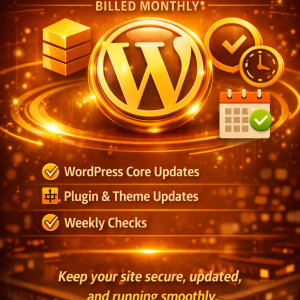
WordPress Care Essentials can be a smart way to operationalize updates and weekly checks without micromanaging every task yourself. This package typically includes:
- WordPress core updates
- Plugin and theme updates
- Weekly checks
With these elements, you gain a predictable maintenance rhythm, reduced risk of downtime, and a clearer path to a secure and performant site. If you’re managing a small business website or a client site, this package helps allocate time and budget to essential maintenance, while giving you the peace of mind that comes with ongoing protection and visibility into your site’s health.
- How this package benefits you: you receive timely updates and regular diagnostics, which means you’re less likely to deal with unexpected outages or security incidents.
- What to expect in practice: scheduled updates are applied in a controlled manner, followed by quick verifications and a concise report on what changed and what to watch next.
Weekly checks: a concrete checklist you can adopt
To make weekly checks practical, you can structure them into a compact checklist. Here is a simple, 15-minute cadence you can start with. The goal is to catch obvious problems and confirm everything continues to function as expected.
- Confirm backups ran successfully in the last 24 hours.
- Check the site status and uptime alerts for any anomalies.
- Review the latest plugin and theme update notes for anything that might affect functionality.
- Test critical user flows (contact forms, login, checkout, account management) on a staging or live environment.
- Scan for 404 errors and broken internal links.
- Review performance metrics (page load times, server response times) and look for spikes.
- Verify security scans or threat alerts and confirm there are no unresolved issues.
- Check for unexpected admin notices or PHP errors in logs.
- Confirm that caching and CDN are functioning as expected.
If you want a compact view, you can summarize the weekly checks in a table like this:
| Check item | What to look for | Status/Notes |
|---|---|---|
| Backups | Recent backups completed; verify restore point | OK / Issue observed |
| Uptime | Any outage or degradation | OK / Outage details |
| Update notes | New versions and potential breaking changes | Proceed if compatible |
| Critical flows | Forms, login, checkout, account pages | OK / Needs test |
| 404s & links | Broken links, n / 404 pages | OK / Fix needed |
| Performance | Load times, TTFB, cache hit rate | OK / Action needed |
| Security | Threat alerts or scanner findings | OK / Issue resolved |
| Logs | PHP errors or admin notices | OK / Investigate |
| Caching/CDN | Cache purges, CDN responsiveness | OK / Adjust if needed |
A short table like this helps you visualize the health of your site at a glance and makes weekly communication with clients or stakeholders faster and clearer.
The practical benefits of a weekly maintenance routine
A weekly maintenance rhythm offers several practical benefits:
- Predictable workload: you know what to do each week, which reduces last-minute scrambles.
- Early problem detection: small issues don’t become big problems because you catch them quickly.
- Improved reliability: consistent updates and checks keep features stable and visitors happy.
- Enhanced security posture: regular patches reduce exposure to new threats over time.
- Better budgeting: a regular maintenance package enables predictable costs and resource planning.
Setting up a weekly maintenance calendar
To implement this in your workflow, you can break it down into a few steps:
- Choose a fixed maintenance day and time that works for you and your team. Consistency matters more than the exact day.
- Prepare a staging or testing process to verify updates before they hit production if possible.
- Schedule automated backups and health checks to run ahead of manual tasks.
- Document what you update and what you test, so you have a running history you can review.
- Establish a quick sign-off process for non-technical stakeholders to confirm that the site still looks and behaves as expected after updates.
By following these steps, you create a reliable maintenance routine that reduces risk and helps you communicate progress to clients or teammates.
Best practices for updates
Certain best practices consistently help you minimize risk when applying updates. Keeping them in mind makes a significant difference, especially when you manage multiple sites or work with clients.
- Test updates in a staging environment first whenever possible. If you cannot test fully, apply updates during low-traffic hours and monitor closely.
- Keep a current, verified backup before applying updates. This reduces the risk of data loss and makes recovery fast.
- Review update notes for each plugin or theme. Look for known compatibility issues or required PHP version adjustments.
- Limit the number of updates applied in one session if you are managing a large site. Batch updates carefully and verify after each batch.
- Maintain a small core set of essential plugins. Reducing the number of plugins lowers the surface for conflicts.
- Use reliable hosting and monitoring to detect anomalies quickly. A good hosting environment supports automated rollback if something goes wrong.
- Regularly check your security posture. Run a periodic security scan, review login activity, and enforce strong authentication practices.
- Communicate clearly with stakeholders. Let them know what updates were applied and what to watch for after changes.
Common myths about updates
There are a few myths that can lead you to neglect maintenance. Let’s debunk them with practical truths:
- Myth: Updates always break things. Truth: While conflicts can occur, careful testing, backups, and a staged approach dramatically reduce the risk.
- Myth: If it isn’t broken, don’t fix it. Truth: Security patches and performance improvements often come with updates; delaying them increases risk.
- Myth: You only need to update when something fails. Truth: Proactive updates prevent issues before they appear, saving time and money.
- Myth: All updates require heavy downtime. Truth: In many cases, updates are quick and can be done with minimal downtime, especially when you have a plan.
How to measure success
To know whether your update routine is working, track a few key indicators. This helps you justify time spent on maintenance and demonstrates value to clients or leadership.
- Uptime percentage: Target a high uptime with minimal unplanned outages.
- Mean time to recovery (MTTR): How quickly you recover from any incident.
- Backups: Regular, successful backups with verified restore points.
- Update success rate: The percentage of updates that install cleanly without major issues.
- Page performance: Consistent load times and responsiveness after updates.
- Security incidents: Fewer vulnerabilities and security alerts over time.
- User experience signals: Fewer user-reported problems on critical paths like forms and checkout.
Tracking these metrics gives you objective insight into how maintenance contributes to reliability and security, helping you adjust your approach as needed.
Real-world scenarios: how regular updates make a difference
Consider two small business sites with similar traffic and purposes. One site follows a strict maintenance cadence with weekly checks and timely updates. The other delays updates and performs maintenance irregularly.
- In the updated site, a plugin vulnerability is patched within days of discovery, and the core is kept current. The site experiences no downtime, and a smooth user experience continues even during a spike in traffic.
- In the delayed-update site, a known vulnerability becomes public, and attackers begin probing the site. A malware injection occurs, requiring emergency remediation, data restoration, and a period of downtime. The owners lose trust with customers and face a more complicated recovery path.
These contrasting outcomes illustrate why a consistent maintenance routine matters. Regular updates, combined with weekly checks, help you stay ahead of problems and preserve both user trust and business continuity.
Conclusion
Regular WordPress updates are not optional maintenance; they’re essential safeguards for uptime and security. By keeping the core software current, ensuring plugins and themes are up to date, and performing weekly checks, you reduce the risk of outages, security breaches, and performance degradations. A structured routine—whether you handle updates yourself, delegate to a team, or use a maintenance package like WordPress Care Essentials—creates predictability, lowers stress, and keeps your site dependable for your visitors.
If you’re ready to implement a robust maintenance plan that prioritizes updates and weekly checks, consider the WordPress Care Essentials package as a practical way to ensure core updates, plugin and theme updates, and weekly checks are handled consistently. You’ll gain improved security, fewer headaches, and a faster path to delivering a reliable online experience for your audience. Your site deserves that level of care, and your users will notice the difference.










0 Comments