


How Long Does a Personal Injury Case Take to Settle?
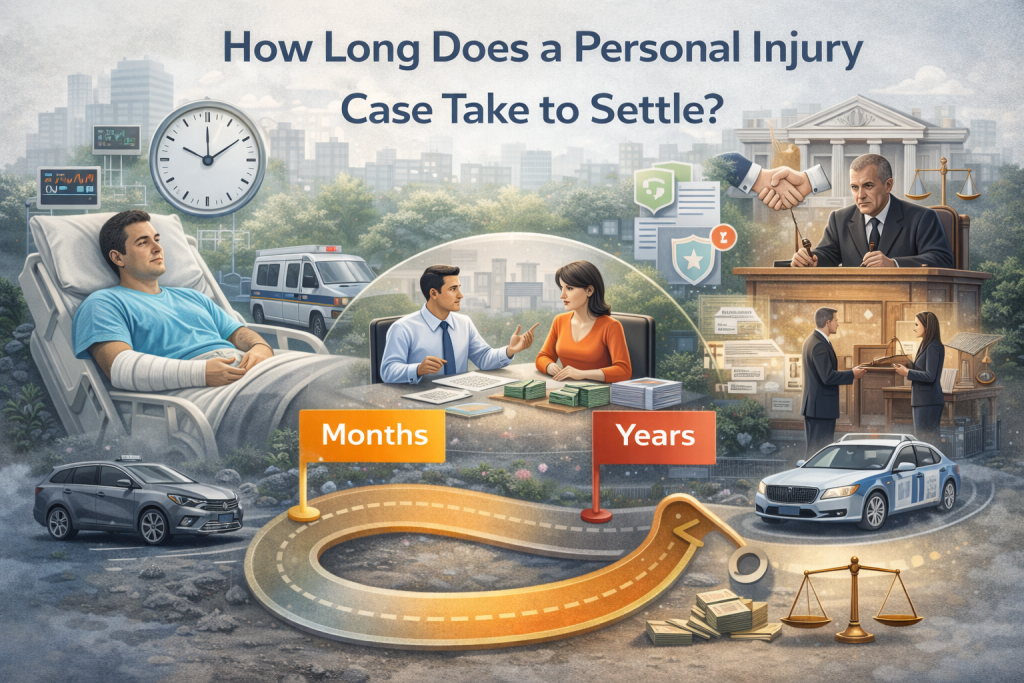
One of the most common questions accident victims ask is how long a personal injury case will take to settle. The answer depends on several factors, including the complexity of the case, the severity of injuries, and how liability is disputed. While some cases resolve relatively quickly, others can take months or even years to reach a settlement.
Understanding the timeline of a personal injury case can help set realistic expectations and reduce uncertainty during the process.
There Is No One-Size-Fits-All Timeline
Personal injury cases vary widely. Some claims may settle within a few months, while others take significantly longer. The timeline often depends on how clear fault is, how extensive the injuries are, and whether negotiations or litigation become necessary.
Cases involving minor injuries and clear liability typically resolve faster than those involving serious injuries or disputed responsibility.
Medical Treatment Plays a Major Role
One of the biggest factors affecting settlement time is medical treatment. A case generally should not settle until the injured person has reached maximum medical improvement or has a clear understanding of future medical needs. Settling too early can result in inadequate compensation for ongoing or long-term care.
The length of treatment directly influences how long a case remains open.
Liability Disputes Can Slow the Process
If fault is disputed, the settlement process often takes longer. Insurance companies may investigate the accident, review evidence, and attempt to shift responsibility. Disagreements over who caused the accident—or whether multiple parties share fault—can extend negotiations significantly.
Clear evidence and documentation can help reduce delays, but disputes still require time to resolve.
Insurance Negotiations Take Time
Settlement negotiations are rarely immediate. Insurance companies typically review medical records, assess damages, and evaluate liability before making an offer. Initial offers may be lower than expected, leading to back-and-forth negotiations.
The willingness of both sides to negotiate in good faith plays a key role in how quickly a case settles.
Litigation Extends the Timeline
If a settlement cannot be reached through negotiation, filing a lawsuit may become necessary. Litigation adds formal procedures such as discovery, motions, and potentially trial preparation. These steps can significantly lengthen the timeline of a personal injury case.
Even after a lawsuit is filed, many cases still settle before reaching trial—but the process usually takes longer than pre-litigation negotiations.
Patience Can Lead to Better Outcomes
While it is natural to want a quick resolution, rushing a personal injury case can result in reduced compensation. Taking the time to fully evaluate damages, gather evidence, and negotiate properly can improve the outcome, even if it extends the timeline.
Each case is unique, and the focus should be on achieving a fair settlement rather than the fastest possible one.











0 Comments