
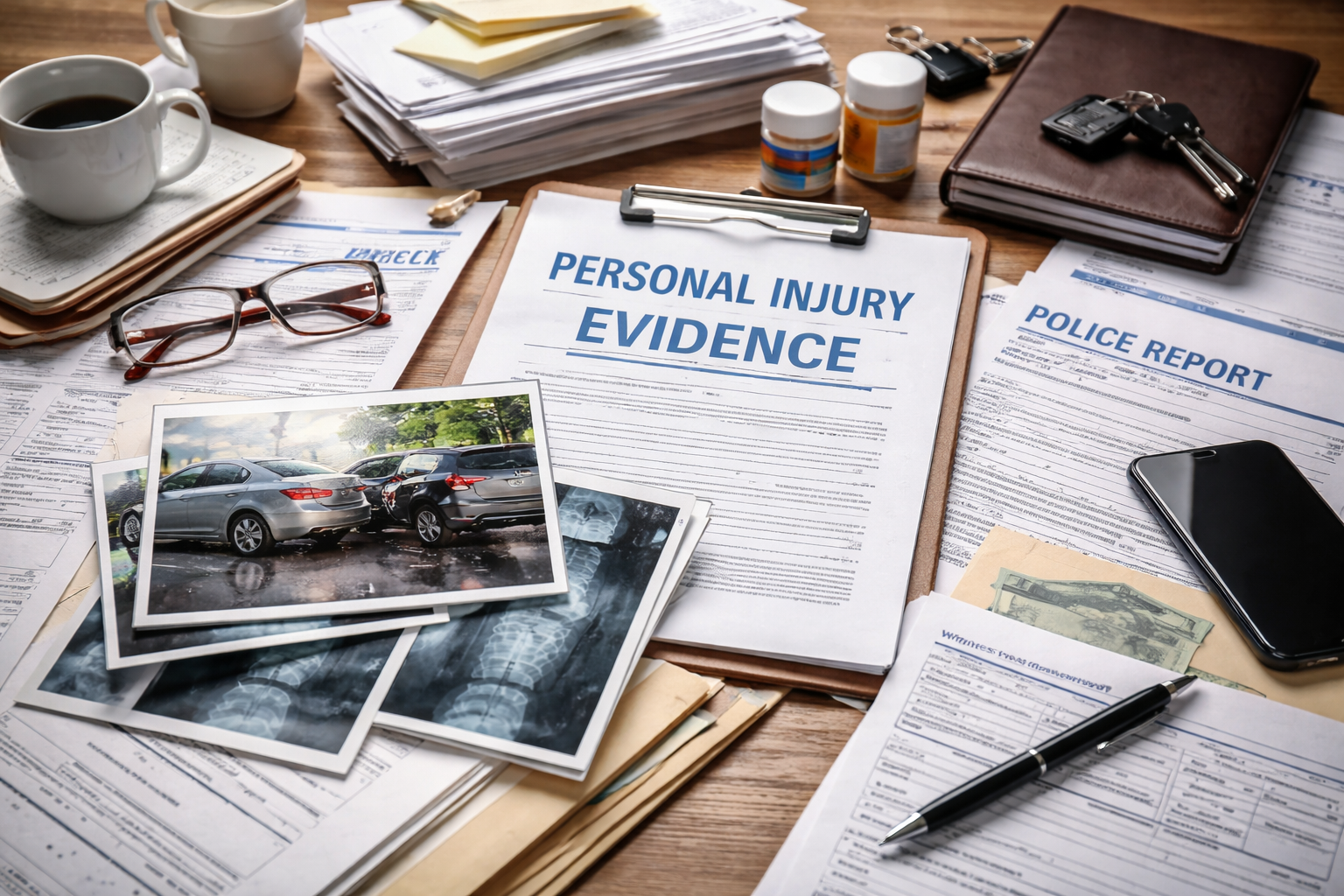

When someone is injured due to another party’s negligence, the success of a personal injury claim often depends on one critical factor: evidence. Evidence is the foundation of any strong personal injury case—it transforms an allegation into a provable claim and directly influences whether a victim receives fair compensation or walks away empty-handed.
From medical records and accident reports to witness statements and expert testimony, every piece of evidence plays a role in establishing liability, proving damages, and strengthening negotiation power with insurance companies. This article explores the role of evidence in depth, why it matters, and how it can make or break a personal injury case.

Why Evidence Is the Backbone of a Personal Injury Case
In a personal injury claim, the injured party (the plaintiff) carries the burden of proof. This means they must demonstrate—using credible evidence—that another party’s negligence caused their injuries and resulting losses.
Strong evidence helps to:
-
Establish fault and liability
-
Prove the extent of injuries
-
Connect the accident directly to those injuries
-
Demonstrate financial and non-economic damages
-
Counter insurance company disputes and low settlement offers
Without solid evidence, even a valid claim can be weakened or denied.
Types of Evidence Used in Personal Injury Cases
1. Medical Records and Documentation
Medical evidence is often the most important component of a personal injury case. It provides objective proof that injuries occurred and documents their severity.
Key medical evidence includes:
-
Emergency room records
-
Physician diagnoses and treatment notes
-
Imaging results (X-rays, MRIs, CT scans)
-
Physical therapy and rehabilitation records
-
Prescriptions and medical bills
-
Prognosis statements regarding long-term or permanent injuries
Consistent medical treatment also strengthens credibility. Gaps in care may be used by insurers to argue that injuries were not serious or were unrelated to the accident.
2. Accident Reports
Official accident reports add authority and third-party documentation to a claim.
Common examples include:
-
Police reports for car, motorcycle, or pedestrian accidents
-
Incident reports from property owners or businesses
-
Workplace injury reports
These reports often contain:
-
Date, time, and location of the incident
-
Parties involved
-
Preliminary findings of fault
-
Witness contact information
Although not always conclusive, accident reports often shape the early narrative of a case.
3. Photographs and Video Evidence
Visual evidence can be extremely persuasive. Photos and videos capture details that words often cannot.
Examples include:
-
Scene of the accident
-
Vehicle damage
-
Hazardous conditions (wet floors, broken stairs, poor lighting)
-
Visible injuries such as bruises, cuts, or swelling
-
Surveillance footage or dash-cam recordings
Visual evidence helps juries, judges, and insurance adjusters clearly understand how an accident occurred and how severe the aftermath was.
4. Witness Statements
Witness testimony can corroborate the injured party’s version of events and provide independent confirmation of negligence.
Effective witness evidence includes:
-
Eyewitness accounts of how the accident happened
-
Statements confirming unsafe conditions
-
Observations of pain, distress, or immediate injury after the incident
The credibility and consistency of witnesses often influence settlement negotiations and trial outcomes.
5. Expert Testimony
In complex cases, expert witnesses may be necessary to interpret evidence and explain technical details.
Common expert witnesses include:
-
Medical experts who explain injury severity and long-term impact
-
Accident reconstruction specialists
-
Vocational experts addressing loss of earning capacity
-
Economic experts calculating future financial losses
Expert testimony can connect evidence into a clear, logical narrative that supports the claim.
Proving Negligence Through Evidence
To succeed in a personal injury case, evidence must establish four legal elements of negligence:
-
Duty of Care – The defendant had a legal obligation to act reasonably
-
Breach of Duty – That duty was violated
-
Causation – The breach directly caused the injury
-
Damages – The injury resulted in measurable losses
Each element must be supported by credible evidence. Missing or weak proof in any area can undermine the entire case.
Evidence and Insurance Company Tactics
Insurance companies closely scrutinize evidence—and they often attempt to use its absence against claimants.
Common insurer strategies include:
-
Arguing injuries were pre-existing
-
Claiming medical treatment was excessive or unnecessary
-
Disputing fault due to lack of witnesses or photos
-
Minimizing pain and suffering without documentation
Comprehensive evidence limits these tactics and places pressure on insurers to offer fair settlements.
The Importance of Preserving Evidence Early
Evidence can disappear quickly. Surveillance footage may be erased, witnesses may forget details, and accident scenes can change within hours.
Steps that strengthen evidence preservation include:
-
Seeking medical care immediately
-
Photographing the scene as soon as possible
-
Collecting witness contact information
-
Keeping copies of all bills, records, and correspondence
-
Avoiding statements to insurers without legal guidance
Early action often determines the long-term strength of a claim.
How Strong Evidence Impacts Settlement and Trial Outcomes
Cases supported by strong, well-organized evidence are more likely to:
-
Settle faster
-
Receive higher settlement offers
-
Succeed at trial if litigation becomes necessary
Clear evidence reduces uncertainty, making it harder for defendants and insurers to dispute responsibility or damages.
Conclusion
The role of evidence in building a strong personal injury case cannot be overstated. Evidence transforms personal suffering into legally recognized harm and provides the factual support needed to pursue compensation.
Whether through medical records, photographs, witness testimony, or expert analysis, every piece of evidence contributes to the story of what happened and why justice is warranted. For injury victims, understanding the importance of evidence—and acting quickly to preserve it—can be the difference between a weak claim and a successful recovery.











0 Comments