


Are you confident your WordPress site stays secure and reliable on a weekly basis?
How Weekly Checks Support A Secure And Reliable WordPress Website
Weekly checks are not just a routine; they are a foundational practice that keeps your WordPress site resilient against threats, downtime, and performance bottlenecks. When you commit to a regular review cadence, you gain visibility into what’s working, what needs attention, and how to prevent small problems from becoming costly outages. This article explains why updates matter, why weekly checks are necessary, and how a practical maintenance approach—such as WordPress Care Essentials—provides a structured, reliable path to a secure and smooth-running website.
You depend on your site for credibility, customer trust, and business operations. A weekly checks routine is a proactive habit that guards your site’s core functions, keeps your content accurate, and safeguards visitor experience. By following a consistent process, you reduce the chance of unforeseen failures and you establish an evidence-based workflow you can measure, optimize, and scale. In the sections below, you’ll learn how updates, checks, and careful monitoring work together to create a WordPress environment that remains secure, fast, and dependable week after week.

Why Updates Are Necessary
Updates are the first line of defense and performance improvement for your WordPress site. They cover three major areas: the WordPress core, plugins, and themes. Each area plays a distinct role in the health of your site, and delaying updates can introduce risks you would rather avoid.
- Core updates fix security vulnerabilities and bugs. The WordPress team continuously discovers and patches issues that could be exploited by attackers or could cause unexpected behavior. When you apply core updates promptly, you reduce your exposure to threats and maintain compatibility with modern standards.
- Plugin updates address security fixes, compatibility issues, and new features. Plugins extend WordPress functionality, but they can also introduce risk if left outdated. An outdated plugin may have known vulnerabilities or may conflict with your theme or other plugins. Regular updates keep this ecosystem harmonious and safer.
- Theme updates improve security, performance, accessibility, and user experience. Themes are responsible for how your site looks and behaves. When a theme is updated, you benefit from better coding practices, updated templates, and compatibility improvements that align with WordPress core changes.
But updates are not just about security. They also improve performance and reliability. Sometimes updates include performance enhancements, caching improvements, or optimizations that reduce page load times and server load. Other times, updates fix compatibility issues that could otherwise break features on your site. By keeping core, plugins, and themes current, you reduce the chance of breakages and ensure a smoother user experience for your visitors.
Skipping or delaying updates creates an accumulating risk. If you wait too long, you may encounter a cascade of incompatibilities, which can lead to broken pages, broken forms, or failed checkout flows. The longer you wait, the more complex it becomes to roll back changes or to resolve issues that arise from out-of-sync components. Weekly checks help you manage updates in a controlled, predictable way rather than as a surprise emergency.
The Role of Weekly Checks in Website Health
Weekly checks are a structured set of activities designed to monitor, validate, and maintain the health of your WordPress site. They go beyond a simple update schedule by bringing together multiple domains of site care: security, performance, accessibility, content integrity, and uptime. The goal is to catch issues early, document changes, and verify that your site continues to meet business objectives and user expectations.
A weekly checks routine typically includes:
- Verifying site uptime and basic availability, so you know if your site is reachable.
- Checking for update success and rollback readiness in case something goes wrong.
- Running automated security scans and reviewing any flagged items.
- Testing core site functionality, such as forms, checkout, search, and navigation.
- Auditing performance metrics and investigating any regression in load times.
- Ensuring content accuracy, links, and media display correctly.
- Checking accessibility and basic SEO signals to maintain reach and usability.
By performing these checks on a weekly cadence, you create a safety net around your WordPress environment. You prevent minor issues from escalating into major problems, protect your visitors’ experience, and maintain a reliable platform for your business operations. This approach also fosters a culture of accountability: you can attribute outcomes to specific changes and identify best practices that consistently yield positive results.
The Stack: WordPress Core, Plugins, and Themes
Your WordPress site relies on three primary layers: core software, plugins, and themes. Each layer has its own update cycle and maintenance considerations. Understanding how these pieces interact helps you plan effective weekly checks and make informed decisions.
WordPress Core Updates
Core updates are designed to improve security, performance, and stability. They may include changes to the underlying PHP, database handling, or APIs that plugins and themes rely on. When you stay current with core updates, you keep your site aligned with the latest security patches and platform improvements. This reduces the likelihood of incompatibilities and helps ensure that new features and developer tools function as intended.
A proactive approach to core updates involves testing in a staging environment when possible, especially for sites with custom code or tightly integrated plugins. If staging isn’t feasible, you can still apply updates in a controlled fashion, with a clear rollback plan and post-update checks to confirm that essential functionalities remain intact.
Plugin Updates
Plugins provide targeted functionality, from forms and SEO to caching and security. Each plugin carries its own risk profile. Some plugins are light and well-supported, while others may become problematic after a core update or when installed alongside another plugin. Regular plugin updates bring security patches and compatibility improvements, but you should assess each update for potential conflicts.
Your weekly checks should verify:
- That critical plugins (security, backups, contact forms, payment gateways) are functioning after updates.
- That there are no console errors, broken admin features, or UI inconsistencies.
- That plugin-driven performance features (lazy loading, image optimization, caching integrations) continue to function correctly.
Theme Updates
Themes shape your site’s look and feel and often include templates, CSS, and JavaScript that impact front-end behavior. Theme updates can fix accessibility issues, improve responsive design, and address compatibility with newer WordPress versions. When you update a theme, you also reduce the chance of design or layout regressions that could degrade user experience or rendering across devices.
In weekly checks, consider:
- Verifying that key templates render correctly across devices and browsers.
- Ensuring customizations remain intact or are properly migrated during the update.
- Checking that any child theme changes continue to apply as expected.
How Weekly Checks Improve Security
Security is the cornerstone of a trustworthy WordPress site. Weekly checks act as a continuous defense mechanism, reducing the window of opportunity for attackers and keeping your protection aligned with evolving threats.
- Patch management discipline: Regular updates close known vulnerabilities. Attackers often target sites with outdated software because the exploit tooling is widely known. Keeping core, plugins, and themes updated minimizes exposure.
- Configuration review: Alongside updates, weekly checks are an opportunity to review security-related configurations, such as strong authentication practices, password hygiene, and limiting login attempts. You can also verify that security plugins are properly configured and up to date.
- Monitoring and anomaly detection: A weekly cadence enables you to monitor for unusual traffic patterns, login attempts, or changes to critical files. Early detection gives you time to respond before a breach expands.
- Least privilege and access control: Weekly checks help you review user roles and permissions, ensuring that only authorized individuals can perform sensitive actions. Removing unused accounts or adjusting privileges reduces risk.
Security is not a one-and-done task. It’s an ongoing process that benefits from consistent, deliberate effort. By incorporating security reviews into your weekly checks, you create a culture of vigilance and resilience that reduces risk over time.
How Weekly Checks Improve Reliability and Performance
Beyond security, weekly checks contribute to site reliability and user satisfaction by addressing performance dips, broken pages, and inconsistent behavior. Here’s how weekly checks translate into tangible improvements.
- Consistent performance: Regular checks let you compare performance metrics week over week. If you notice a gradual slowdown, you can pinpoint contributing factors such as new plugins, large media files, or database bloat, and address them before users are affected.
- Error prevention: By monitoring error logs and console messages, you catch PHP warnings, deprecated functions, or JavaScript issues that could degrade experience or halt critical processes.
- Uptime and availability: Small issues, such as a malfunctioning cron job or a failing background task, can cause service interruptions. Weekly checks help you verify that scheduled tasks run as expected and that automated processes complete successfully.
- Content correctness: Broken links, missing images, or outdated content undermine credibility and SEO. Regular checks ensure your content remains accurate and accessible, preserving trust with your audience.
- Accessibility and inclusive design: Regular validation of accessibility basics ensures your site is usable by everyone, not only by a subset of visitors. This broadens your reach, reduces potential legal risk, and improves overall usability.
The cumulative effect of weekly checks is a site that not only functions correctly but also feels fast, reliable, and trustworthy. Visitors experience fewer disruptions, which translates into higher engagement, longer session durations, and better conversion rates.
The Maintenance Package: WordPress Care Essentials
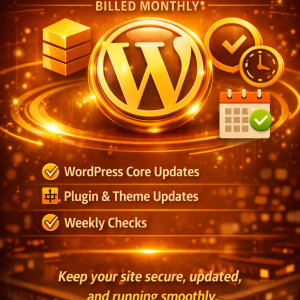
WordPress Care Essentials represents a structured package designed to deliver consistent core updates, plugin and theme maintenance, and weekly checks. It’s tailored for site owners who want a reliable, hands-off approach to site health while retaining control over critical decisions. Here’s what this package typically includes, along with why each component matters.
- WordPress core updates: Regularly apply the latest core releases to protect against vulnerabilities, improve compatibility with modern PHP versions, and gain access to new features and performance improvements.
- Plugin & theme updates: Keep extensions current to reduce security risk, ensure compatibility with the core platform, and preserve user-facing features. Updates are selected and tested for compatibility as part of weekly checks.
- Weekly checks: A comprehensive review process that validates uptime, functionality, security posture, performance metrics, and content integrity. The weekly cadence helps you catch issues early and document changes for future reference.
To make this more concrete, consider the following table that outlines the core components, what they cover, and the benefits you can expect from each.
| Component | What it covers | Primary benefits |
|---|---|---|
| WordPress core updates | Security patches, performance improvements, compatibility fixes | Reduced vulnerability, better performance, fewer compatibility issues |
| Plugin updates | Security fixes, feature enhancements, bug fixes | More reliable plugin behavior, improved integration with core |
| Theme updates | Design consistency, accessibility improvements, template fixes | Consistent user experience, better accessibility, fewer rendering issues |
| Weekly checks | Uptime verification, functional testing, security scanning, performance checks, content integrity | Early issue detection, documented changes, smoother user experience |
This care package is designed to be predictable and scalable. It reduces the cognitive load on you as the site owner because updates are managed in a consistent rhythm, and weekly checks provide a clear framework to assess site health. If your site grows, this approach scales by adding more granular checks, more automated tests, and additional performance monitoring. The overarching goal is to keep your WordPress site secure, reliable, and fast without requiring you to micromanage every detail.
A Practical Weekly Checks Checklist
To make weekly checks actionable, you need a clear, repeatable checklist. Below is a practical, comprehensive checklist you can adapt to your specific site. Each item includes a brief purpose so you understand why it matters and what you’re looking to achieve.
-
Pre-update verification
- Confirm maintenance window and notify stakeholders if necessary.
- Back up the entire site (files and database) and verify the backup integrity.
- Review the current site health status and note any known issues.
-
Update phase
- Apply WordPress core updates first, then plugins, then themes, following a structured sequence to minimize conflicts.
- Monitor update progress and record any errors or warnings.
- Check for compatibility prompts or deprecations in plugin/theme notes and adjust if needed.
-
Post-update checks
- Verify admin area functionality: add/edit posts, create a page, manage media, and test core editor features.
- Test front-end usability: load the homepage, navigate to key pages, perform a search, and submit a form (if applicable).
- Check critical functionalities: checkout flows, contact forms, login/logout, and user registrations.
- Review console logs and error messages for any signs of issues.
- Validate that security plugins report no critical alerts and that the firewall is active.
-
Security and backups
- Run a quick security scan and confirm there are no high-severity findings.
- Confirm that automated backups completed successfully and that you can restore from a test restore point if needed.
-
Performance and optimization
- Run a quick performance test (page load times, first-byte times) and compare with the previous week.
- Check caching behavior and ensure that cache invalidation occurs correctly after updates or content changes.
- Review database size and any slow queries if you have monitoring on your site.
-
Content and SEO checks
- Confirm that core content remains accurate and up-to-date.
- Check for broken internal and external links.
- Ensure SEO meta tags, titles, and descriptions remain aligned with current content.
-
Accessibility and user experience
- Validate color contrast, focus states, and keyboard navigability on critical pages.
- Check that images have alt text and that headings follow a logical order.
-
Documentation and reporting
- Document changes, including what was updated, why, and any observed issues.
- Create a brief executive summary for stakeholders with key metrics (uptime, page speed, and any issues resolved).
-
Rollback readiness
- Confirm that you have a tested rollback plan in case an update introduces a critical issue.
- Keep a record of rollback steps and the expected outcomes.
If you want a quick glance at the rhythm without reading every line, the following compact table captures the essence of the weekly checks.
| Stage | Key actions | Why it matters |
|---|---|---|
| Pre-update | Backups, health check, maintenance window | Safe starting point and risk mitigation |
| Update phase | Core, plugins, themes in order | Minimizes conflicts and vulnerabilities |
| Post-update | Functionality, forms, admin tasks | Verifies that updates didn’t break essential flows |
| Security | Quick scan, backup verification | Maintains a strong security posture |
| Performance | Load times, caching checks | Ensures fast, reliable experiences |
| Content & SEO | Links, metadata, accuracy | Preserves trust and search visibility |
| Accessibility | Keyboard navigation, alt text | Expands reach and inclusivity |
| Documentation | Change log, outcomes | Builds accountability and traceability |
| Rollback | Confirm rollback plan | Reduces downtime in case of issues |
This weekly checks checklist is designed to be practical, not overwhelming. You can tailor the steps to your site’s complexity, the number of active plugins, and the level of customization you have. The goal is consistency: a repeatable routine that you can follow week after week.
How to Implement Weekly Checks: A Step-by-Step Guide
Implementing weekly checks effectively requires a structured approach that fits your workflow, technical comfort level, and business requirements. Here’s a practical, step-by-step guide you can follow to establish this discipline.
- Define your weekly window
- Pick a consistent day and time that minimizes disruption to visitors and business operations.
- Communicate the window to your team and stakeholders so everyone understands when maintenance might occur.
- Set up a reliable backup process
- Use automated backups that run on a strict schedule and store copies off-site or in a secure cloud location.
- Verify backup integrity weekly by performing a quick restore test on a staging environment or a local test site.
- Establish a staging environment
- A staging environment allows you to test updates and changes without affecting live visitors.
- If you can’t run a full staging environment, allocate a low-risk window for updates and perform targeted tests after updates on a development copy.
- Implement update governance
- Apply core updates first, then tested plugins, then themes.
- Use version-controlled deployments if possible, so you can track changes and revert cleanly.
- Automate where possible
- Use automated scanning tools for malware and known vulnerabilities.
- Automate performance tests and basic accessibility checks where feasible to save time.
- Standardize post-update validation
- Create a runbook with test scenarios for critical flows: login, search, forms, checkout, and any integrations (CRM, email, analytics).
- Keep a checklist so you don’t miss important checks during busy weeks.
- Review and adjust
- At the end of each week, review what you learned: which updates caused issues, what improved performance, and where you found gaps.
- Update your process to prevent recurrence of the same issues.
- Document and report
- Record the outcomes of the week’s maintenance, including metrics like uptime, page speed, and error counts.
- Share the results with stakeholders to demonstrate value and maintain accountability.
- Prepare for the next cycle
- Pre-stage planned updates and verification steps for the next week.
- Ensure the backup and staging environments are ready for the next round.
If you want to optimize further, consider integrating monitoring dashboards that automatically alert you when a page becomes slower or a critical error is detected. Automations can handle repetitive checks, while you focus on more nuanced observations that require human judgment.
Benefits and Risks: Weighing Outcomes
A weekly checks routine offers substantial benefits but also requires discipline and resources. It’s helpful to compare the potential gains against the possible challenges so you can plan accordingly.
-
Benefits
- Reduced downtime: Early detection of issues means less time spent on emergency repairs.
- Improved security posture: Regular patching closes vulnerabilities and reduces exposure.
- Consistent user experience: Stability in performance and layout enhances trust and engagement.
- Clear audit trail: Documentation of changes and outcomes supports accountability and compliance.
- Predictable maintenance costs: A steady routine helps you budget for updates, backups, and monitoring.
-
Common risks and how to mitigate them
- Update conflicts: Test updates in staging, or have a rollback plan ready.
- Compatibility issues: Prioritize well-supported plugins and themes; avoid deprecated code. -Resource constraints: Schedule maintenance during off-peak hours; use automation to reduce manual workload. -Overload of checks: Start with essential checks and gradually add more as you mature.
A well-executed weekly checks routine reduces risk in a predictable way and helps you maintain a high level of confidence in your WordPress site. It’s not just about preventing problems; it’s about creating a resilient platform that supports your business objectives.
Case for a Care Package: Why Weekly Checks Matter for WordPress Sites
If you manage a WordPress site, you face a dynamic environment where updates, security threats, and user expectations continually evolve. A weekly checks framework, embedded in a maintenance package like WordPress Care Essentials, provides a practical, scalable approach to staying ahead of risk while delivering consistent performance.
- Security resilience: Regular updates minimize the window during which vulnerabilities can be exploited, which is especially important for sites handling sensitive data or processing payments.
- Reliability and uptime: Routine checks reduce the likelihood of unexpected outages caused by outdated software or misconfigurations.
- Performance optimization: Ongoing monitoring allows you to sustain fast load times, which is critical for engagement and conversion.
- Compliance and governance: Regular changes are documented, providing an auditable history that supports governance, policy adherence, and regulatory considerations if applicable.
- Peace of mind: A defined process reduces guesswork and provides a clear path for developers and site owners to work together effectively.
A weekly checks approach acts as a stabilizer for WordPress sites. It helps you move from reactive problem solving to proactive prevention, and it creates space for continuous improvement. Whether you’re a small business owner, an agency, or an enterprise-level site, adopting a disciplined maintenance rhythm can deliver measurable returns over time.
Practical Considerations for Adoption
If you’re considering adopting weekly checks for your WordPress site, keep these practical considerations in mind:
- Resource allocation: Establish who is responsible for each step of the weekly checks. This could be a dedicated maintenance team, a service provider, or a trained internal person.
- Tooling: Leverage tools for backups, security scanning, uptime monitoring, and performance analytics. The right tools save time and reduce manual error.
- Customization: Your site may have unique needs (custom post types, integrations, or e-commerce workflows). Adapt the checklist to cover those areas thoroughly.
- Training and onboarding: Ensure your team understands the rationale behind weekly checks and knows how to respond when issues are detected.
- Continuous improvement: Treat weekly checks as an evolving process. Regularly review outcomes and update your playbooks to incorporate lessons learned.
Putting It All Together
Weekly checks, combined with a structured maintenance package, create a robust framework for WordPress site health. They address the triad of security, reliability, and performance in a way that aligns with business goals and user expectations. By understanding why updates matter and how weekly checks function, you’re better equipped to safeguard your site against threats, prevent disruptions, and deliver a consistently positive experience to your visitors.
You can think of WordPress Care Essentials as a disciplined program that formalizes best practices into repeatable routines. Core updates keep the foundation secure, plugin and theme updates extend reliable functionality, and weekly checks guarantee ongoing verification of everything that matters. By embedding these activities into your weekly rhythm, you create a maintenance culture that supports growth and resilience.
Final Thoughts
Maintaining a WordPress site is not a one-off task; it’s an ongoing commitment to security, reliability, and performance. Updates are essential, yes, but they are more effective when paired with a thoughtful weekly checks process. This combination helps you stay ahead of problems, protect your visitors, and preserve the integrity of your content and user workflows.
If you’re unsure where to start, consider adopting the WordPress Care Essentials approach as a proven framework. It provides the core updates and weekly checks you need, with structure that can scale as your site grows. You don’t have to reinvent the wheel every week; you can build on a solid foundation that prioritizes safety, speed, and user trust.
Your website deserves proactive care. With weekly checks, you’re investing in a stable, secure platform that serves you well now and into the future. If you’d like, I can tailor a starter weekly checks plan to fit your site’s specific plugins, themes, and business goals, and help you implement it step by step.








0 Comments