


Have you ever wondered how often you should update WordPress to keep your site secure and running smoothly?

Why updates matter for your WordPress site
Updates are not cosmetic tweaks or optional extras. They are fundamental parts of keeping your site safe, fast, and reliable. When you hear about WordPress core updates, plugin updates, or theme updates, think of them as ongoing maintenance that protects your visitors, protects your data, and protects your brand.
You might ask, “What really happens when I skip updates?” The short answer is risk accumulation. Each new release typically contains security patches, performance improvements, and compatibility fixes that address bug fixes discovered since the last version. If you ignore these updates, you become more vulnerable to security breaches, slower load times, and sudden incompatibilities with other parts of your site.
Why do updates matter so much? Three big reasons stand out:
- Security: The vast majority of WordPress security incidents involve known vulnerabilities that have already been patched in newer versions. If you don’t update, you’re leaving doors unlocked for automated bots, malware, and opportunistic attackers to exploit.
- Performance and stability: Updates often include efficiency improvements, caching enhancements, and fixes for memory leaks or resource bottlenecks. A site that runs smoothly for your users tends to perform better in rankings and conversions.
- Compatibility and future-proofing: Plugins, themes, and even hosting platforms evolve. Keeping everything current reduces the risk of conflicts, broken features, or incompatible dependencies that can crash parts of your site or disrupt key workflows.
In short, updates are not a one-and-done task. They are continuous protection and improvement that directly impact your user experience, your business operations, and your bottom line.
What WordPress Care Essentials includes
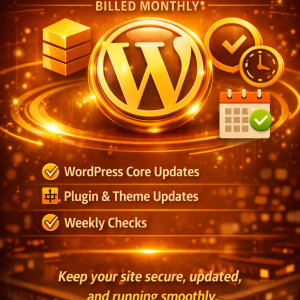
WordPress Care Essentials is a comprehensive website maintenance package designed to handle the essential upkeep you need for a healthy site. It focuses on three core pillars: WordPress core updates, plugin and theme updates, and weekly checks. Each pillar serves a specific purpose, and together they create a predictable, safer, and more reliable online presence.
Here’s what’s included, explained in clear terms:
- WordPress core updates: Regular updates to the WordPress core ensure you benefit from security patches, performance improvements, and new features that align with modern web standards. Core updates help keep the foundation of your site sturdy and compatible with the latest technologies.
- Plugin & theme updates: Plugins and themes extend your site’s capabilities, but they also introduce risk if they fall behind or become incompatible. Regular updates minimize security gaps, fix bugs, and maintain compatibility with WordPress core and other components.
- Weekly checks: A proactive routine that verifies backups, tests updates in a safe environment, checks for broken functionality, monitors uptime, and reviews security signals. Weekly checks catch issues early, long before they become customer-visible problems.
Table: What’s included in WordPress Care Essentials
| Component | What it covers | Why it matters for you |
|---|---|---|
| WordPress core updates | Patches, security fixes, performance improvements | Keeps the foundation secure and efficient, reduces risk of core-related errors |
| Plugin updates | Security patches, compatibility fixes, feature improvements | Maintains plugin reliability, reduces conflicts and vulnerabilities |
| Theme updates | Security patches, styling and compatibility fixes | Keeps your site visually consistent and technically solid |
| Weekly checks | Backups, update testing, site health checks, uptime monitoring, security scans | Early problem detection, continuity, and confidence in your site’s operation |
The practical upshot is that you get a structured, steady rhythm of maintenance rather than ad hoc, reactive fixes. You’ll know when updates happen, you’ll understand their impact, and you’ll have a safety net if something doesn’t go as planned.
The value of weekly checks
Weekly checks are the heartbeat of a healthy WordPress site. They provide a controlled cadence for maintenance, reduce the chance of surprise downtime, and instill a sense of predictability in your operational costs.
Why weekly? Because the web moves quickly. A monthly schedule might miss urgent vulnerabilities or silent incompatibilities that accumulate over a few days. A daily check list can be overkill for many sites, but a weekly, comprehensive review captures the right balance between risk mitigation and resource efficiency.
Key benefits of weekly checks:
- Early detection of issues: You spot failed backups, broken links, or plugin conflicts before they disrupt visitors.
- Stability through tested updates: Updates are not just installed; they are tested in isolation to verify core functionality and common workflows.
- Improved security posture: Regular scans and checks raise the likelihood of catching malware, misconfigurations, or brute-force attack indicators early.
- Reliable performance: You monitor load times, resource usage, and caching behavior, which helps you keep performance predictable.
- Peace of mind: Knowing that a trained process is handling updates and checks frees you to focus on content, features, or business growth.
The weekly check routine is designed to be thorough yet efficient. It covers critical areas while allowing you to scale the process as your site grows.
A practical blueprint: how weekly checks are performed
To make weekly checks actionable, here’s a practical blueprint you can adopt. It’s organized to be repeatable, with clear steps and expected outcomes. You’ll see where automation helps and where human judgment matters.
1) Prepare and review the plan
- Confirm the schedule: Set a weekly window for checks, updates, and testing.
- Review change logs: Look at the release notes for WordPress core, your plugins, and your themes to understand what’s changed.
- Verify backups: Ensure a recent backup exists and can be restored. This is your safety net if something goes wrong.
What you gain: Confidence that you’re starting from a known baseline and that you can recover quickly if needed.
2) Perform core and extension updates
- Apply WordPress core updates: Install the latest stable version.
- Update plugins and themes: Update all installed extensions to the latest compatible versions.
- Note exceptions: Some updates may be flagged as incompatible with specific themes or other plugins. In those cases, plan a targeted test or roll back if needed.
What you gain: The latest security patches, feature improvements, and compatibility with modern web standards.
3) Test site functionality post-update
- Quick front-end check: Open the homepage, navigate to key sections (about, services, contact), and verify basic interactions.
- Admin workflows: Create a draft post, publish, and test admin form submissions if relevant to your site’s purpose.
- Critical plugins: If you rely on e-commerce, forms, booking, or membership systems, run through core flows to ensure nothing broke.
What you gain: Early detection of subtle regressions that can impact user experience or conversions.
4) Run health and security checks
- Site health: Review WordPress health status for critical issues flagged by the dashboard.
- Security signals: Check for unusual login activity, unknown users, or suspicious file changes.
- Performance signals: Measure page load times and identify any new slow queries or resource bottlenecks.
What you gain: Ongoing assurance that your site stays secure and fast.
5) Verify backups and disaster recovery readiness
- Restore test: If feasible, perform a quick restore from the latest backup in a staging environment to verify restore procedures work.
- Check backup integrity: Ensure that backup archives are complete and can be extracted.
- Document outcomes: Record the success or issues encountered during the backup test.
What you gain: Confidence that you can recover quickly from data loss or site compromise.
6) Content and SEO health sweep
- Content integrity: Check for broken internal links, missing media, or newly broken shortcodes.
- SEO basics: Confirm meta tags, sitemaps, and canonical URLs are intact.
- Accessibility checks: Quick checks for color contrast and basic keyboard navigation can improve inclusivity.
What you gain: A site that remains discoverable and accessible, protecting your search engine performance and user experience.
7) Reporting and next steps
- Document updates: Note what was updated and any issues encountered.
- Schedule next cycle: Set the plan for the next week, including any follow-up tasks.
- Communicate with stakeholders: If relevant, share a concise update with team members or clients.
What you gain: A transparent, accountable maintenance process that aligns with your business goals.
Table: Weekly checks workflow and timing
| Step | What to do | Typical Time | Outcome |
|---|---|---|---|
| Prepare and review plan | Check schedule, review release notes, verify backups | 15–20 minutes | Ready to proceed with confidence |
| Apply updates | Core, plugins, themes | 20–40 minutes (depends on site) | Updated to latest versions |
| Functional testing | Front-end and admin workflows | 20–30 minutes | Confirmed basic operations |
| Health and security checks | Site health, security signals, performance | 15–25 minutes | Issues identified early |
| Backup verification | Restore test and backup integrity | 10–15 minutes | Restore process validated |
| Content/SEO health sweep | Broken links, meta, accessibility | 15–20 minutes | Content integrity maintained |
| Reporting | Document, plan next steps | 10–15 minutes | Clear record and roadmap |
Note: Time estimates depend on the size and complexity of your site. Complex e-commerce stores or sites with custom functionality may require additional testing time or staging environments.
Why weekly checks are essential for smooth operation
Weekly checks act as a proactive circuit breaker against cascading issues. They catch problems when they’re small, easily fixable, and inexpensive to resolve. If you let issues accumulate, you might face:
- Increased downtime: A failed update or a plugin conflict can bring parts of your site offline, which harms user experience and revenue.
- Broken user flows: If forms, checkout, or event bookings break after an update, your conversions take a hit, and your credibility can suffer.
- Security exposures: Unpatched vulnerabilities are a prime target for attackers. Weekly checks improve your security posture by maintaining a current, well-monitored environment.
- SEO drift: Missing redirects, broken pages, or performance regressions can impact rankings and organic traffic over time.
- Higher repair costs: The cost and effort of cleaning up a problem after it happens are typically higher than maintaining a routine preventive process.
Weekly checks aren’t a luxury; they’re a practical investment in site reliability, performance, and business continuity. With them, you create a predictable maintenance rhythm that aligns with your site’s growth and your organizational needs.
How WordPress Care Essentials reduces risk and simplifies management
If you’re managing a WordPress site on your own or with a small team, keeping up with updates and maintenance can be overwhelming. WordPress Care Essentials offers a structured approach that reduces risk, saves time, and improves peace of mind. Here are some concrete ways it helps you:
- Predictable cadence: You won’t have to decide when to update or whether a plugin is compatible. The package provides a steady rhythm that aligns with best practices and industry norms.
- Faster issue resolution: With weekly checks, problems are identified early, often before they impact visitors. This reduces emergency fix time and crisis management.
- Consistent performance: Regular performance checks help you maintain fast load times and smooth user experiences, which support retention and conversions.
- Security hygiene: Ongoing security checks, vulnerability awareness, and timely patches keep you ahead of threats rather than reacting to breaches.
- Compliance and governance: Regular checks help you maintain audit trails, change logs, and documentation that are useful for stakeholders and vendors.
The bottom line: a managed care approach doesn’t just protect your site—it enhances your ability to grow and innovate with confidence.
Common questions you may have
- Do I still need a staging environment? Having a staging site is highly recommended for larger or more complex sites. It allows you to test updates in a risk-free space before applying them to production.
- Can I skip some updates? Skipping updates increases risk over time. It’s best to apply critical security patches promptly and test other updates to minimize conflicts.
- What happens if an update breaks something? A well-structured maintenance plan includes quick rollback options, backups, and a processing workflow to fix or revert changes with minimal downtime.
- Is weekly maintenance expensive? When you consider the cost of downtime, lost traffic, and potential security breaches, regular weekly maintenance provides a strong return on investment.
Real-world scenarios: before and after implementing WordPress Care Essentials
To help you picture the impact, here are two illustrative scenarios.
Scenario A — Before Care Essentials:
- Updates are irregular and ad hoc.
- Backup routines are inconsistent or unreliable.
- Minor issues go unnoticed until they cause significant downtime.
- The site occasionally experiences performance slowdowns during peak hours.
- SEO health fluctuates due to broken links or outdated sitemaps.
Scenario B — After Care Essentials:
- Core, plugin, and theme updates are performed on a predictable weekly cycle.
- Backups are current, tested, and readily restored if needed.
- Minor issues are identified and resolved during weekly checks.
- Performance remains consistently fast with proactive caching and optimization.
- SEO health remains strong thanks to routine checks and quick corrections.
In the second scenario, you gain reliability, trust from your audience, and a framework that scales as your site grows. You also free up time to focus on content, marketing, or product development rather than firefighting maintenance.
The business case: cost, value, and return on investment
You might wonder how much WordPress Care Essentials costs and whether it represents good value. While exact pricing depends on your site’s complexity, the package is designed to be cost-effective relative to the risk and overhead of unmanaged maintenance.
Consider these value levers:
- Reduced downtime and faster issue resolution save revenue and protect your brand.
- Predictable monthly or weekly costs simplify budgeting and avoid surprise expenses.
- You gain access to expert procedures, tested workflows, and standardized reporting that would be time-consuming to recreate in-house.
- The peace of mind that comes from knowing your site is professionally cared for allows you to invest in growth activities with confidence.
A well-executed maintenance program often pays for itself through avoided incidents and smoother operations, while also enabling you to deliver a better user experience.
How to get started with WordPress Care Essentials
If you’re ready to implement WordPress Care Essentials for your site, here’s a practical path forward.
- Step 1: Assess your site. Make an inventory of your core WordPress version, active plugins, themes, and essential functionalities (e-commerce, forms, memberships, etc.).
- Step 2: Choose a maintenance window. Pick a weekly time that works for you, ideally during low-traffic hours.
- Step 3: Establish backups. Ensure reliable daily or weekly backups and test restoration procedures.
- Step 4: Set up weekly checks. Define the standard tasks discussed above, assign ownership, and create a simple reporting template.
- Step 5: Start with a pilot. Run the weekly checks for one month on a staging environment or a smaller site before applying the same process to a larger site.
- Step 6: Measure impact. Track metrics such as uptime, page speed, number of issues detected, and time to resolution. Adjust the process to optimize efficiency.
As you implement WordPress Care Essentials, you’ll build a knowledge base of the site’s normal behavior, which makes future maintenance even smoother.
Best practices to maximize the effectiveness of updates
- Test in a staging environment: If possible, test updates in a clone of your site before applying them to production.
- Keep a changelog: Record every update, including what was updated, why, and any issue that arose. This makes future troubleshooting easier.
- Prioritize critical updates: Security patches should be installed promptly, while non-critical updates can follow a validation process if you must stagger them.
- Monitor after updates: Don’t assume everything is fine after an update. Run a quick round of checks to confirm no new issues emerged.
- Maintain plugin compatibility notes: Maintain a list of plugins that are critical to your site and verify their compatibility with the latest core version.
- Automate where possible: Use automation for routine tasks like backups and basic health checks, while reserving human review for more nuanced decisions.
- Regularly review security settings: Review login security, two-factor authentication, and access roles to minimize the risk of unauthorized access.
A note on scope and customization
WordPress Care Essentials is designed to provide a solid foundation, but many sites benefit from customization. Depending on your needs, you might add:
- Dedicated staging environments for complex sites.
- Performance optimization services (caching configurations, image optimization, database cleaning).
- Security enhancements (WAF rules, malware scanning, and alerting).
- Content audits and SEO optimization services.
If you’re running a high-traffic site or a mission-critical storefront, a tailored maintenance plan can address specific risks and business objectives more precisely.
Frequently asked questions (quick take)
- How often should I update WordPress core? In practice, you should apply WordPress core updates as soon as they’re released if your site is in a safe, production environment, after testing in staging if possible.
- Do I need to update every plugin and theme every week? Not every week, but you should review and apply updates regularly. Prioritize plugins and themes that are essential to your site’s functionality and security.
- What if a plugin update breaks something? Use a staged approach and have a rollback plan. Keep recent backups and consider rolling back to the previous version if necessary while you investigate a fix or alternative solution.
- How long does a weekly check take? Depending on site size and complexity, a full weekly check could range from 1 to 3 hours. Automations can shorten this time, but human review remains valuable for nuanced decisions.
- Is WordPress Care Essentials suitable for small blogs? Yes. Even smaller sites benefit from regular maintenance, better security, and reliable uptime. A streamlined version can be tailored to the needs and budget of a smaller site.
Final reflections: your smarter approach to updates
WordPress Care Essentials is designed to provide you with a smarter, safer, and more dependable way to manage updates. By combining core updates, plugin and theme updates, and weekly checks, you create a comprehensive maintenance routine that reduces risk, preserves performance, and protects your brand. It’s not about chasing every new feature in every release; it’s about ensuring that your site remains secure, fast, and functional, so you can focus on delivering great content and a seamless user experience.
If you’re wondering how to implement a robust maintenance plan right away, start with a clear schedule and a simple weekly checklist. Build from there, incorporating staging environments for critical sites, robust backups, and a consistent reporting process. Over time, your site will become more resilient, and you’ll spend less time reacting to problems and more time delivering value to your readers and customers.
WordPress Care Essentials is your smarter way to manage updates. It’s a practical, steady, and proven approach that keeps your site healthy, secure, and ready to grow. By embracing this maintenance mindset, you’re not just protecting the present—you’re investing in sustainable performance for the future.









0 Comments